
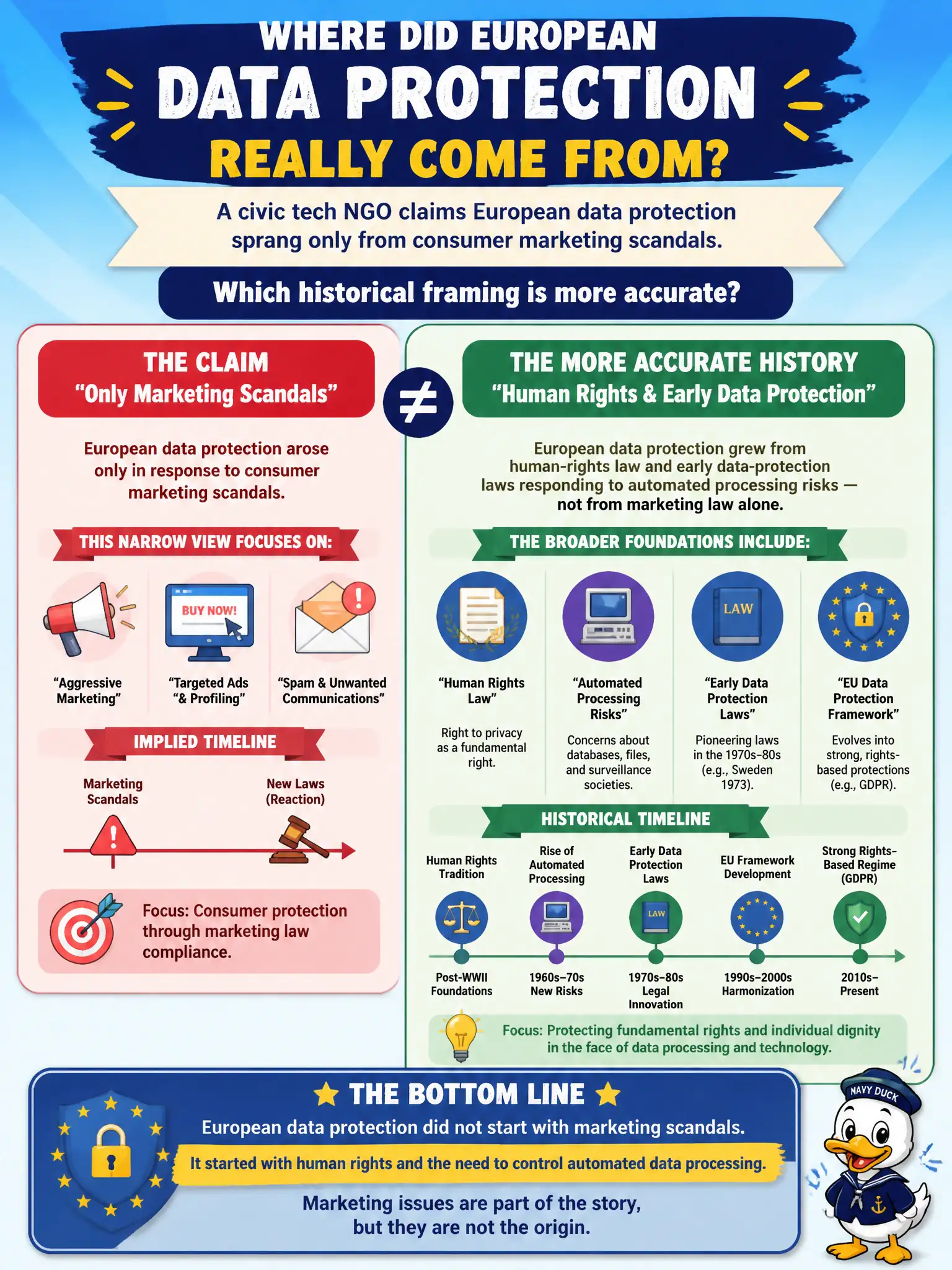
A civic tech NGO claims European data protection sprang only from consumer marketing scandals. Which historical framing is more accurate?
Select an answer to reveal the explanation.
Short Explanation
Marketing messes sure made headlines later, but Europe’s privacy roots go deeper — human rights and early fears about big filing systems that could sort people. It is less “banner ads invented privacy” and more dignity-plus-automation anxiety. Two roots, not one scandal story.
Full Explanation
European data protection grew from human-rights law protecting private life and autonomy and from early data-protection statutes responding to risks of automated processing—not from consumer marketing scandals alone. A civic tech NGO that flattens the entire tradition into advertising controversies misses the BoK’s historical core: dignity, power asymmetries in filing systems, and machine-readable profiles in public and private hands. Marketing and ecommerce debates later shaped enforcement narratives, but they are not the sole origin. Framing European DP as exclusively spam-email fines under advertising codes replaces rights foundations with a narrow consumer-tool story. Claiming it originated only by copying US state privacy acts wholesale into EU treaties ignores Europe’s own postwar and CoE/EU trajectory. Saying ecommerce platforms invented the field to justify cookie banners projects a present-day UX fight backward onto decades of law. Exam caveat: origin questions reward human rights plus early automated-processing laws; beware stems that bait that it is all cookies or marketing. Operational check: in public education materials, lead with human dignity and automated filing risks, then layer commercial examples—so residents and staff see why municipal registries were always in scope.