
When calculating an administrative fine, which approach aligns with Article 83?
Select an answer to reveal the explanation.
Short Explanation
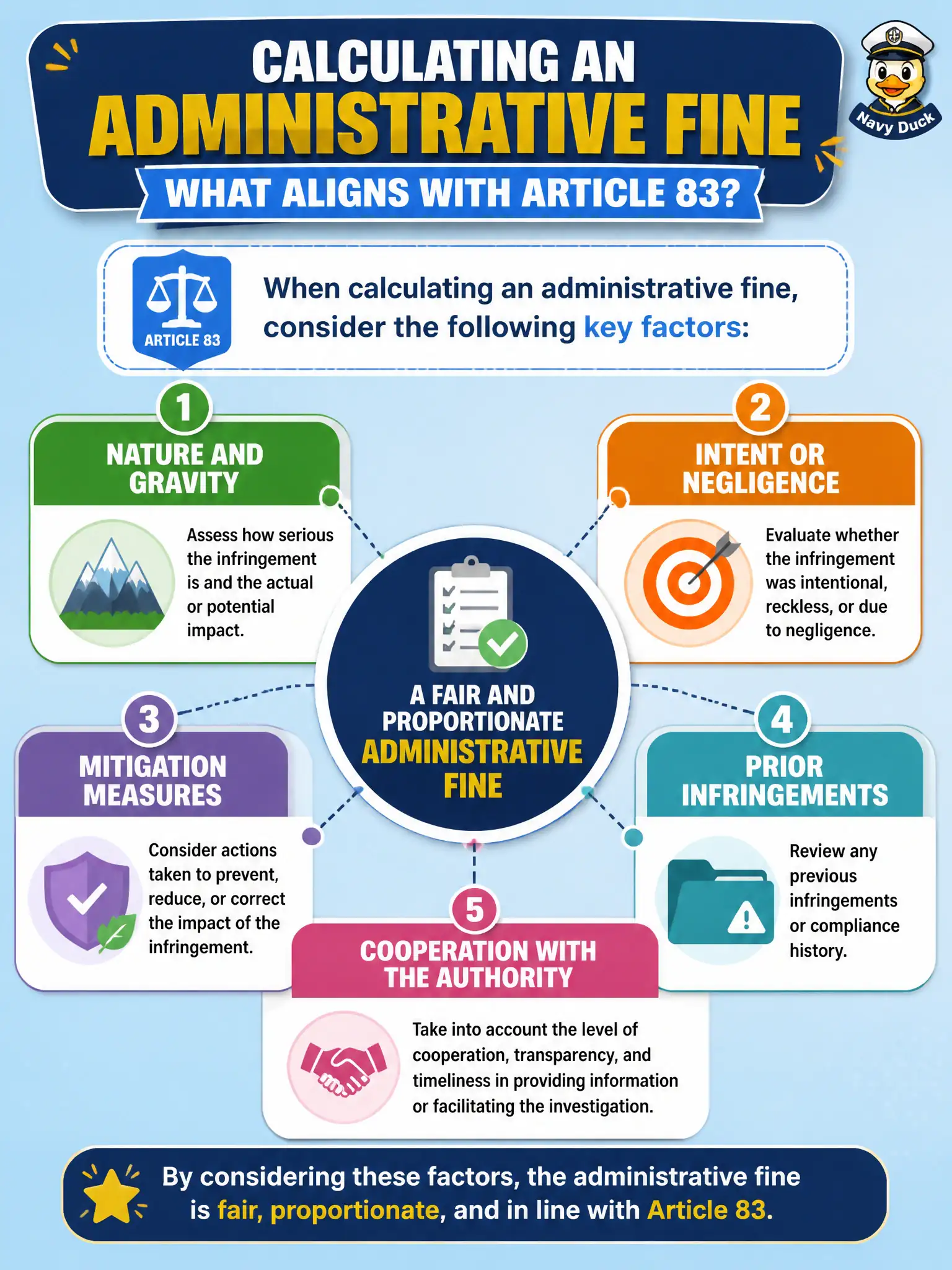
Fines aren't vending-machine prices—you weigh how bad it was, whether it was careless or on purpose, what you fixed, past run-ins, and whether you cooperated. Context changes the number.
Full Explanation
When calculating an administrative fine, the approach that aligns with Article 83 is to consider factors such as nature and gravity, intent or negligence, mitigation measures, prior infringements, and cooperation with the authority. Fines are calibrated instruments of public enforcement meant to be effective, proportionate, and dissuasive—not vending-machine prices. Applying one identical euro amount to every controller regardless of facts fails proportionality and ignores listed factors. Ignoring remedial steps and cooperation because they never affect fines fails—those factors are expressly relevant under Article 83. Basing the fine solely on how many languages appear in the privacy notice fails by using an irrelevant proxy disconnected from harm and culpability. Exam caveat: aggravating and mitigating factors adjust within statutory caps rather than inventing uncapped punishment by language count or other cosmetics. Operational check: after an incident, document mitigation and cooperation timelines, remediate quickly, prepare a factor-based narrative for the SA, and avoid conduct that looks intentional or obstructive. In public-interest terms, documenting the lawful analysis, assigning owners, and retaining evidence of how individuals were protected is how organisations demonstrate accountability when supervisory questions arrive.