
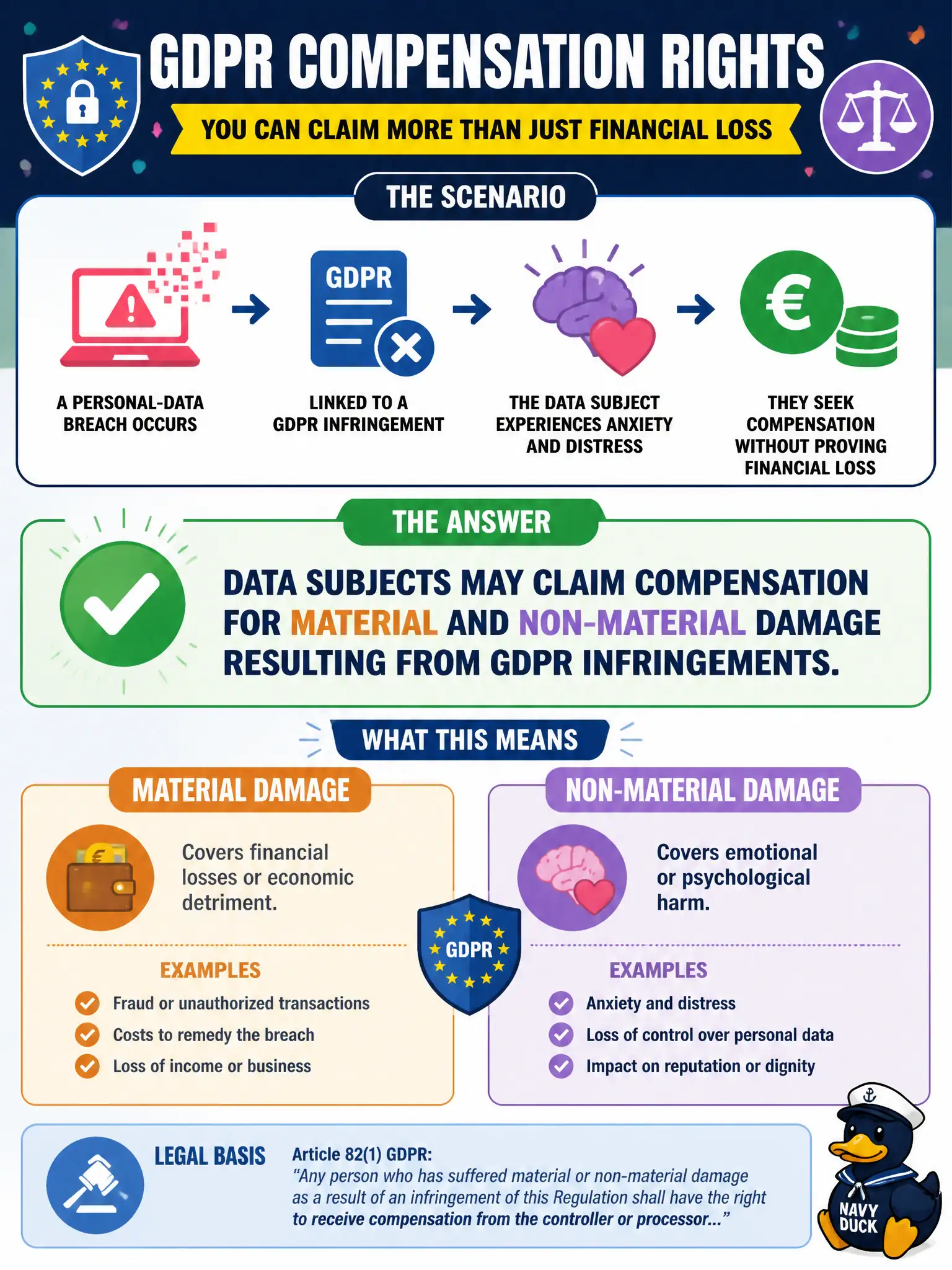
After a personal-data breach linked to a GDPR infringement, a data subject seeks compensation for anxiety and distress without proving financial loss. Which statement best matches GDPR compensation rights?
Select an answer to reveal the explanation.
Short Explanation
Hurt feelings and sleepless nights can still count—GDPR isn't only about empty wallets. Material and non-material damage from an infringement can ground a compensation claim.
Full Explanation
After a personal-data breach linked to a GDPR infringement, a data subject seeking compensation for anxiety and distress without proving financial loss aligns with the rule that data subjects may claim compensation for material and non-material damage resulting from GDPR infringements. Dignity and mental harm matter in civic privacy remedies, not only empty wallets or receipted financial loss. Saying only punitive US-style treble damages are available fails by importing a foreign damages model that is not the GDPR framework. Limiting compensation to controllers that publicly apologise on television fails by inventing a media precondition foreign to Article 82. Claiming non-material harm is never compensable under any reading of the GDPR fails against Article 82’s inclusion of non-material damage. Exam caveat: claimants still must establish damage resulting from an infringement and causation under applicable case law; recognisability of non-material harm is not automatic quantification of any demanded sum. Operational check: preserve breach and compliance evidence, train claims handlers that distress claims are legally cognisable, coordinate insurance and legal response, and remediate root causes rather than relying only on apology theatre.