
In a cross-border GDPR case, authorities other than the lead SA still have a structured role. What concept does that reflect?
Select an answer to reveal the explanation.
Short Explanation
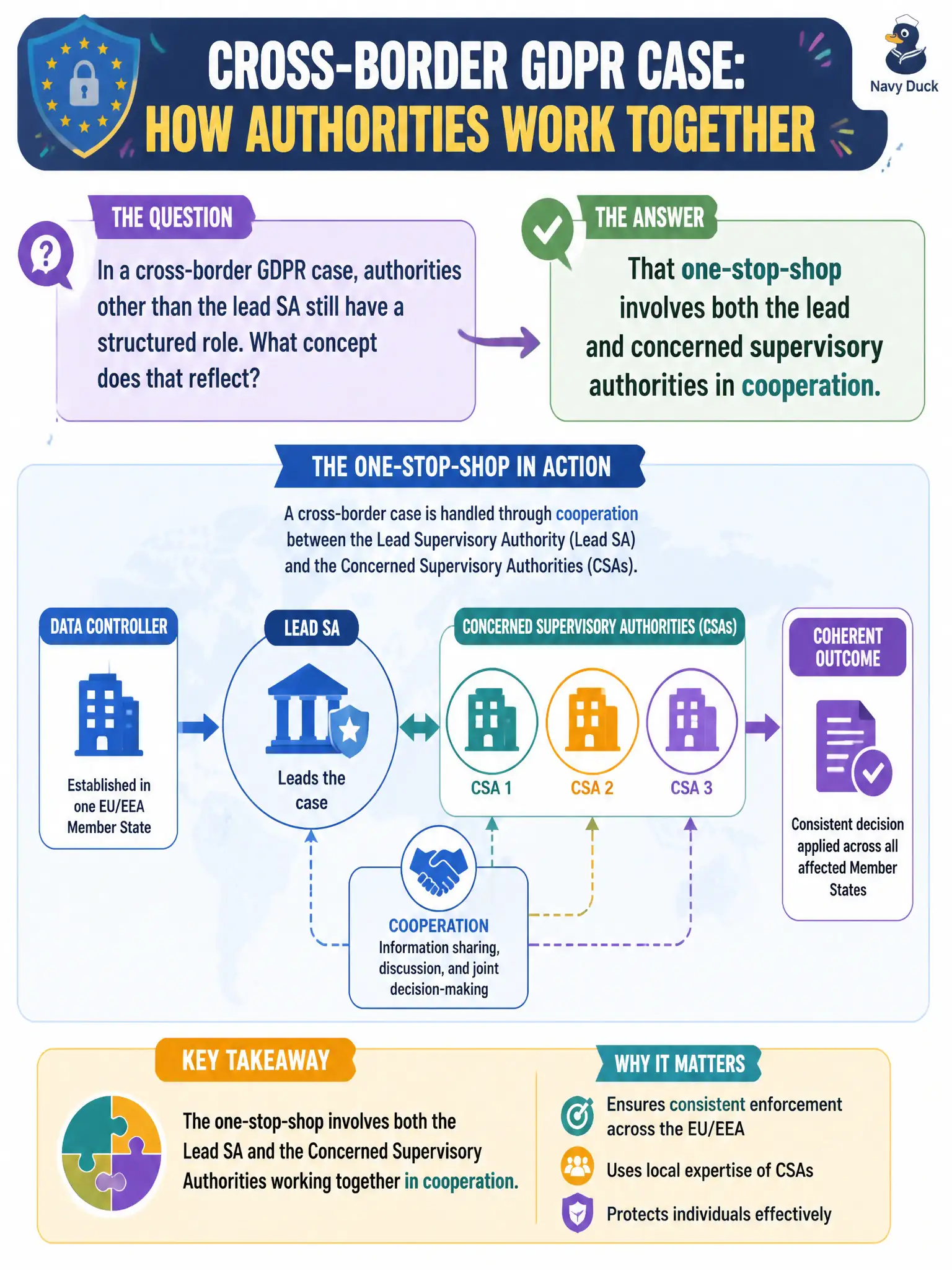
Lead doesn't mean lone wolf. Concerned supervisory authorities still plug into cross-border cases—like co-pilots who know their own airspace—while the lead SA coordinates.
Full Explanation
In a cross-border GDPR case, authorities other than the lead SA still having a structured role reflects that one-stop-shop involves both the lead and concerned supervisory authorities in cooperation. Concerned SAs bring territorial knowledge so residents in their Member States are not erased from the process when a lead coordinates the file. Saying only Interpol may speak once a lead SA is identified fails by inventing an international-police monopoly the GDPR does not create. Claiming concerned SAs are permanently barred from submitting views fails—cooperation procedures exist precisely so they can contribute views and draft measures. Asserting one-stop-shop abolishes all national SA powers overnight fails: OSS coordinates cross-border cases; it does not delete national competence concepts wholesale for every matter. Exam caveat: ‘concerned’ status follows GDPR criteria tied to establishments or substantially affected data subjects—not every SA in Europe is automatically concerned in every file. Operational check: identify lead and concerned SAs early, share draft measures through cooperation channels, respond to concerned-SA views, and document how local impacts were addressed in the final position.