
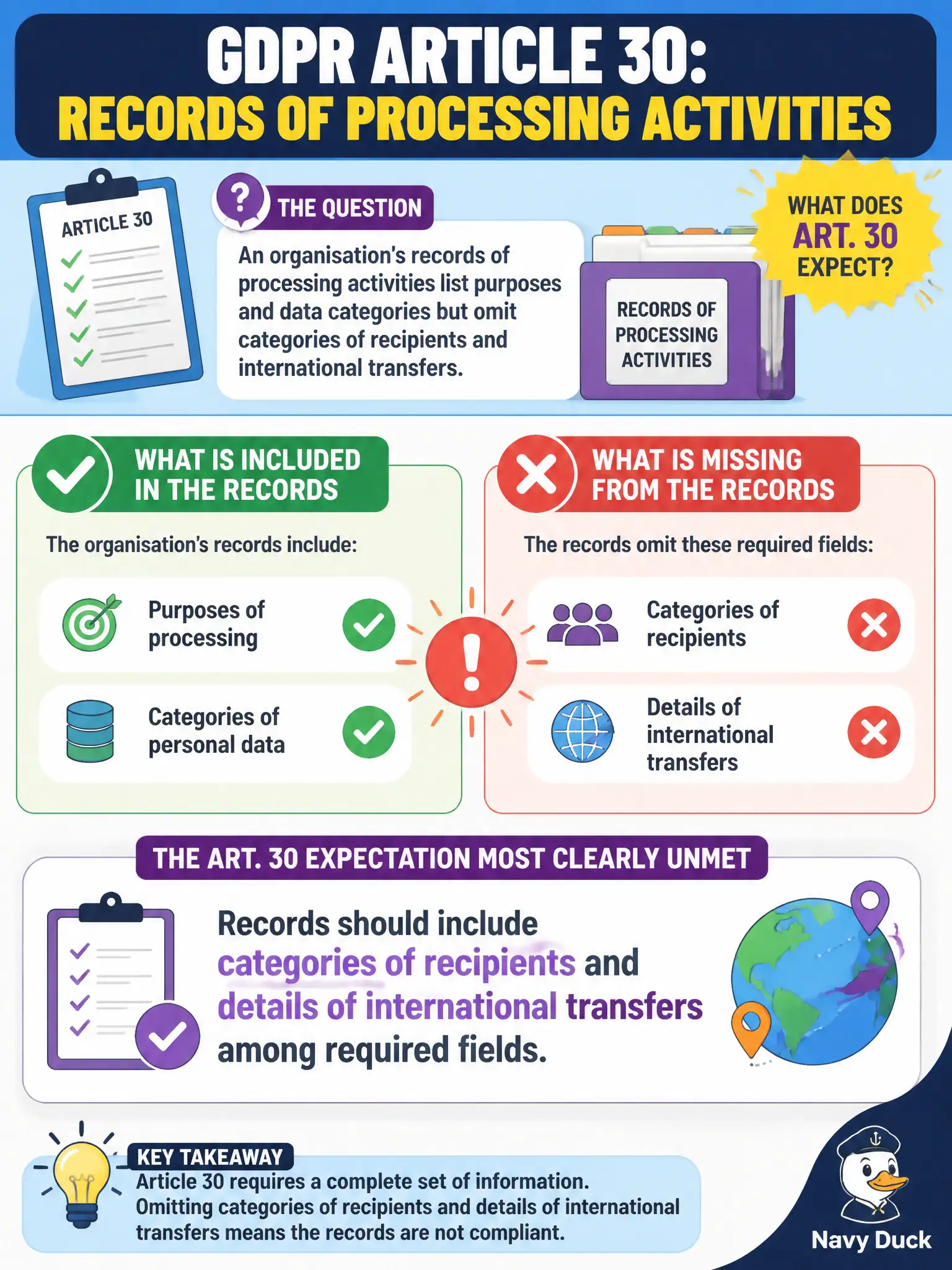
An organisation's records of processing activities list purposes and data categories but omit categories of recipients and international transfers. What Art. 30 expectation is most clearly unmet?
Select an answer to reveal the explanation.
Short Explanation
A processing map with blank 'who gets the data' and 'where it leaves the EEA' boxes is like a shipping log that forgets destinations. Article 30 expects recipients and transfers on the record—not just purposes and categories.
Full Explanation
Records of processing that list purposes and data categories but omit categories of recipients and international transfers most clearly fail Article 30 expectations that records include recipients and transfer details among required fields. A civic processing map that forgets who receives data and where it leaves the EEA cannot support accountability, resident rights, or supervisory review. Requiring each data subject’s favourite colour for profiling accuracy fails by inventing irrelevant content not demanded by Article 30. Saying records must replace the privacy notice for all public disclosures fails by conflating internal accountability records with external transparency notices—they serve related but distinct roles. Demanding that records name every individual employee who ever viewed a spreadsheet fails by mistaking access logs for the required categories of recipients and transfer information. Exam caveat: SME exemptions can narrow some record-keeping in limited cases, but where records are required, recipients and third-country transfers remain core fields, including safeguard references where applicable. Operational check: update the RoPA template to capture recipient categories, processors, and transfer tools (adequacy, SCCs, etc.), inventory flows leaving the EEA, and sample-check entries against contracts and system diagrams before the next SA inquiry.