
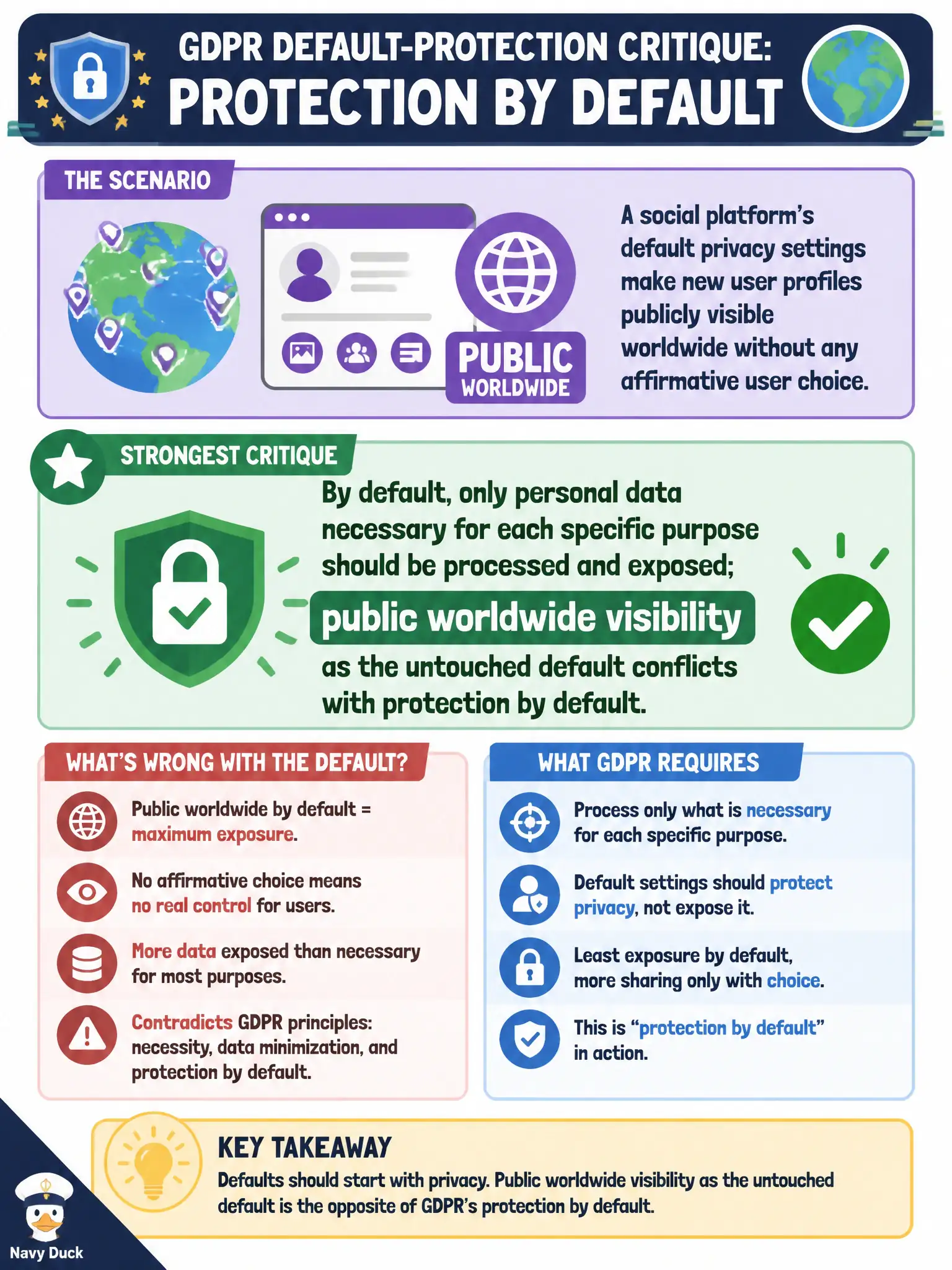
A social platform’s default privacy settings make new user profiles publicly visible worldwide without any affirmative user choice. Which GDPR default-protection critique is strongest?
Select an answer to reveal the explanation.
Short Explanation
Shipping every new profile as a billboard until someone hunts for a lock is the opposite of privacy by default. Defaults should start narrow; users can open the curtains later if they want. ‘Settings exist somewhere’ does not rescue a public-by-default launch.
Full Explanation
Protection by default under Article 25(2) means that, by default, only personal data necessary for each specific purpose are processed, considering amount, extent of processing, storage period, and accessibility. Making new social profiles publicly visible worldwide without affirmative user choice conflicts with that rule: broad public accessibility is not a necessary default for ordinary account creation. Defaults shape real-world privacy for millions of users, including minors and participants in civic discourse, so open-to-the-world settings demand active choice—not silence.
Existence of a buried settings page does not validate public-by-default. Later user tightening does not excuse non-compliant defaults. Protection by default is not limited to special-category data; ordinary profile fields are covered.
Exam caveat: “necessary for the purpose” is the test—public global discovery may be a distinct purpose needing its own basis and affirmative opt-in, not an untouched default.
Operational check: set new profiles to private or limited audience by default, require affirmative action for public visibility, test signup UX for dark patterns, and document the default rationale in Article 25 records.