
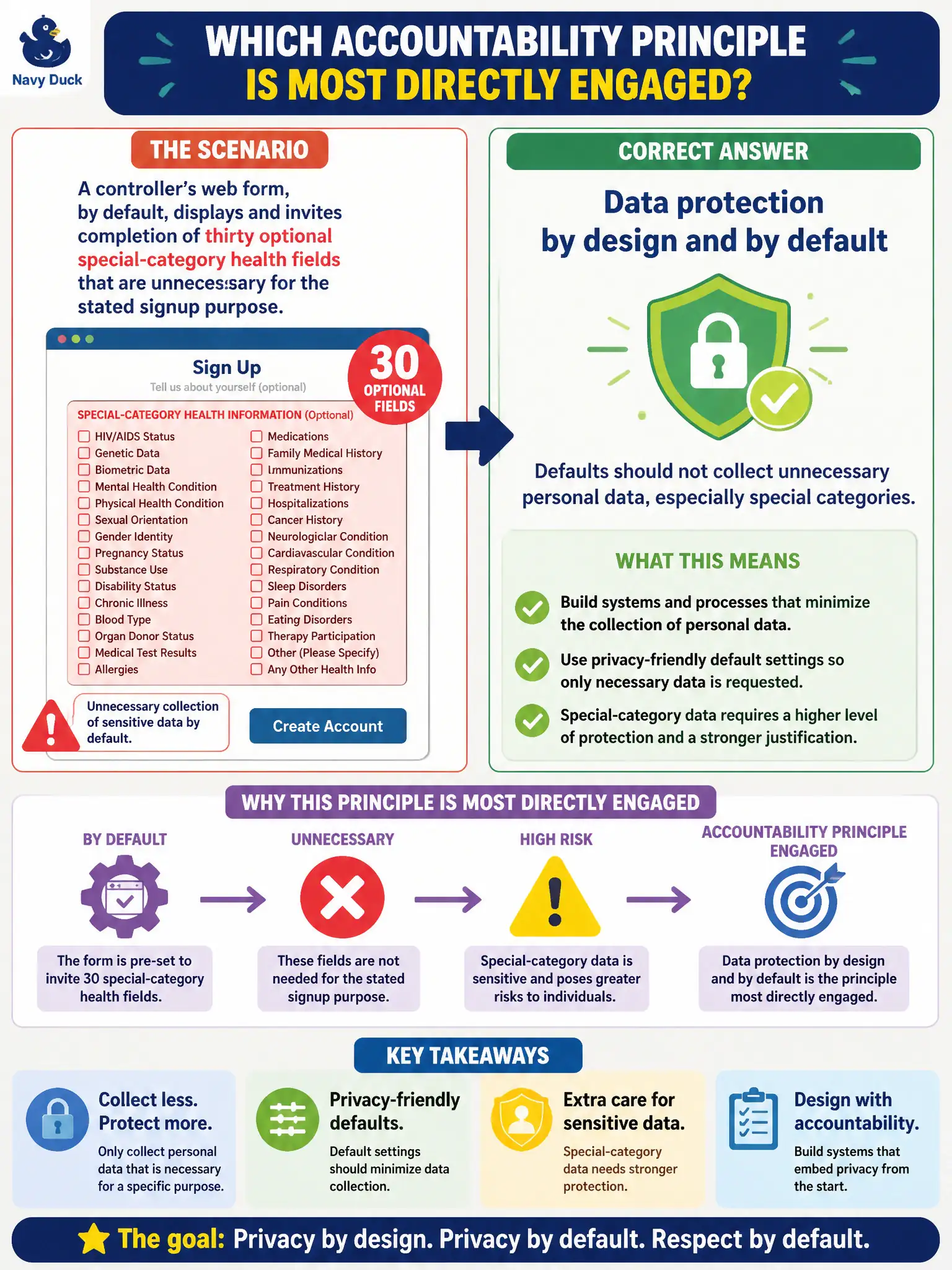
A controller’s web form, by default, displays and invites completion of thirty optional special-category health fields that are unnecessary for the stated signup purpose. Which accountability principle is most directly engaged?
Select an answer to reveal the explanation.
Short Explanation
Leaving thirty health checkboxes wide open on a simple signup is like putting every medicine cabinet drawer on the welcome desk. Privacy by design and by default says start locked-down and collect only what the purpose needs. Portability and transfers are different chapters.
Full Explanation
Article 25 requires data protection by design and by default, including that by default only personal data necessary for each specific purpose are processed. A signup form that by default displays and invites completion of thirty optional special-category health fields unnecessary for the stated purpose violates that default-minimisation ethic—especially given Article 9 sensitivity. Civic intake forms and commercial onboarding should not normalised-nudge people into oversharing health data they never needed to provide for signup.
Storage limitation alone does not exhaust the issue; field design and defaults are classic Article 25 concerns. Optional fields do not inherently imply international transfers or cloud hosting abroad. The right to data portability is not the primary principle engaged by an excessive default field count.
Exam caveat: “optional” fields can still be excessive by default if the user experience pressures completion or collects special-category data without an Article 9 pathway. Defaults matter as much as privacy-policy text.
Operational check: remove unnecessary health fields from the default signup path, require a documented Article 9 condition before any health collection, use progressive disclosure only when a later purpose truly needs those data, and re-test the form against minimisation in quality assurance.