
A data subject asks a controller to restrict processing while the controller verifies whether legitimate interests override the objection. What is the appropriate treatment of restriction in this situation?
Select an answer to reveal the explanation.
Short Explanation
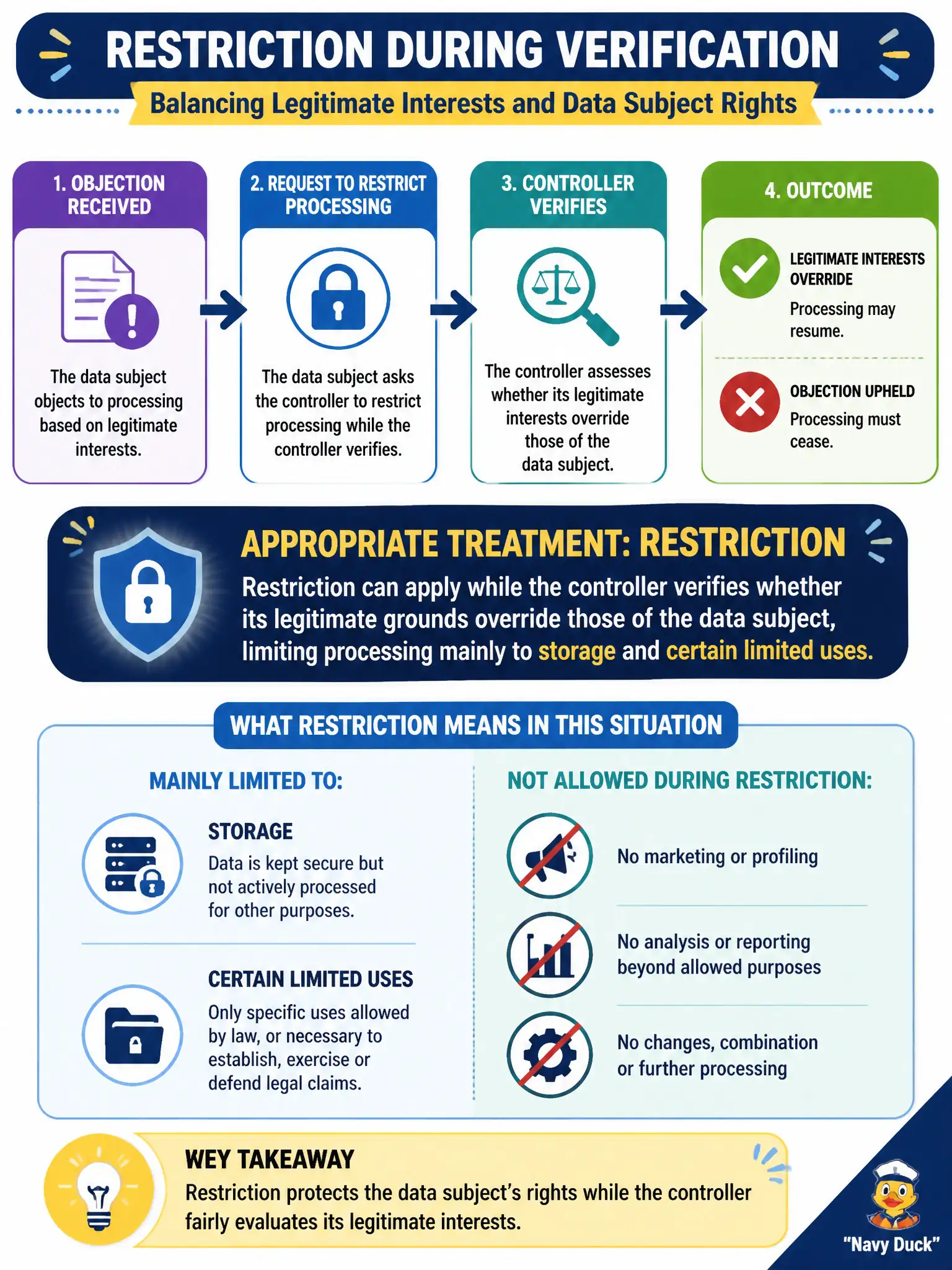
Picture hitting pause on a playlist while someone checks the volume rules. Restriction is that pause—keep the data, stop most processing—while the controller checks whether its legitimate interests really win. It is not an automatic erase-everything button.
Full Explanation
Restriction can apply while the controller verifies whether its legitimate grounds override those of the data subject following an objection. During that verification window, processing should be limited mainly to storage and certain limited uses permitted under the restriction rules, rather than continuing the contested processing at full throttle. Restriction thus protects the person while the override analysis is completed in good faith.
Restriction is not unavailable merely because legitimate interests were the original lawful basis; that setting is precisely when objection-plus-restriction dynamics often arise. The controller must not erase all data immediately instead of considering restriction where pause—not deletion—is the fit tool. Restriction is also not available only after a supervisory authority issues a formal order; it is a data-subject right the controller must be able to apply.
Exam caveat: objection to legitimate interests can pair with restriction while override is checked—do not skip straight to “we win automatically.” Operational check: flag records as restricted, block routine use of the contested processing, complete the balancing documentation promptly, then either stop permanently or resume only if compelling grounds are demonstrated and communicated. Municipal services should show residents that objections trigger a real pause and analysis, not business as usual under a civic logo.