
An individual objects to a shop’s CCTV that captures the entrance to their home, where the shop relies on legitimate interests. Which statement best reflects the objection analysis?
Select an answer to reveal the explanation.
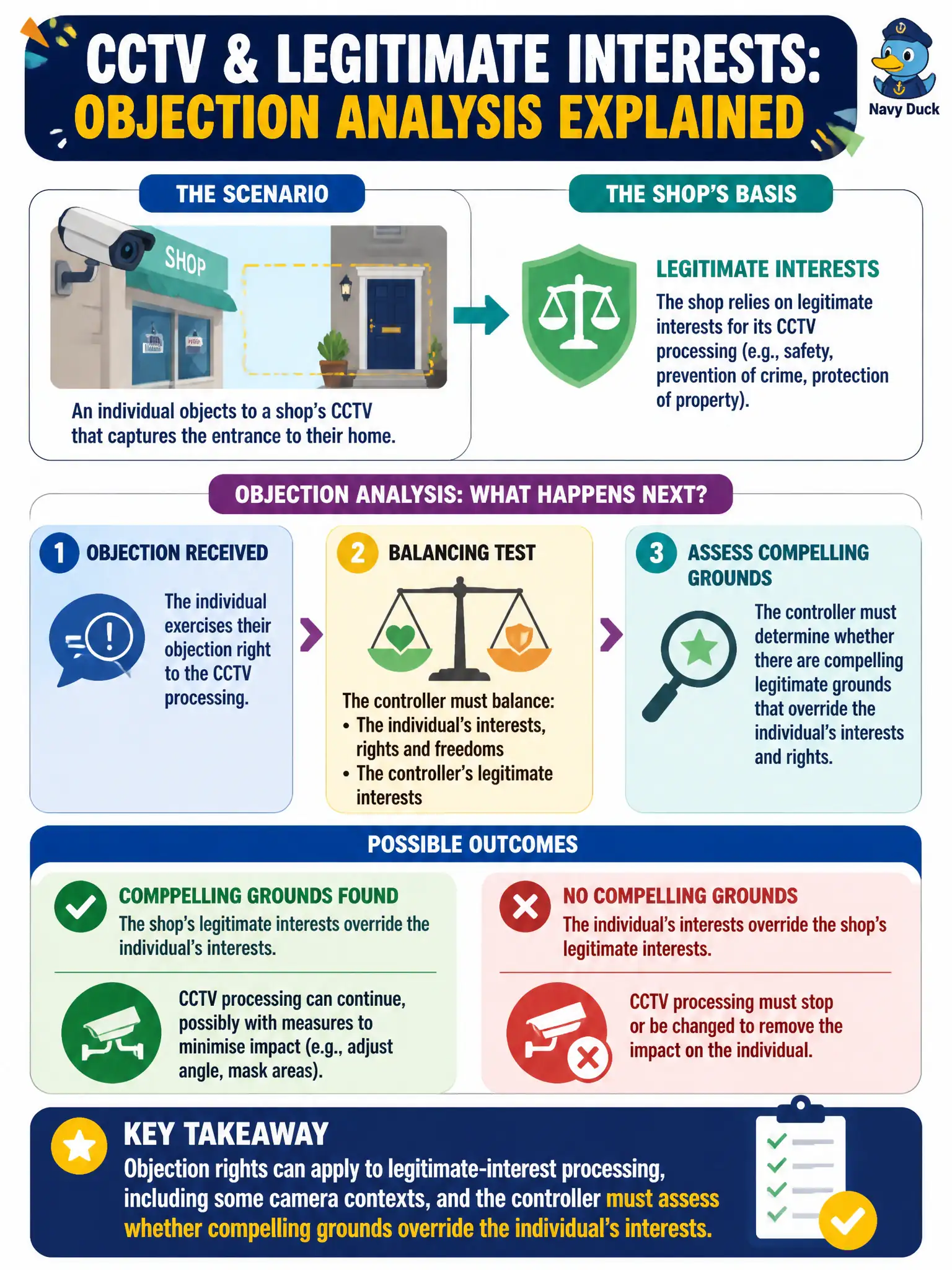
Short Explanation
Cameras pointed near your front door are not automatically above objection just because the shop likes security. If legitimate interests are the basis, an objection still gets a real assessment—your privacy weighed against their claimed need. Security interest is an argument, not a free pass.
Full Explanation
Objection rights can apply to legitimate-interest processing, including some camera contexts where CCTV captures areas affecting a person’s home life. The controller must assess whether compelling legitimate grounds override the individual’s interests, rights and freedoms, or else cease or adjust the contested processing. Home-adjacent surveillance raises heightened balancing stakes even when a shop cites ordinary security interests.
CCTV based on legitimate interests can be the subject of an objection; saying objection can “never” apply is wrong. Home-adjacent cameras do not automatically become law-enforcement processing outside the GDPR merely because they face a dwelling. The individual need not sue before an objection is valid; objection is a rights mechanism that precedes litigation.
Exam caveat: legitimate interests plus objection requires an active override analysis (with the stronger absolute stop rule reserved especially for direct marketing). Operational check: log the objection, review camera angles and necessity, consider masking, repositioning, or retention cuts, document compelling grounds if continuing, and respond to the individual with reasons. Neighbourhood businesses and civic spaces should take seriously a resident’s claim that cameras pierce private life, recording why “security always wins” was an inadequate non-analysis.