
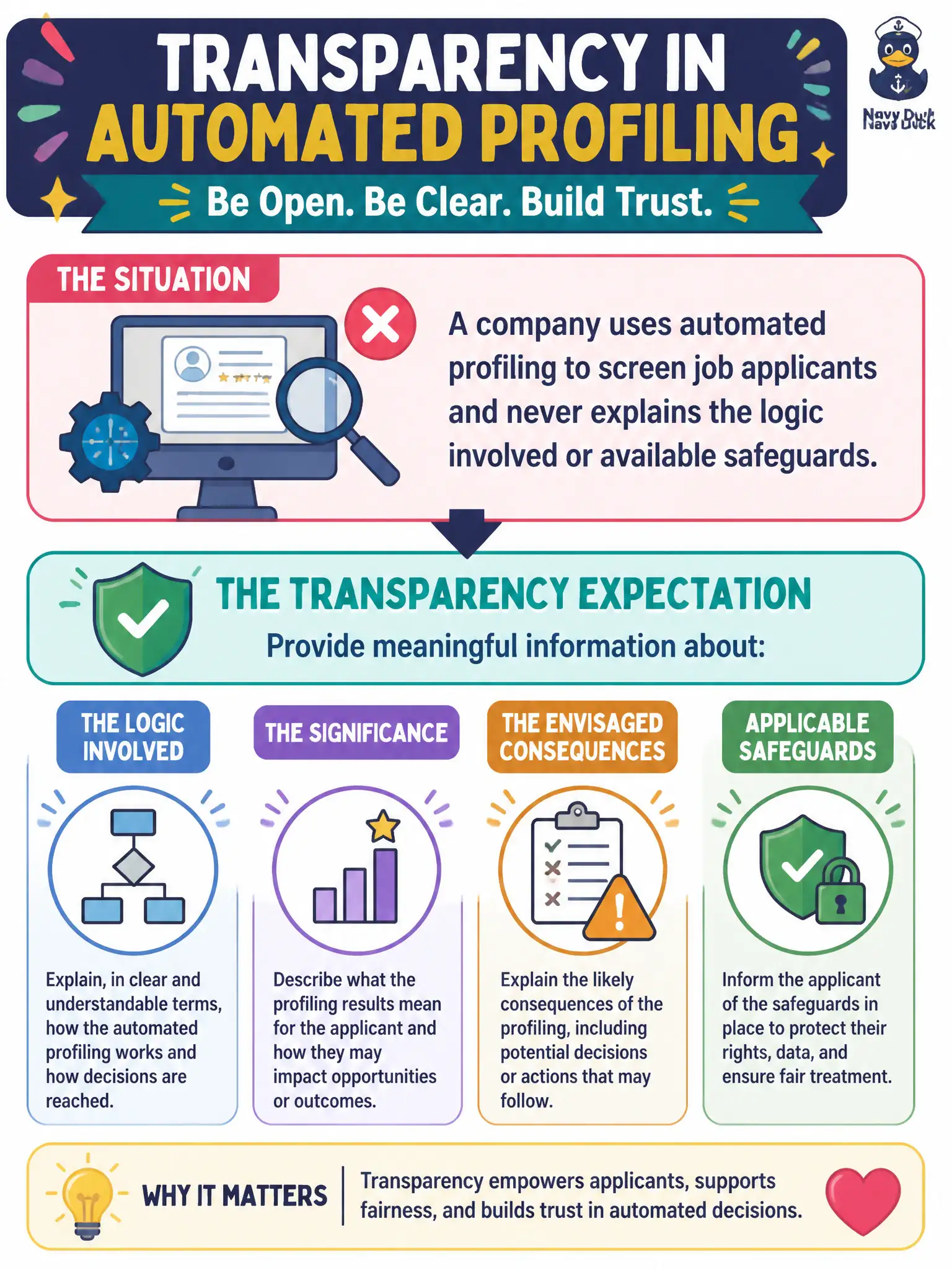
A company uses automated profiling to screen job applicants and never explains the logic involved or available safeguards. What transparency expectation applies?
Select an answer to reveal the explanation.
Short Explanation
If a machine is deciding whether your résumé makes the cut, you deserve more than a shrug. Explain in plain terms how the screening works and what you can do about it—challenge, human review, that sort of thing. Mystery-meat hiring bots fail the transparency test.
Full Explanation
Where automated profiling screens job applicants, transparency expectations include meaningful information about the logic involved and about the significance and envisaged consequences of the processing for the data subject, together with applicable safeguards. Hiding how screening works and what outcomes follow undermines fairness and the ability to exercise related rights, especially where decisions significantly affect people’s opportunities.
Automated hiring tools are not exempt from GDPR transparency on the false claim that employment sits outside the Regulation. A vendor marketing brochure is not meaningful information about logic and consequences. Disclosing nothing until a court orders full source code sets an unlawfully high barrier; meaningful explanation does not always mean dumping proprietary code, but it does mean more than silence.
Exam caveat: “meaningful information about the logic” ≠ empty marketing and ≠ necessarily full source. Operational check: provide layered explanations candidates can understand, describe main factors and consequences, offer human review routes where Article 22 applies, and train recruiters on how to explain outcomes. Civic and public employers using screening tools should be able to tell applicants, in plain language, how the system affects them—sustaining trust in fair access to opportunity.