
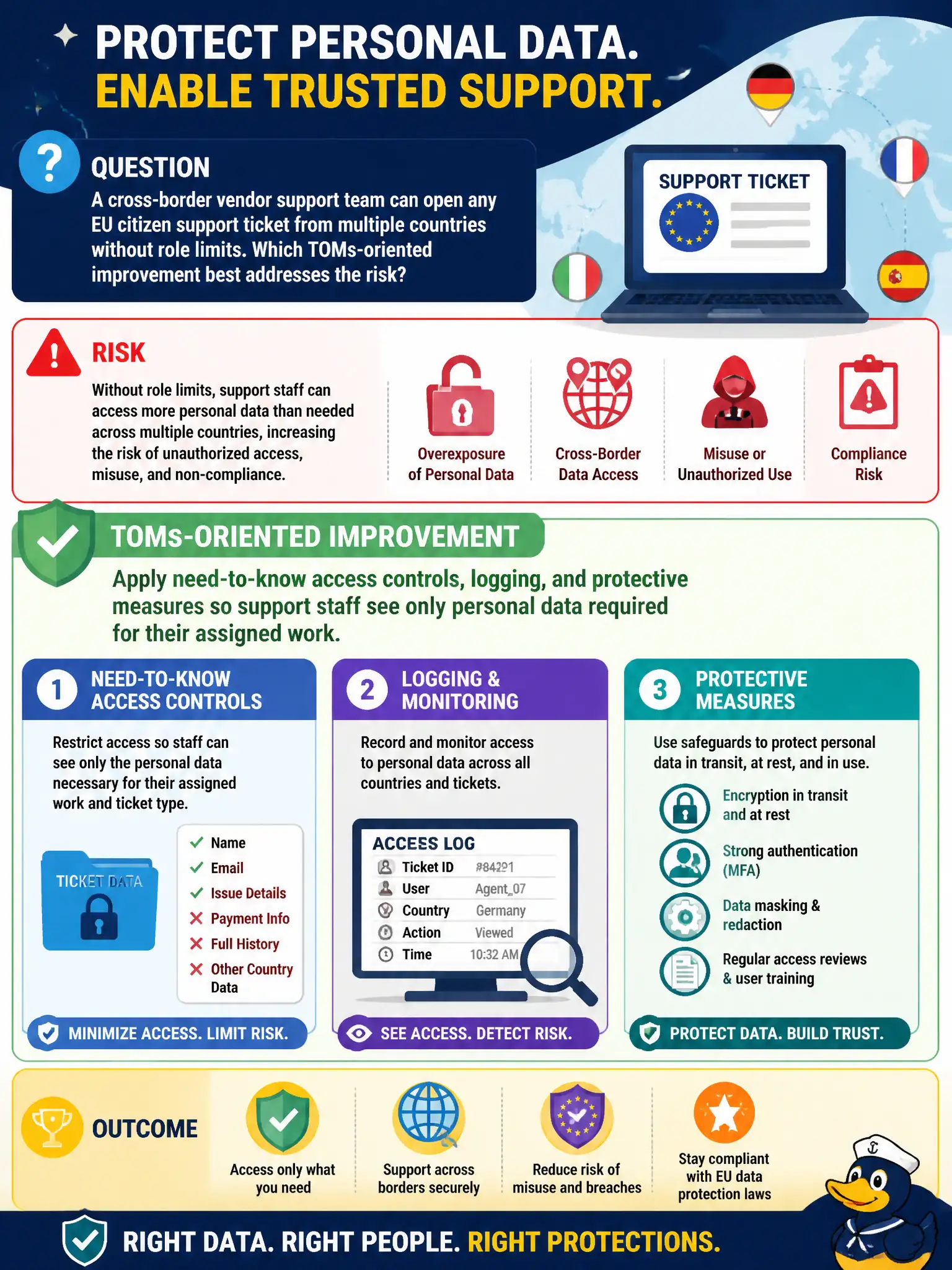
A cross-border vendor support team can open any EU citizen support ticket from multiple countries without role limits. Which TOMs-oriented improvement best addresses the risk?
Select an answer to reveal the explanation.
Short Explanation
Support shouldn't mean a world tour through every citizen's ticket. Need-to-know access, logging, and guardrails keep help desks helpful without turning them into open filing cabinets. Least privilege still applies when the helper sits in another country.
Full Explanation
Helpdesk and support platforms that store citizen tickets contain personal data and often sensitive context about residents’ problems. GDPR-aligned security expects need-to-know access, logging, and protective measures so support staff see only what their assigned work requires. Broad, unrestricted ticket access maximises the blast radius of misuse or account compromise and undermines integrity and confidentiality.
Granting global unrestricted access merely to improve mean-time-to-repair trades security for speed without Article 32 justification. Disabling all logging of support access because “logs are unlawful” misstates the law—security logging is commonly part of appropriate measures when itself protected. Publishing every support ticket publicly confuses organisational transparency with unlawful disclosure of individuals’ personal data.
Exam caveat: operational speed does not override appropriateness of access control for sensitive citizen tickets. Operational check: implement role-based access, just-in-time elevation for rare cases, immutable access logs, and field-level masking of unnecessary identifiers in helpdesk tools. City service desks should model civic respect: help the resident in front of you without offering staff a world tour through every municipal case file, and record why open-by-default access was rejected.