
A partner hospital shares patient contact lists with another organisation for a joint health fair without assessing the recipient's safeguards. What should privacy practice require before such sharing?
Select an answer to reveal the explanation.
Short Explanation
Before you hand over patient contacts, check that the other organisation can lock the door. Sharing for a health fair is still sharing personal data, so assess safeguards and wrap the transfer in proper agreements. Good intentions on a flyer don't replace that homework.
Full Explanation
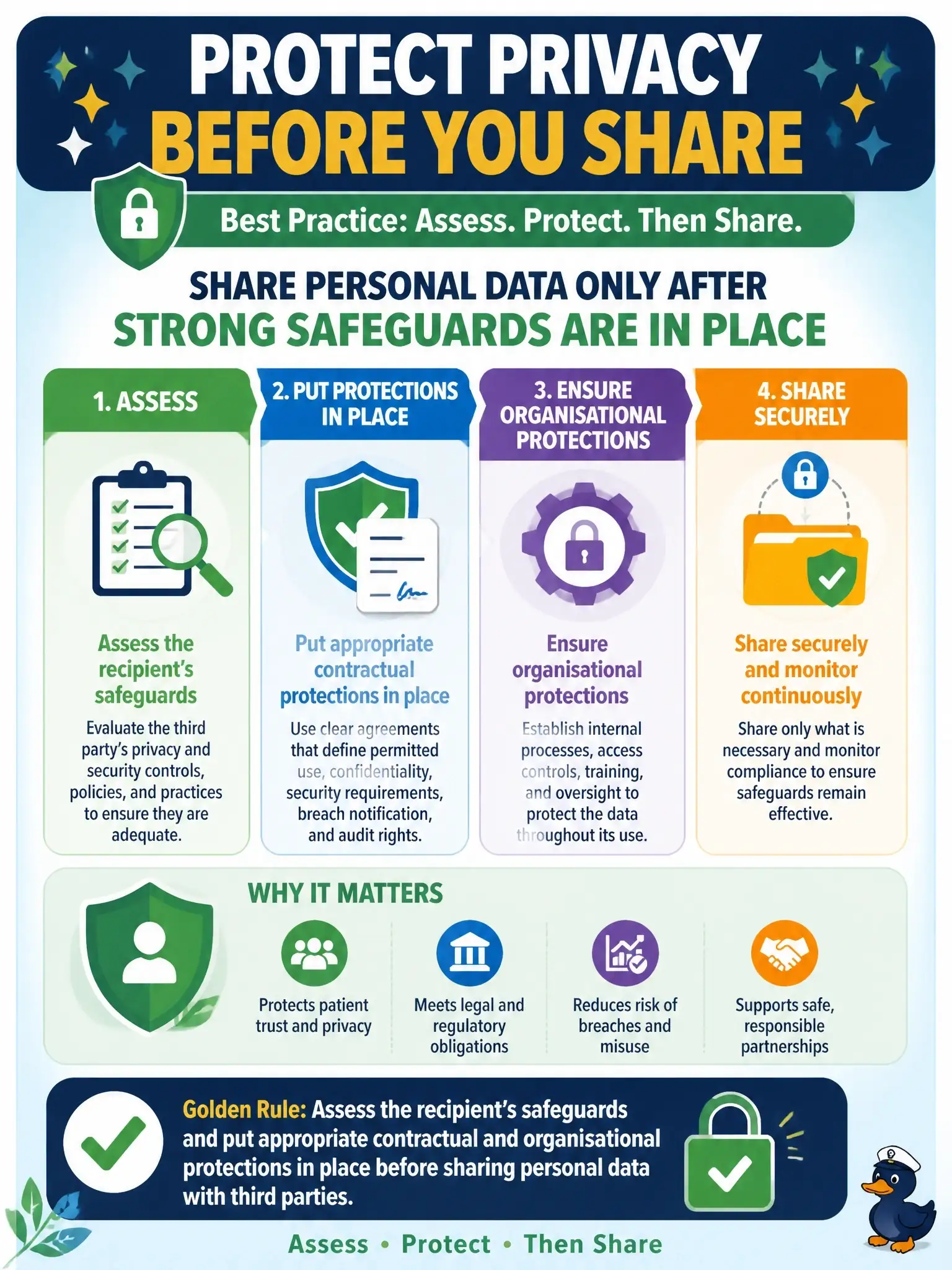
Sharing patient contact lists with another organisation for a joint health fair is still a disclosure of personal data. Responsible practice requires assessing the recipient’s safeguards and putting appropriate contractual and organisational protections in place before sharing—alongside a valid lawful basis and purpose clarity. Civic or charitable framing does not remove those duties. The practice of sharing freely whenever a joint brochure is planned treats recipient security as irrelevant and fails controller accountability for onward disclosure. Relying only on a health-fair flyer as lawful basis while skipping recipient diligence confuses marketing copy with legal and security analysis. Redacting first names only while leaving surnames and phone numbers unprotected does not meaningfully reduce identifiability for an event contact list. Exam caveat: “for a good cause” is not a substitute for lawful basis plus recipient due diligence. Operational check: confirm the basis and purpose, execute sharing terms, verify recipient technical and organisational measures are proportionate to health-related contacts, minimise fields shared, and log the disclosure. Partner hospitals and civic organisers should treat resident contacts as held in trust, ensuring community events do not become casual data leaks.