
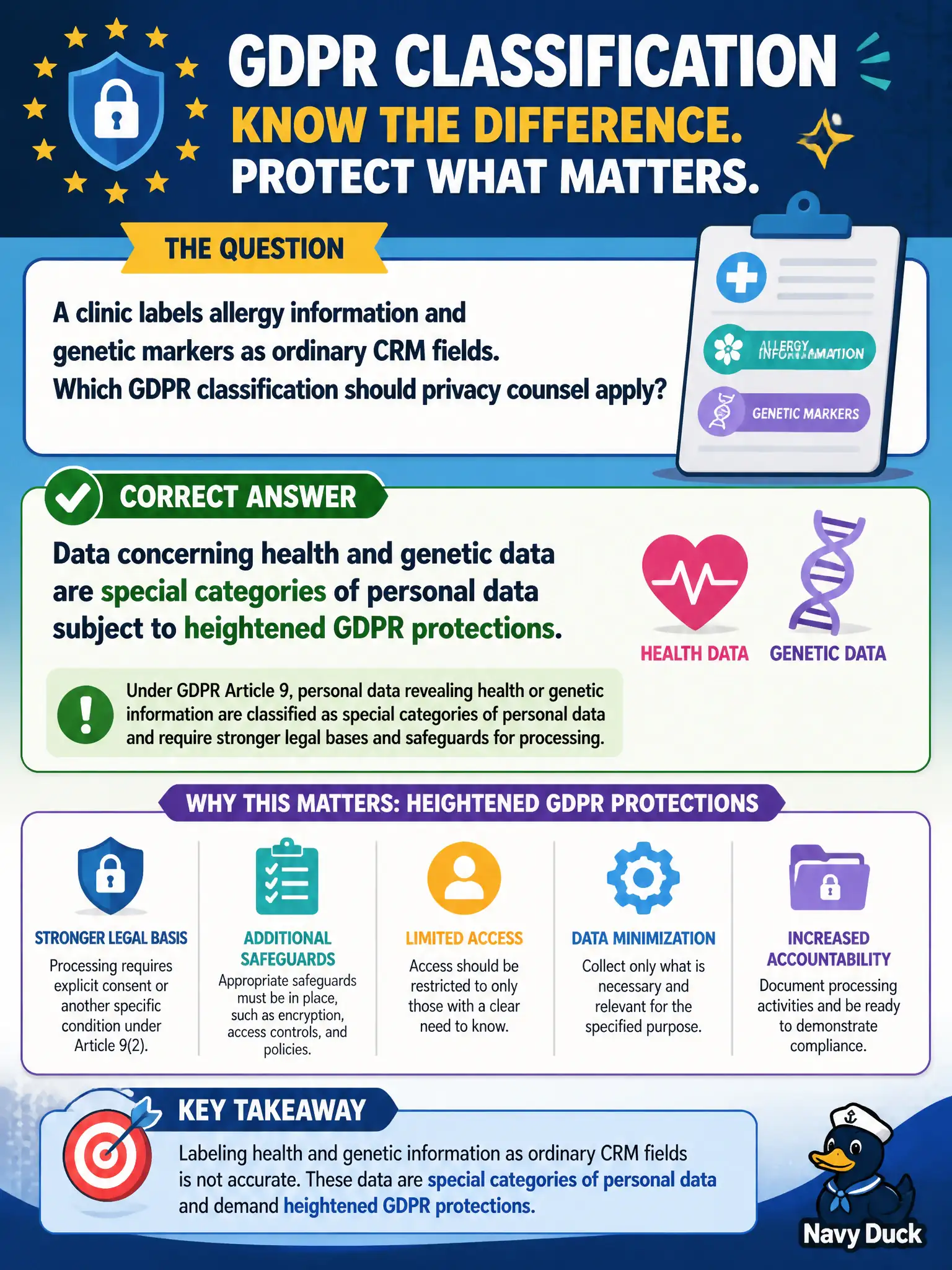
A clinic labels allergy information and genetic markers as ordinary CRM fields. Which GDPR classification should privacy counsel apply?
Select an answer to reveal the explanation.
Short Explanation
CRM labels do not outrank the statute. Allergy details and genetic markers are classic special-category (sensitive) personal data under GDPR—health and genetics—so they get the stricter gate, not the “ordinary newsletter field” treatment.
Full Explanation
Data concerning health and genetic data are special categories of personal data subject to heightened GDPR protections under Article 9. Clinic counsel should refuse ordinary CRM field treatment for allergy information and genetic markers: processing is generally prohibited unless an Article 9(2) condition applies, in addition to an Article 6 basis. Allergy and genetic data are not always anonymous marketing preferences. Credit-card PANs are not the special-category list while health and genetic data are ordinary. Special categories are not solely a CIPP/US HIPAA concept. Exam caveat: Article 9 list recognition—health and genetic data—is a high-frequency test point. Operational check: quarantine health and genetic fields behind heightened access controls, document the Article 9 condition, and exclude them from routine marketing exports. For municipal teams, keep a one-page decision note that states the governing instrument, why competing labels fail, and what evidence would change the conclusion. Document the decision trail so auditors can see how the civic team matched facts to the correct legal category rather than to a slogan. Revisit the conclusion when facts, recipients, or processing purposes change, and record who approved the updated analysis.