
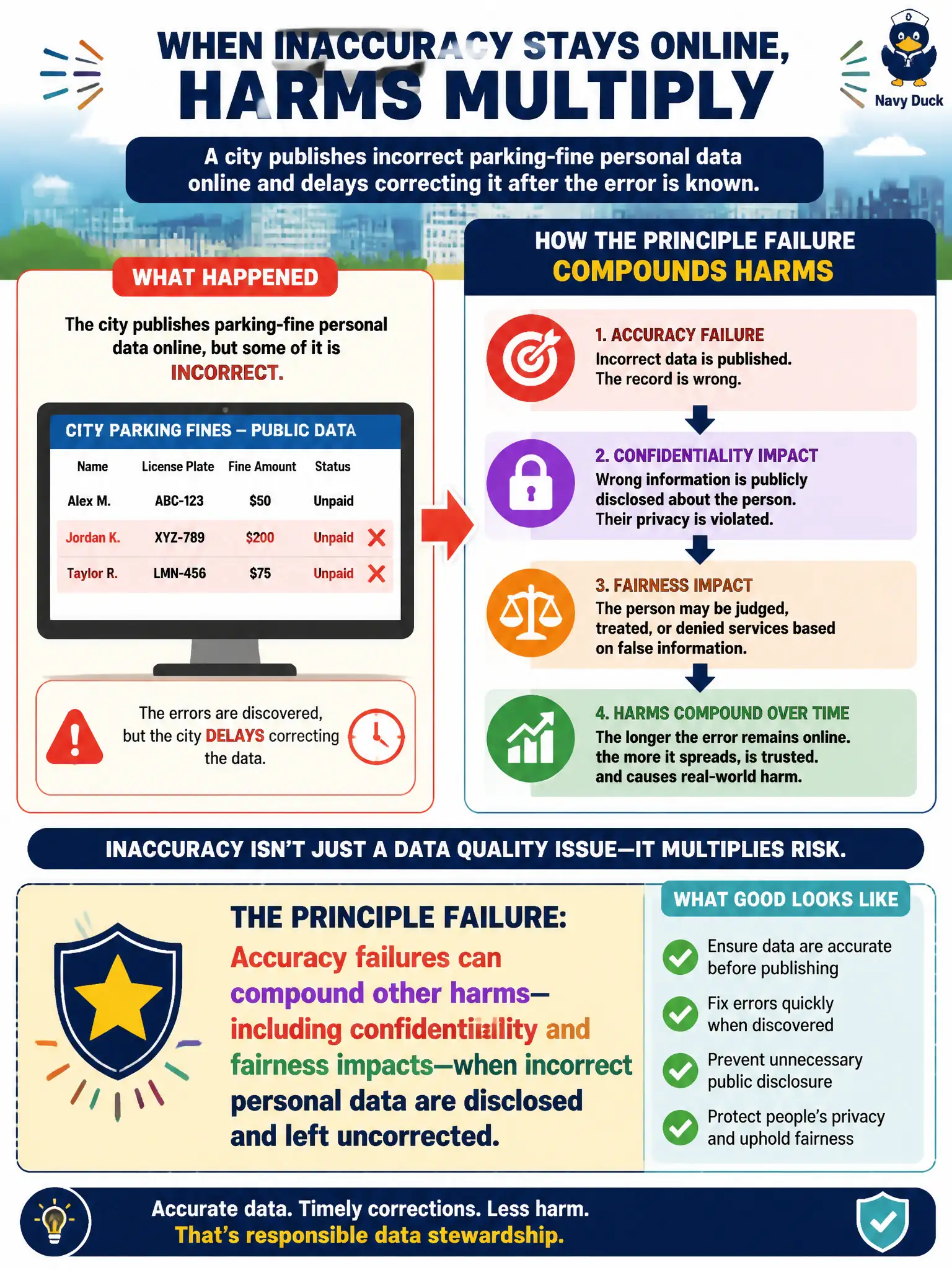
A city publishes incorrect parking-fine personal data online and delays correcting it after the error is known. Which assessment best captures the principle failure?
Select an answer to reveal the explanation.
Short Explanation
Wrong fine details on the internet are not a harmless typo—they are accuracy going public, with reputation and fairness riding along. Fixing the record quickly matters twice as much once strangers can see it. Delay after you know it is wrong digs the hole deeper.
Full Explanation
Accuracy failures can compound other harms—including confidentiality and fairness impacts—when incorrect personal data are disclosed and left uncorrected. A city that publishes incorrect parking-fine personal data online and delays correcting the error after it is known primarily fails accuracy, while the public nature of the error amplifies reputational, practical, and fairness damage to the resident who was wrongly portrayed.
Only the right to portability is not the main right engaged when wrong fines appear online; rectification and accuracy duties lead. Accuracy remains relevant after personal data have been made public—in fact, public errors often heighten the need for swift correction and recipient notification. Public disclosure of fines does not automatically anonymise the data under GDPR when individuals remain identifiable in the publication.
Exam caveat: public plus wrong plus slow fix equals an aggravated accuracy and fairness problem. Operational check: take down or correct the publication urgently, rectify source systems, notify further recipients who received the wrong data, and confirm corrections with the affected person. Civic enforcement publishing must be reliable; cities should treat wrongful public naming as an urgent trust emergency, documenting why delay was unacceptable to residents.