
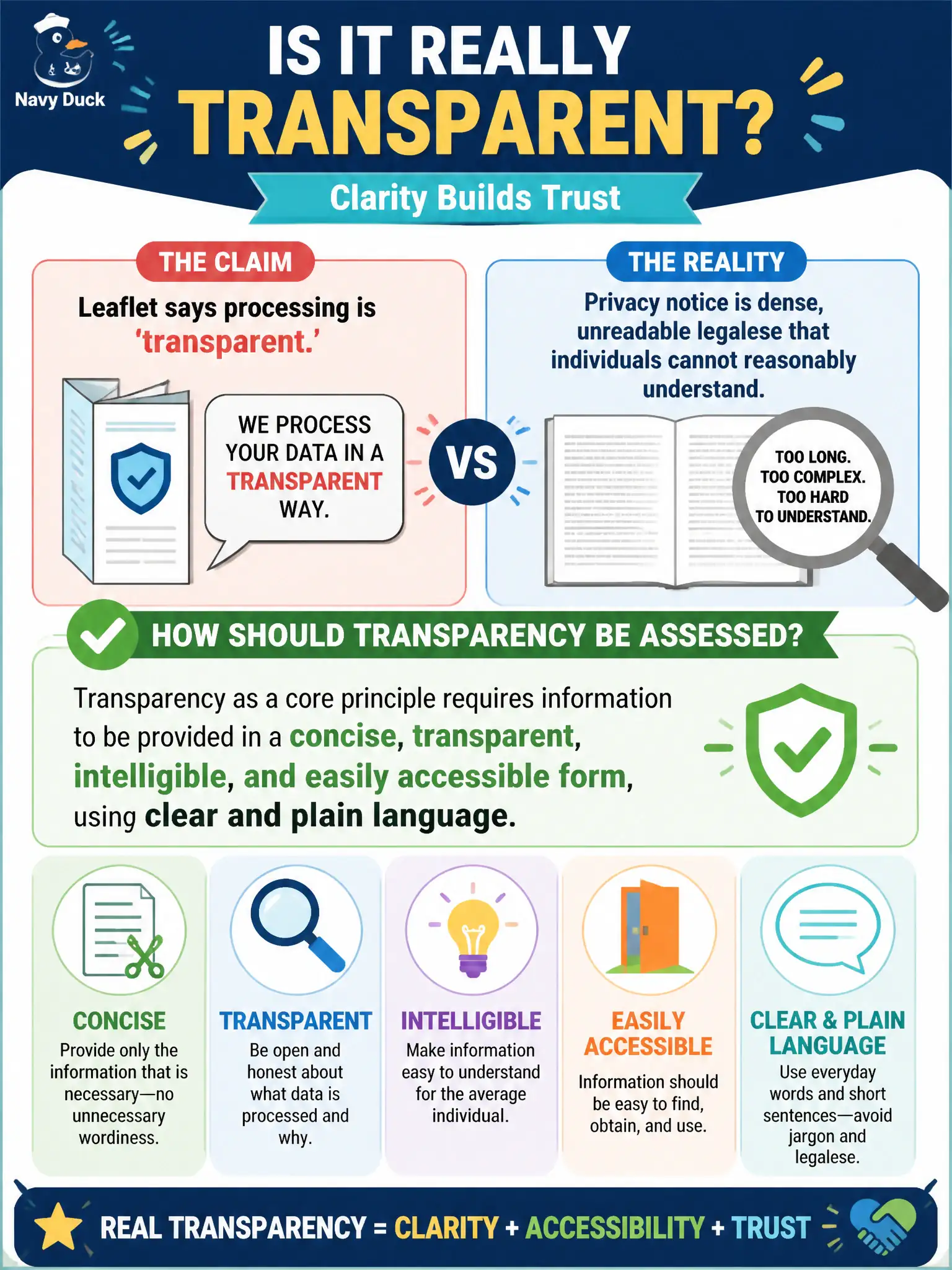
A leaflet claims processing is ‘transparent,’ yet the privacy notice is dense, unreadable legalese that individuals cannot reasonably understand. How should transparency be assessed?
Select an answer to reveal the explanation.
Short Explanation
Calling something transparent does not make a wall of legalese suddenly clear. Transparency means people can actually understand what is happening to their data—plain language, not a puzzle for lawyers only. If the leaflet fails the ‘can a normal person get it?’ test, the principle is failing too.
Full Explanation
Transparency as a core principle requires information to be provided in a concise, transparent, intelligible, and easily accessible form, using clear and plain language. A leaflet that claims processing is “transparent” while the privacy notice remains dense, unreadable legalese fails the principle in substance. Transparency is judged by whether ordinary people can understand the message about who processes what, why, and with whom—not by marketing adjectives pasted on a brochure.
Transparency is not satisfied whenever the word “transparent” appears in copy. Publishing a stock ticker symbol is not a transparency programme under Article 5 or Articles 12–14. Unreadable legalese does not fully meet the standard merely because an in-house lawyer can parse it; the intended audience is the data subject, including residents without legal training.
Exam caveat: plain language and accessibility beat decorative claims of transparency. Operational check: layer notices (short then detailed), use plain-language summaries, test readability, provide accessible formats, and align the notice with real processing. Municipal communications should enable residents to understand how the city uses their data—civic legitimacy depends on comprehensible explanation, not a wall of jargon that hides the truth in plain sight.