
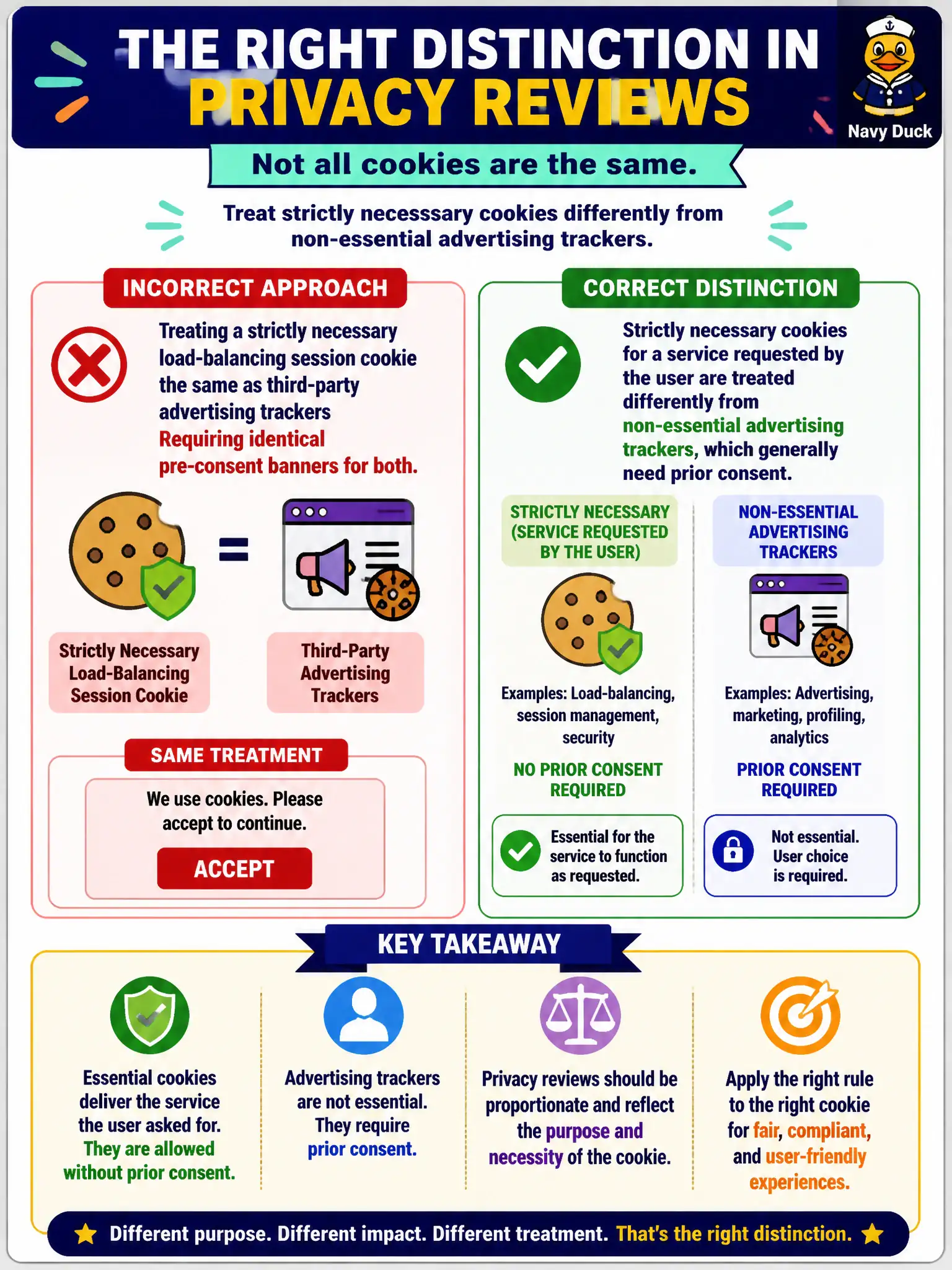
A privacy review treats a strictly necessary load-balancing session cookie the same as third-party advertising trackers, requiring identical pre-consent banners for both. What distinction should be drawn?
Select an answer to reveal the explanation.
Short Explanation
Not every crumb on the device is an ad tracker. A load-balancer cookie that just keeps the site working sits in a different bucket from the billboard tags. Consent banners are for the non-essential stuff—do not blur the line.
Full Explanation
A privacy review that treats a strictly necessary load-balancing session cookie the same as third-party advertising trackers, requiring identical pre-consent banners for both, should distinguish that strictly necessary cookies for a service requested by the user are treated differently from non-essential advertising trackers, which generally need prior consent. Not every device crumb is an ad tracker. Saying all cookies require identical consent UX regardless of purpose fails the necessary/non-essential split. Claiming load-balancing cookies always need marketing-style consent because they touch a device fails the strictly necessary carve-out logic. Asserting advertising trackers are strictly necessary if the site’s business model is ad-funded fails—funding models do not convert ads tags into technical necessity for a requested service. Exam caveat: ‘strictly necessary’ is interpreted narrowly; many analytics cookies fall outside it even if useful to the publisher. Operational check: classify cookies by purpose, allow necessary cookies without consent, block ads/analytics pending consent, publish an accurate cookie inventory, and stop forcing marketing-consent UX onto load-balancer cookies.