
A retailer's marketing platform sends weekly promotional emails but provides no working unsubscribe or opt-out mechanism in those messages. Which GDPR/ePrivacy-aligned statement is correct?
Select an answer to reveal the explanation.
Short Explanation
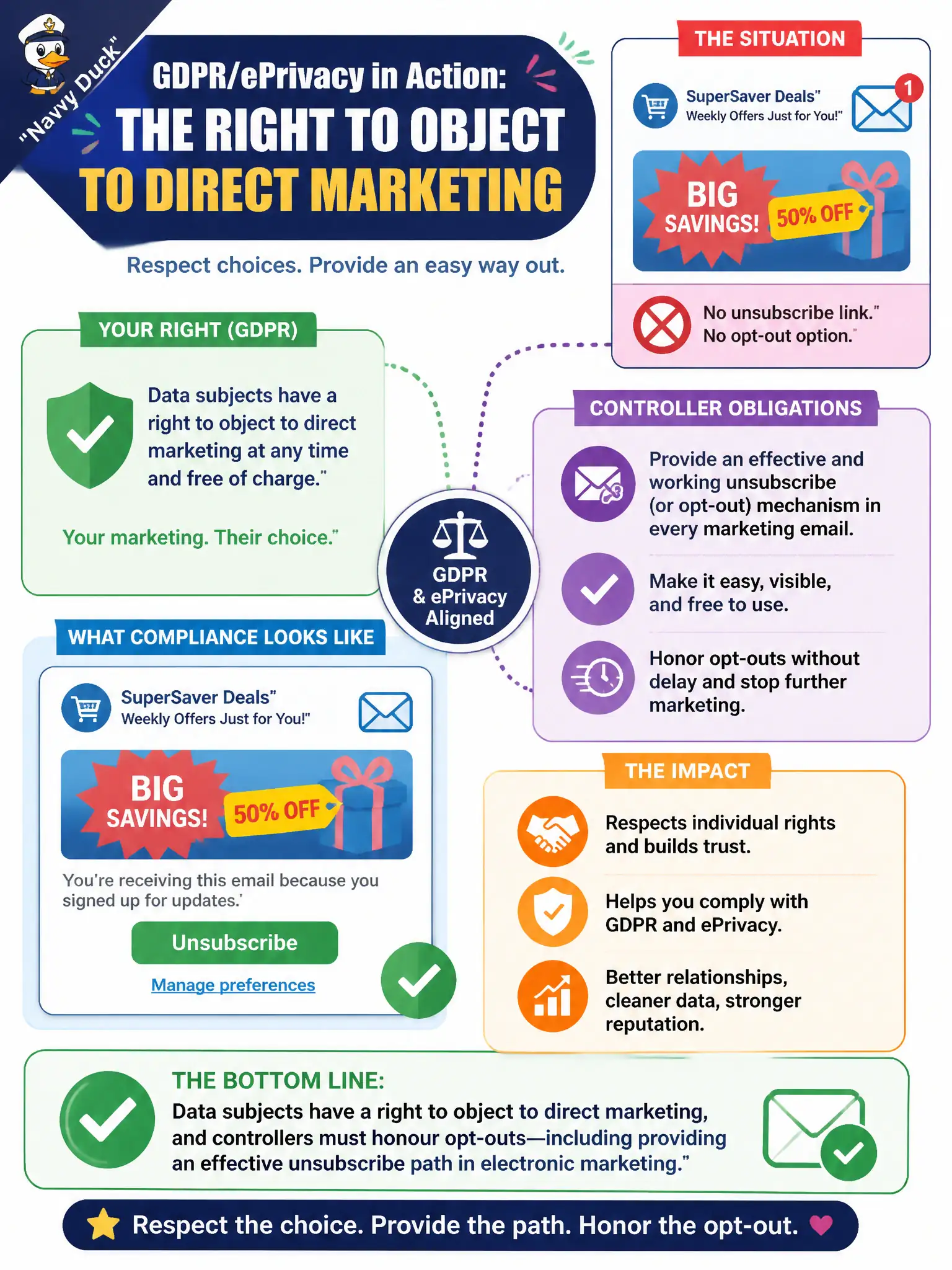
Marketing objection is not a suggestion box—it is a hard stop. If the email has no real unsubscribe, you are not honouring that right in practice. Give people a one-click exit and actually suppress them.
Full Explanation
A retailer’s marketing platform that sends weekly promotional emails without a working unsubscribe or opt-out mechanism violates the principle that data subjects have a right to object to direct marketing and controllers must honour opt-outs—including providing an effective unsubscribe path in electronic marketing. Marketing objection is a hard civic stop, not a suggestion box. Saying opt-out links are optional once the original consent form mentioned marketing fails ongoing objection rights. Claiming controllers may ignore marketing objections if campaigns are labelled ‘service updates’ fails when the content is promotional. Asserting unsubscribe mechanisms are required only for postal leaflets, not email, fails channel reality under ePrivacy/GDPR practice. Exam caveat: objection to direct marketing is unconditional under Article 21(2)–(3); operational suppression must actually work across tools. Operational check: place a working one-click unsubscribe in every marketing message, sync suppressions to all campaign systems, test re-import resistance, and audit that opted-out addresses stay dark. In public-interest terms, documenting the lawful analysis, assigning owners, and retaining evidence of how individuals were protected is how organisations demonstrate accountability when supervisory questions arrive.