
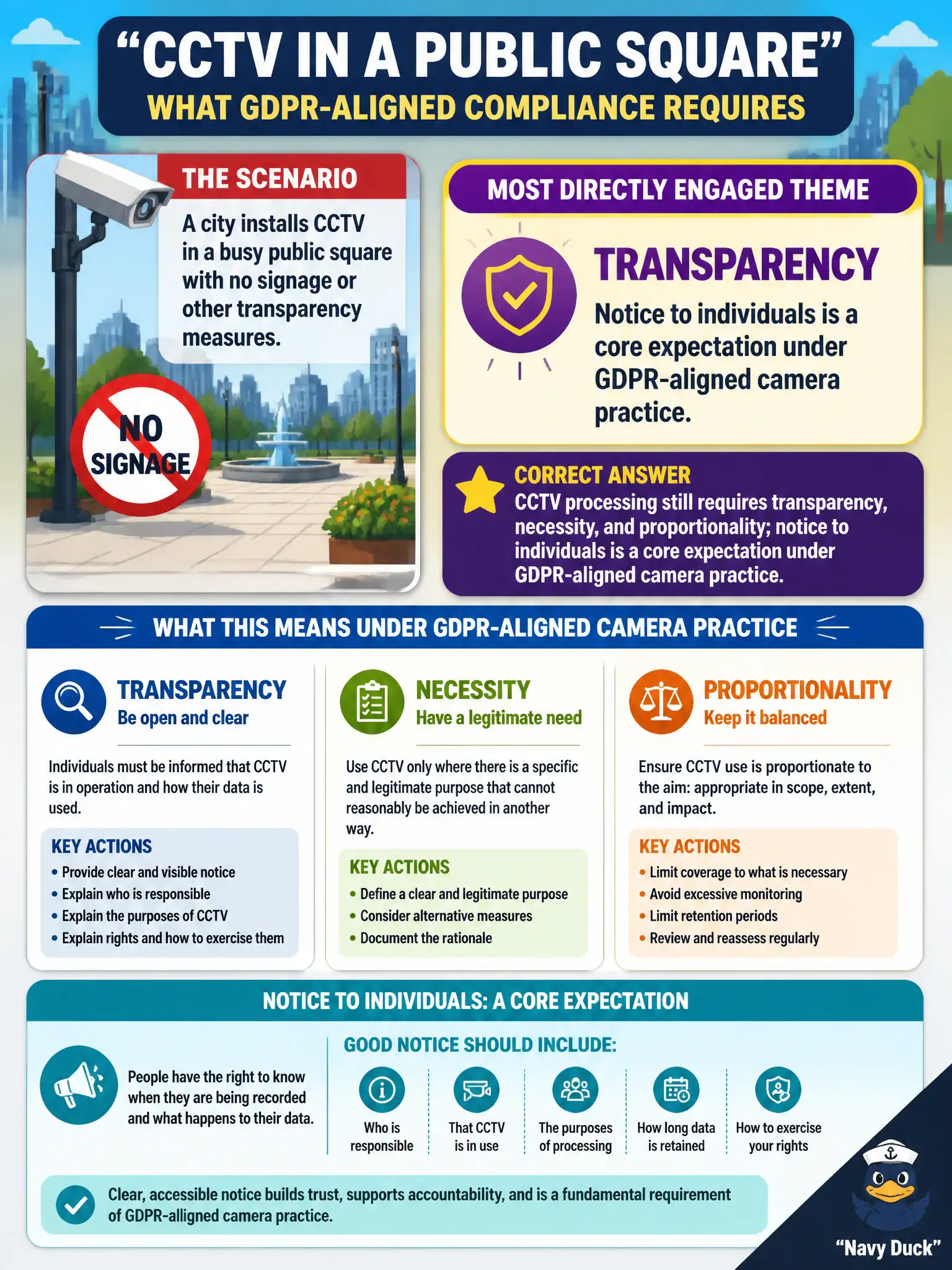
A city installs CCTV in a busy public square with no signage or other transparency measures. Which compliance theme is most directly engaged?
Select an answer to reveal the explanation.
Short Explanation
Cameras without signs are like a speed trap with the radar hidden and no warning—people cannot manage their expectations. Public CCTV still needs necessity, proportionality, and clear transparency. Silence is not a compliance strategy.
Full Explanation
A city installing CCTV in a busy public square with no signage or other transparency measures most directly engages the theme that CCTV processing still requires transparency, necessity, and proportionality; notice to individuals is a core expectation under GDPR-aligned camera practice. Public cameras without signs leave people unable to understand or challenge monitoring in shared civic space. Saying public CCTV never requires transparency because streets are ‘public’ fails fairness and transparency principles. Claiming signage is required only for indoor private shops, never outdoor public spaces, fails—outdoor monitoring of identifiable people still needs information measures. Asserting that once cameras are city-owned, EDPB transparency themes do not apply fails: public bodies are not exempt from informing the public about surveillance. Exam caveat: transparency methods can include signs, notices, and layered information; necessity and retention limits remain required even with perfect signage. Operational check: post clear camera notices, publish a surveillance notice online, define purposes and retention, complete a DPIA for area monitoring, and assign an operational contact for queries.