
A whistleblowing hotline processes personal data of persons accused in reports. Which design principle is most aligned with GDPR expectations?
Select an answer to reveal the explanation.
Short Explanation
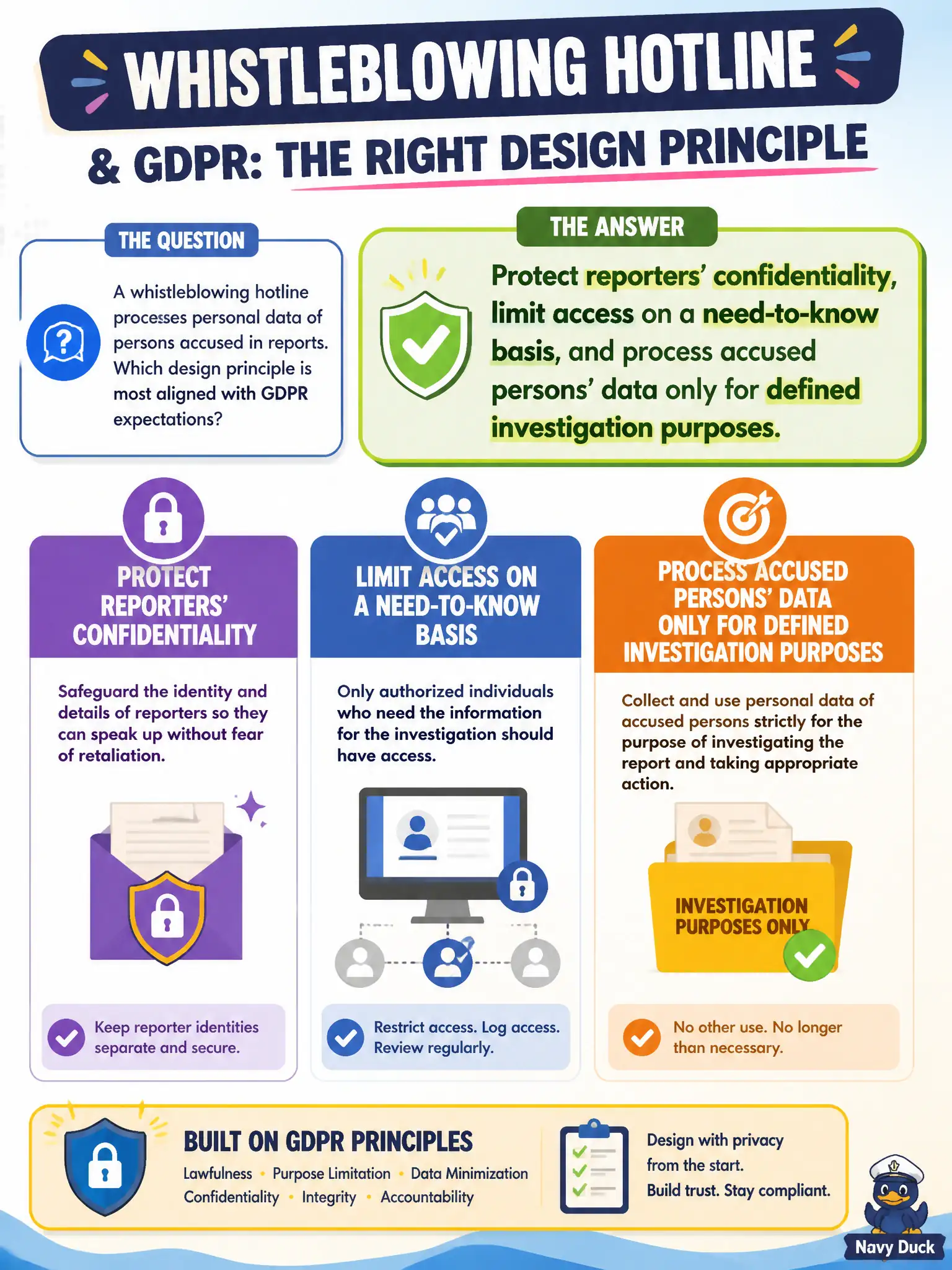
A hotline is a locked evidence room, not a gossip channel. Protect the reporter, lock down who sees the file, and only use accused persons’ data for the investigation purpose. Wide sharing defeats both trust and purpose limitation.
Full Explanation
A whistleblowing hotline that processes personal data of persons accused in reports should protect reporters’ confidentiality, limit access on a need-to-know basis, and process accused persons’ data only for defined investigation purposes. Hotlines work as civic integrity tools only when they are locked evidence rooms rather than gossip channels that destroy trust and fairness. Publishing every report and accused person’s name on an internal wiki for ‘culture of openness’ fails confidentiality and purpose limitation. Allowing any manager who asks to browse the full case file without a need-to-know filter fails security and fairness toward reported persons. Ignoring confidentiality because whistleblowing always outweighs privacy of accused persons fails—accused individuals retain data-protection rights even while investigations proceed. Exam caveat: GDPR applies alongside sectoral whistleblowing laws; controllers must reconcile reporter protection, fairness to accused persons, retention limits, and security. Operational check: restrict case access to authorised investigators, segregate identities, define retention by investigation stage, train intake staff, document lawful bases, and test confidentiality under audit.