
Leadership asks how to judge whether the metadata program is delivering value beyond counting cataloged tables. Which outcome metric best fits that ask?
Select an answer to reveal the explanation.
Short Explanation
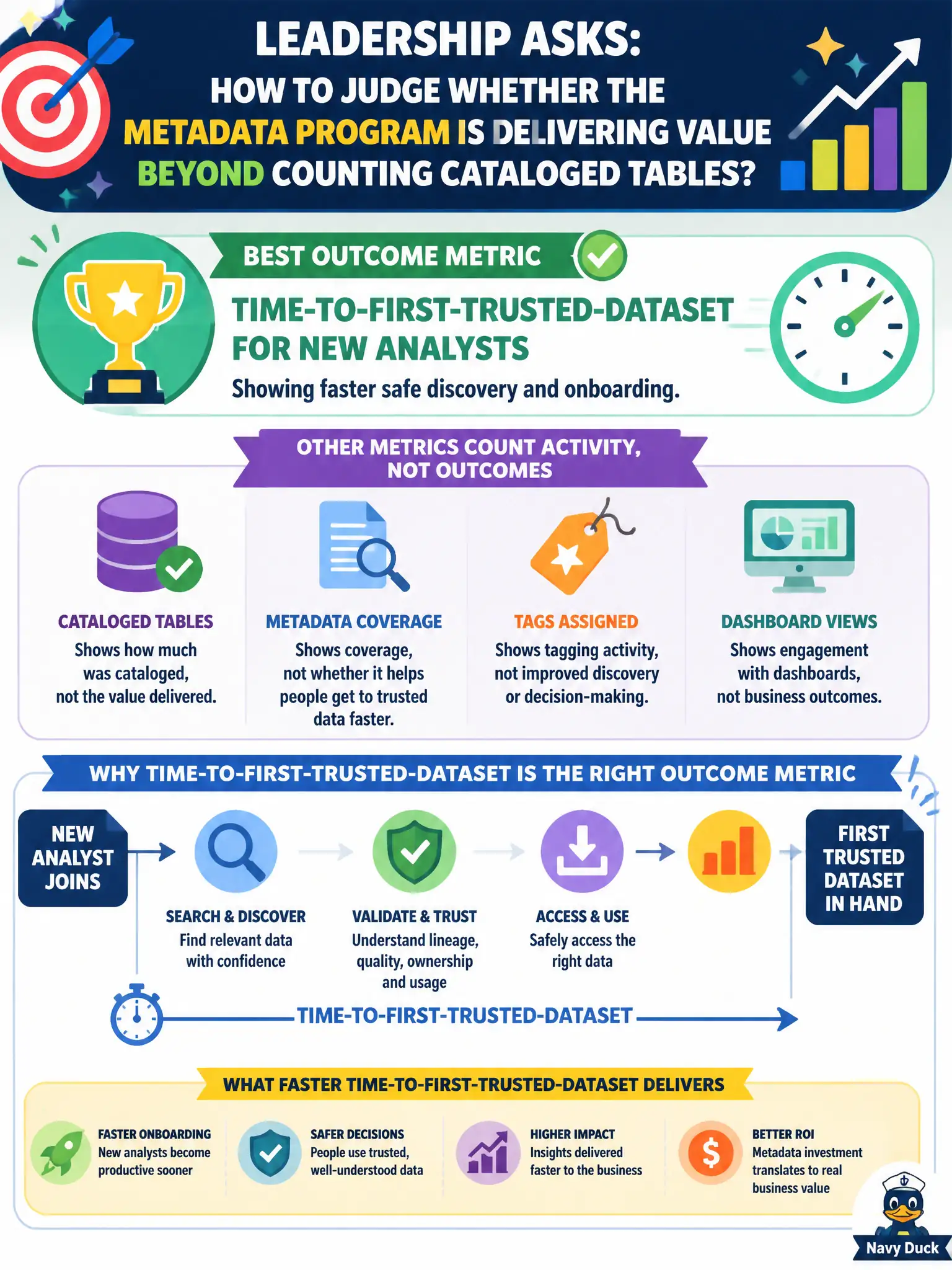
Counting catalog pages is like counting library books without asking if newcomers can find a trustworthy title on day one. Measure time-to-first-trusted-dataset for new analysts. That outcome shows the metadata program actually speeds safe onboarding.
Full Explanation
Metadata program value should be judged by outcomes, not vanity inventory counts. Time-to-first-trusted-dataset for new analysts shows whether the catalog and glossary actually accelerate safe discovery and onboarding in the city. Raw counts of catalog pages regardless of whether anyone finds trusted data faster measure activity, not value. Counting unused orphan tables to inflate inventory rewards the opposite of curation. Hours spent debating logo colors on the home page are not outcome metrics. Exam framing: outcome metrics over volume metrics. Caveat: complement time-to-trusted-data with quality indicators such as certified-asset reuse and reduced duplicate pipeline builds, still focused on decisions enabled. Operationally, baseline how long new analysts take to locate a certified dataset with owner and definition, implement literacy and stewardship improvements, and remeasure quarterly to demonstrate program value to leadership. Report time-to-first-trusted-dataset beside catalog page counts so leadership sees outcome progress rather than inventory vanity alone. Pair the onboarding-time metric with qualitative feedback from new analysts about glossary clarity so improvements target real friction in municipal discovery paths.