
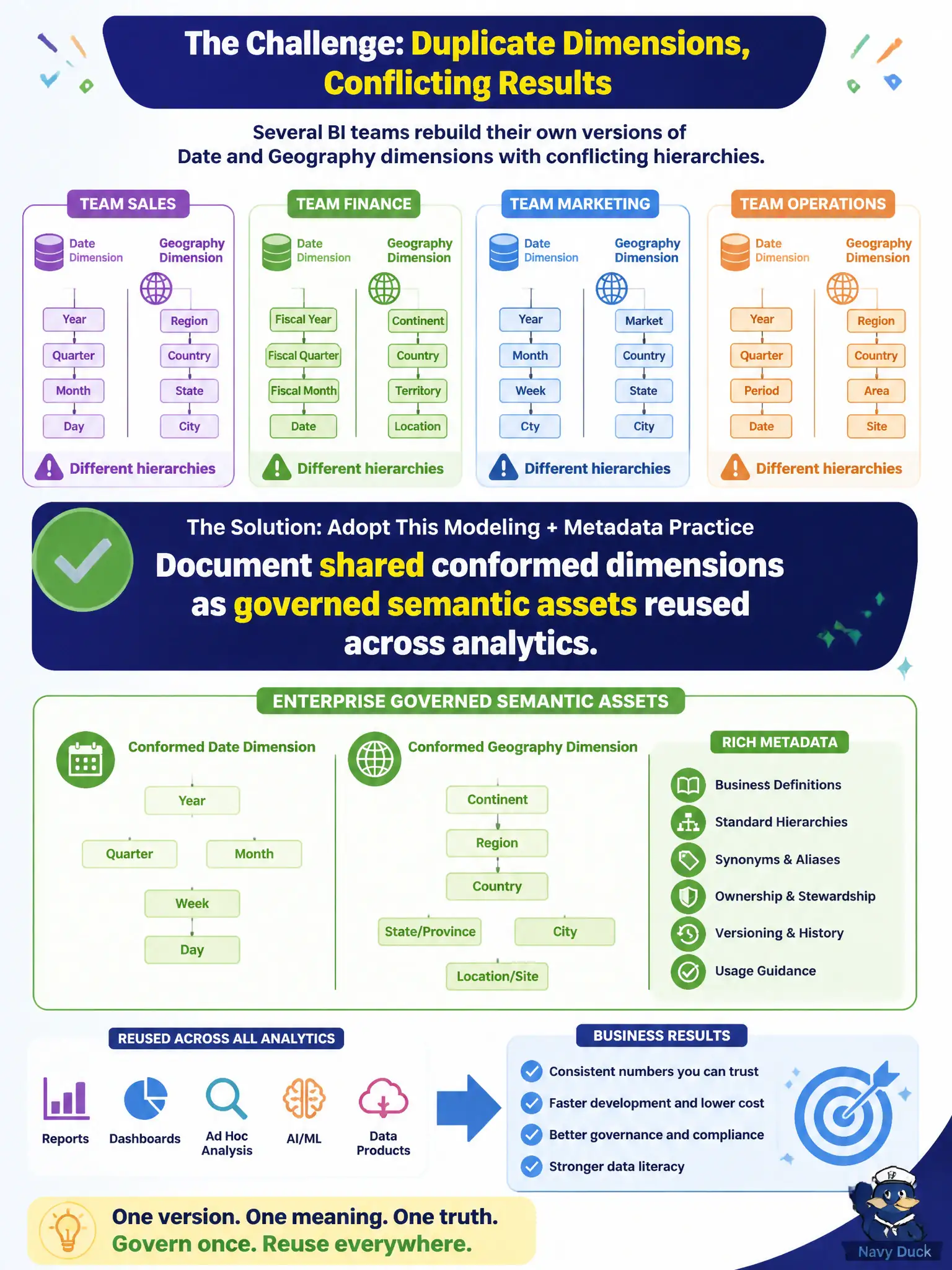
Several BI teams rebuild their own versions of Date and Geography dimensions with conflicting hierarchies. What modeling-plus-metadata practice should the enterprise adopt?
Select an answer to reveal the explanation.
Short Explanation
Conformed dimensions are the shared Legos everyone builds reports from—same Date, same Geography, same rules. Document them as governed semantic assets so teams stop carving private clones. Conflicting hierarchies make enterprise totals disagree.
Full Explanation
Conflicting private Date and Geography dimensions across BI teams fracture enterprise analytics. The enterprise should document shared conformed dimensions as governed semantic assets reused across analytics so hierarchies for civic geography and calendars align. Encouraging each team to keep private dimension clones forever guarantees mismatched counts. Prohibiting dimensional modeling so only flat extracts are allowed throws away useful analytic structure. Hiding dimension definitions from the catalog to reduce arguments removes the coordination mechanism. Exam language: conformed dimensions as governed semantic assets. Caveat: conformed does not mean one physical copy only—it means consistent meaning and hierarchies even when physically distributed. Operationally, publish official Date and Geography dimension specs in the catalog, require new marts to reuse them, migrate priority conflicting clones, and validate that cross-department dashboards now share hierarchy totals. When a new mart is proposed, require an architecture check that Date and Geography hierarchies match the published conformed specs before funding. Stewards should confirm consumer-facing behavior in a controlled check before closing the change.