
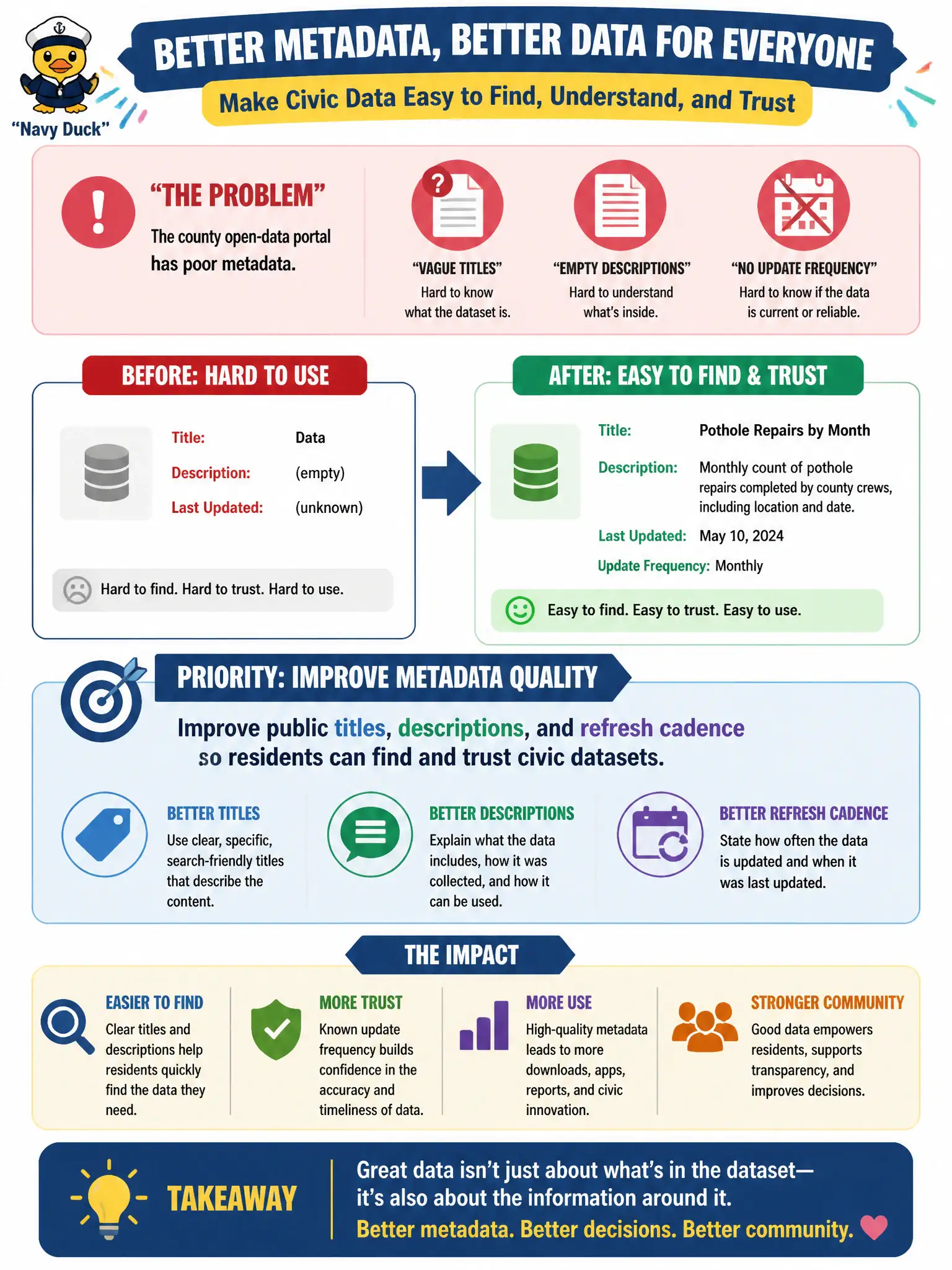
A county open-data portal publishes datasets with vague titles, empty descriptions, and no stated update frequency. What metadata quality concern should the portal owner prioritize?
Select an answer to reveal the explanation.
Short Explanation
Open data without clear titles and refresh notes is like a farmers market with blank signs—people walk away unsure what is fresh. Strong public metadata builds findability and civic trust. Vague or missing fields quietly erode both.
Full Explanation
Open-data portals are public metadata products. Vague titles, empty descriptions, and missing update frequency undermine resident trust and findability, so the portal owner should prioritize improving public titles, descriptions, and refresh cadence for civic datasets. Removing all metadata so downloads “feel faster” harms discovery and accountability. Replacing dataset pages with an unlabeled FTP directory of raw dumps is a regression to ungoverned publishing. Using only internal system IDs as titles discourages legitimate public use and obscures meaning. Exam emphasis is metadata quality for public civic consumption. Caveat: transparency still requires classification—do not “improve descriptions” by publishing sensitive fields that belong in restricted zones. Operationally, score portal entries for title clarity, description completeness, and stated refresh cadence; remediate high-traffic civic datasets first; and verify a resident can understand what the file contains and how old it is without calling city staff. Sample resident-facing portal pages quarterly with non-specialist reviewers to confirm titles and refresh statements remain understandable without staff interpretation.