
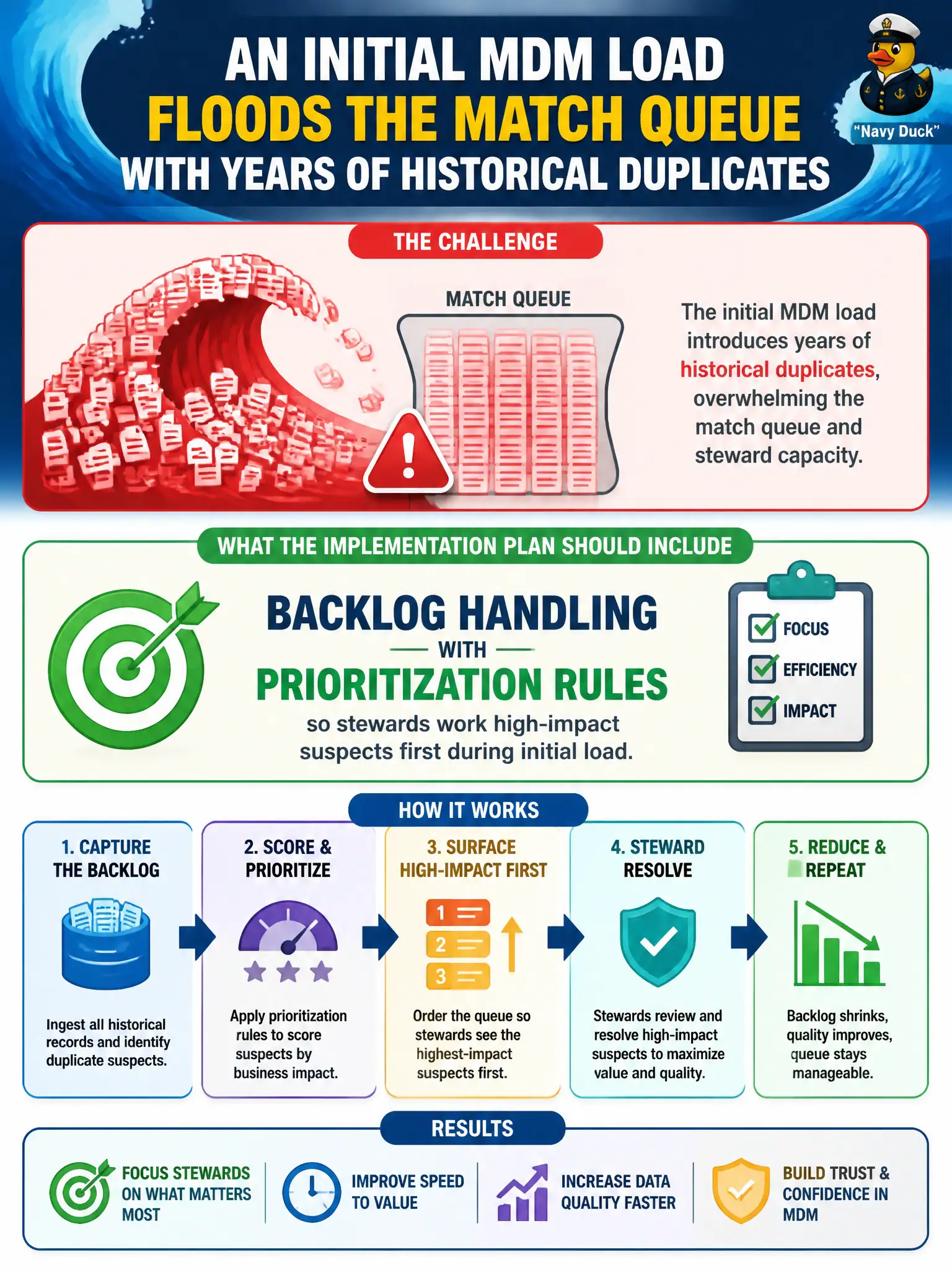
An initial MDM load floods the match queue with years of historical duplicates. What should the implementation plan include?
Select an answer to reveal the explanation.
Short Explanation
First loads dump a mountain of suspects on the desk. Plan the backlog and prioritize what matters—don’t auto-merge everything or throw history away.
Full Explanation
An initial MDM load that floods the match queue with years of historical duplicates needs backlog handling with prioritization rules so stewards work high-impact suspects first. Civic go-lives cannot pretend the queue is empty. Ignoring the queue and auto-merging every suspect at maximum fuzziness invites mass false positives. Halting the program until every historical row is manually typed twice is impractical paralysis. Deleting all historical sources so the queue stays empty destroys lineage and operational history. Exam caveat: initial-load backlog prioritization is a standard MDM implementation planning topic. Operational check: score suspects by citizen impact (payments, benefits, emergency contacts), clear high-impact first, track burn-down, and only then widen auto-merge bands carefully. Report backlog aging to the municipal steering committee so staffing matches queue reality. Keep verification evidence with the municipal runbook so audits can prove the chosen control was applied as designed and that rejected alternatives would have left city services exposed to the failure modes described above. Keep verification evidence with the municipal runbook so audits can prove the chosen control was applied as designed and that rejected alternatives would have left city services exposed to the failure modes described above.