
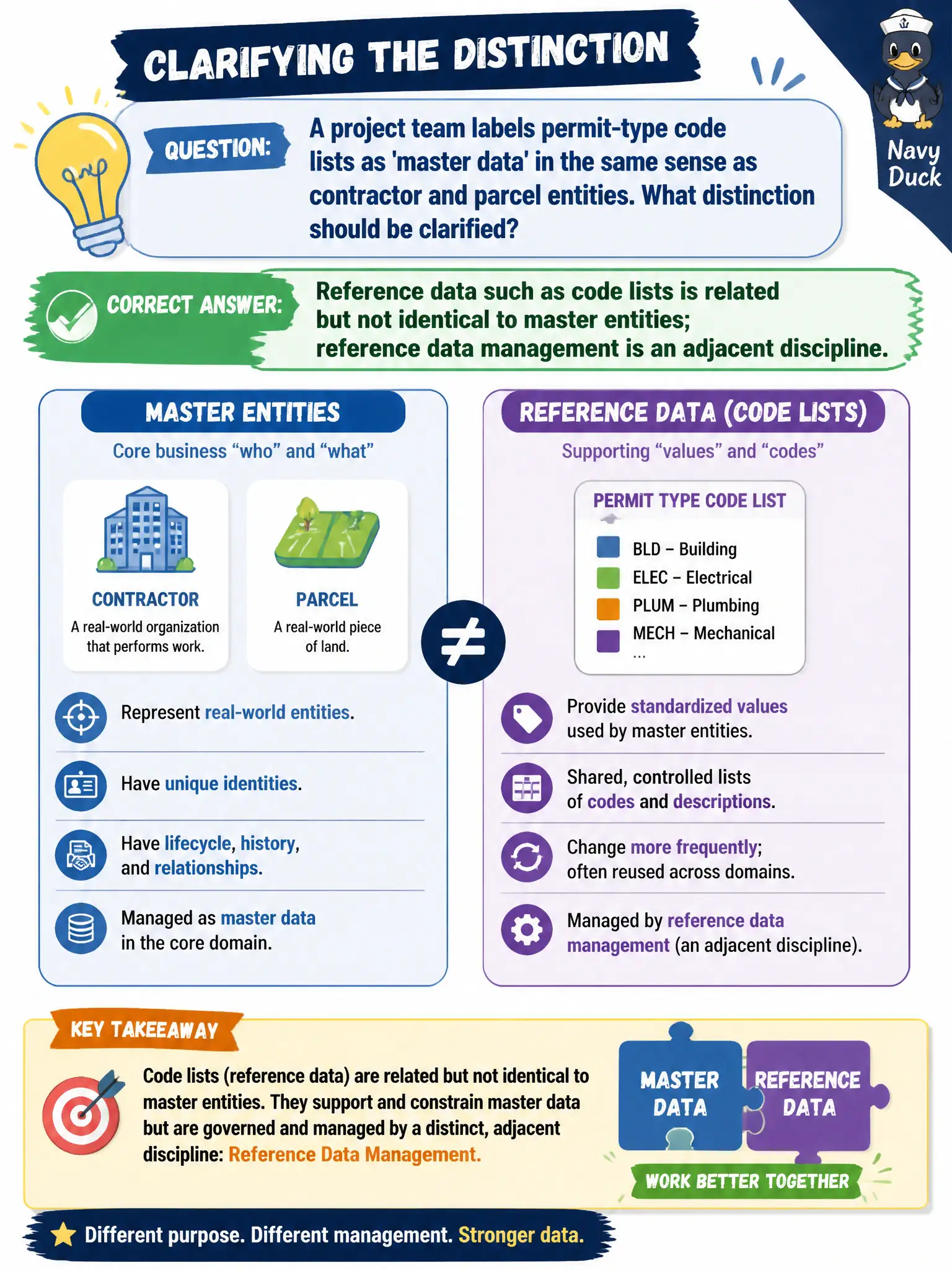
A project team labels permit-type code lists as 'master data' in the same sense as contractor and parcel entities. What distinction should be clarified?
Select an answer to reveal the explanation.
Short Explanation
Permit-type codes are the menu of allowed choices; the contractor and the parcel are the diners and the table. Related, yes—same dish, no. Reference data management sits next to MDM, not inside the same definition.
Full Explanation
Labeling permit-type code lists as ‘master data’ in the same sense as contractor and parcel entities needs clarification: reference data such as code lists is related but not identical to master entities; reference data management is an adjacent discipline. Codes classify and constrain; master entities identify real-world parties, places, and assets. Claiming code lists are transactional facts that must never be governed alongside master entities fails—reference data should be governed, just not conflated with master entities. Treating reference codes and master entities as synonyms in CIMP practice fails the distinction exams expect. Saying only free-text comments qualify as master data while structured codes are always metadata only fails on both sides of the definition. Exam caveat: master data vs reference data is a standard CIMP/MDM conceptual split—related, not identical. Operational check: govern permit-type codes under reference-data ownership and versioning, while contractor and parcel remain master domains with match and survivorship. Teach municipal project teams the vocabulary so architecture diagrams stop mislabeling every controlled list as “master data.” Keep verification evidence with the municipal runbook so audits can prove the chosen control was applied as designed and that rejected alternatives would have left city services exposed to the failure modes described above.