
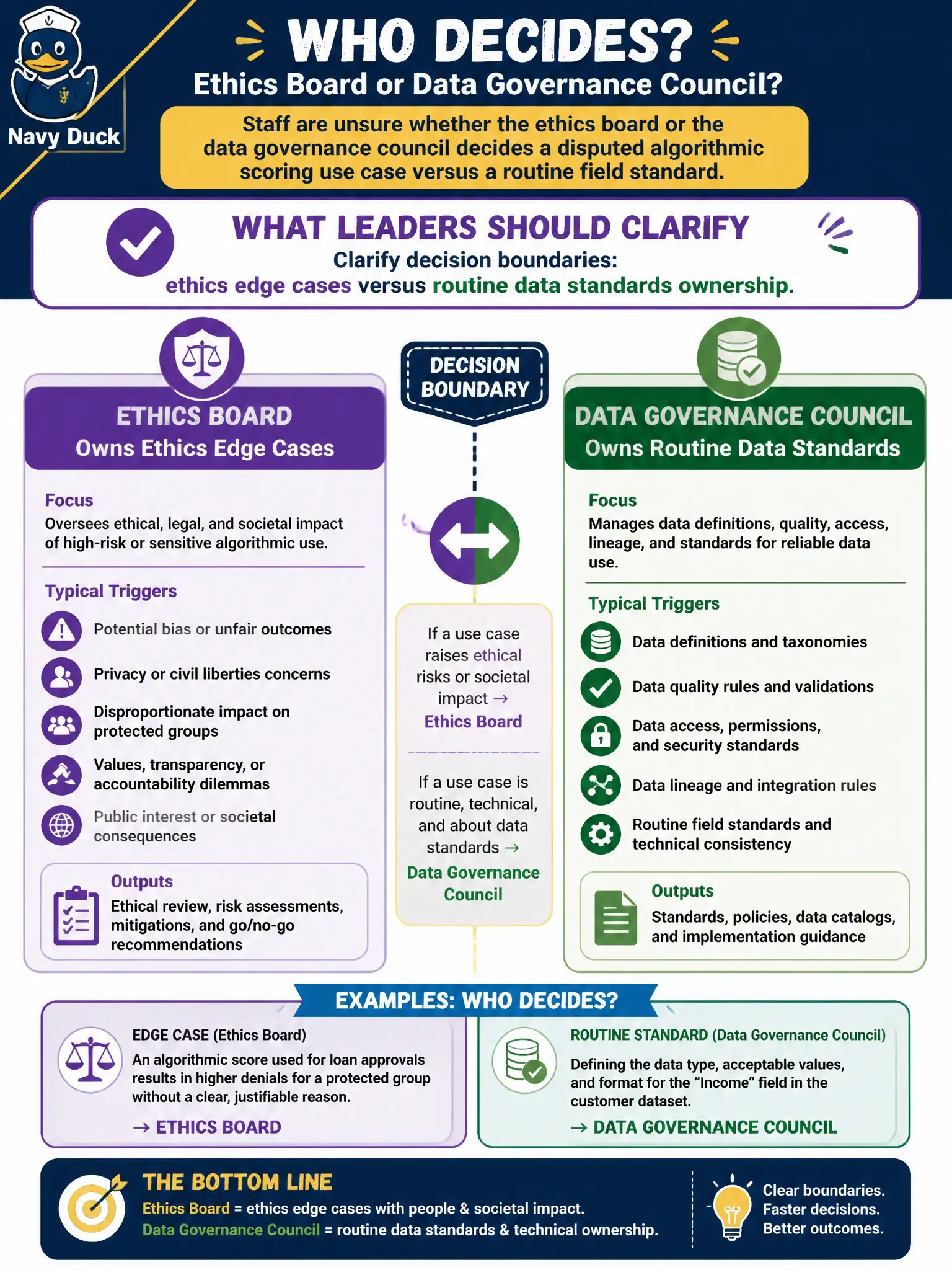
Staff are unsure whether the ethics board or the data governance council decides a disputed algorithmic scoring use case versus a routine field standard. What should leaders clarify?
Select an answer to reveal the explanation.
Short Explanation
Two committees grabbing the same steering wheel just causes swerving. Spell out who handles ethics edge cases and who owns everyday data standards so staff know which door to knock on.
Full Explanation
Staff uncertainty about whether the ethics board or the data governance council decides a disputed algorithmic scoring use case versus a routine field standard means leaders must clarify decision boundaries: ethics edge cases versus routine data standards ownership. Clear lanes prevent forum shopping and stalled civic decisions. Letting both bodies vote on every glossary synonym to maximize attendance fails by wasting specialized forums on low-stakes terminology and blurring accountability. Assigning all ethics and standards decisions exclusively to the procurement office fails because buying processes are not the right locus for meaning standards or algorithmic ethics. Avoiding written boundaries so either body can claim any issue fails by guaranteeing conflict and delay. Exam caveat: decision rights matrices (who decides what) are core operating-model content on governance exams. Operational check: publish a simple decision boundary table—routine standards to the data council, high-impact algorithmic ethics to the ethics board with DG input—and test it on one live disputed use case. File the clarification with both charters so municipal staff know the correct door on the first try.