
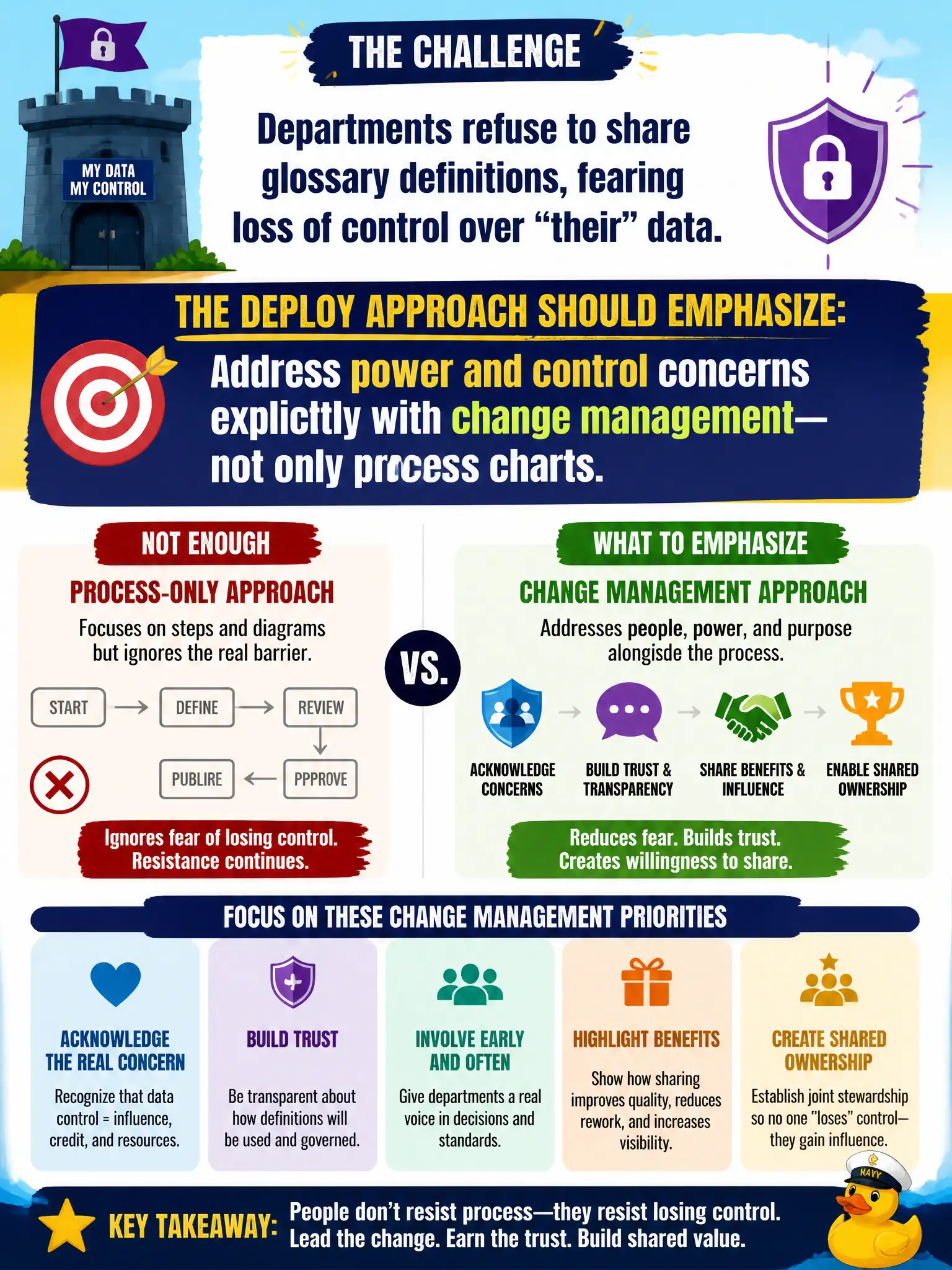
Departments refuse to share glossary definitions, fearing loss of control over “their” data. What should the deploy approach emphasize?
Select an answer to reveal the explanation.
Short Explanation
People dig in when they think sharing means surrendering the steering wheel. Name that fear, show what stays local, and negotiate the win—process diagrams alone will not dissolve politics.
Full Explanation
When departments refuse to share glossary definitions for fear of losing control over “their” data, deployment must address power and control concerns explicitly with change management—not only process charts. Civic glossary programs succeed when leaders acknowledge identity and authority fears and redesign incentives and decision rights accordingly. Forcing overnight consolidation of all definitions without stakeholder engagement fails by triggering resistance and shadow glossaries. Ignoring resistance because technical schemas will settle disputes automatically fails because schemas do not resolve political ownership or business meaning conflicts. Hiding the glossary project until go-live to avoid early objections fails by ambushing stakeholders and destroying trust needed for adoption. Exam caveat: governance deployment is a change program; political dynamics are in scope, not a soft afterthought. Operational check: map stakeholders and control fears, co-design domain decision rights, run facilitated conflict sessions, and publish how local terms map to enterprise terms without erasing necessary domain nuance. Measure glossary adoption by use in municipal projects, not by whether a PDF was emailed once.