
A county analytics team wants flexible landing of raw operational extracts plus trusted curated tables for official dashboards. Which layered pattern best describes that mediate approach?
Select an answer to reveal the explanation.
Short Explanation
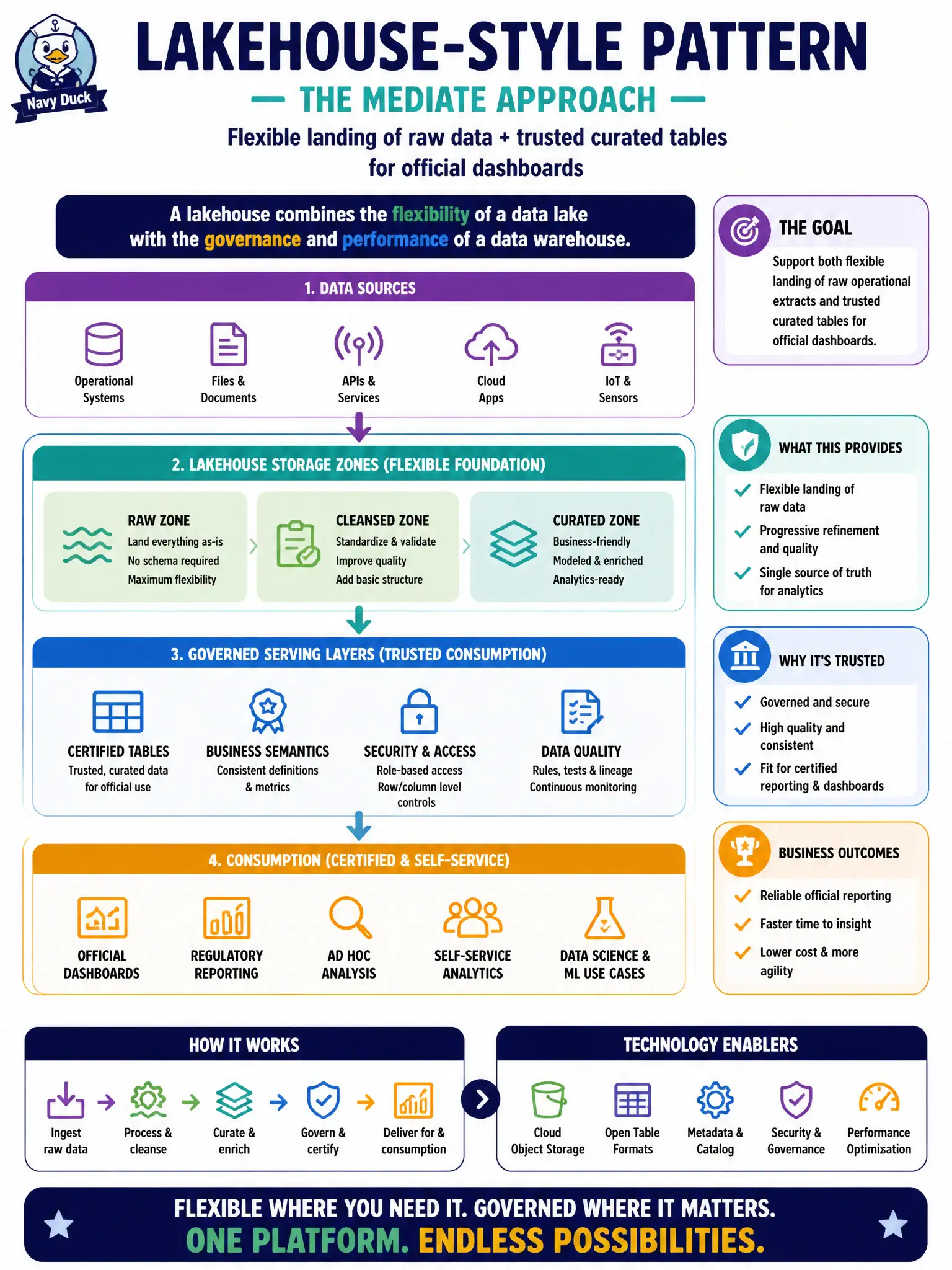
Raw zone for the messy incoming trucks; curated zone for what leadership can trust on stage. That layered lakehouse-style idea keeps flexibility and governance from fighting each other.
Full Explanation
A mediate analytics architecture for county operations typically separates flexible raw landing zones from governed serving layers used for certified consumption—the lakehouse-style pattern. Raw or bronze-style zones absorb operational extracts with minimal friction so lineage and reprocessing remain possible, while curated silver/gold or semantic serving layers enforce quality, standardized definitions, access controls, and certification before dashboards drive official decisions. That separation lets exploration and official briefing packs coexist without pretending every landing table is decision-grade. Collapsing analytics into a single transactional OLTP database that also serves citizen-facing transactions unchanged mixes workload profiles, risks locking and capacity contention, and rarely provides zone discipline or certified semantics. A spreadsheet folder on a shared drive with no zones, lineage, or serving standards recreates shadow IT analytics that cannot support auditability or reproducible official metrics. An email inbox of pasted screenshots is not an architecture: it destroys freshness, lineage, and access control. Exam caveat: “lakehouse” here is a layered mediate pattern, not a mandate to buy a specific vendor; the exam tests zone discipline and governed consumption, not product names. Operational check: label datasets by zone and certification status, block council-facing dashboards from reading unlabeled raw tables, and require promotion criteria (quality rules, steward sign-off, semantic registration) before a metric enters the certified serving layer.