
Departmental marts each define ‘open case’ differently, breaking enterprise performance reporting. What analytic architecture response is appropriate?
Select an answer to reveal the explanation.
Short Explanation
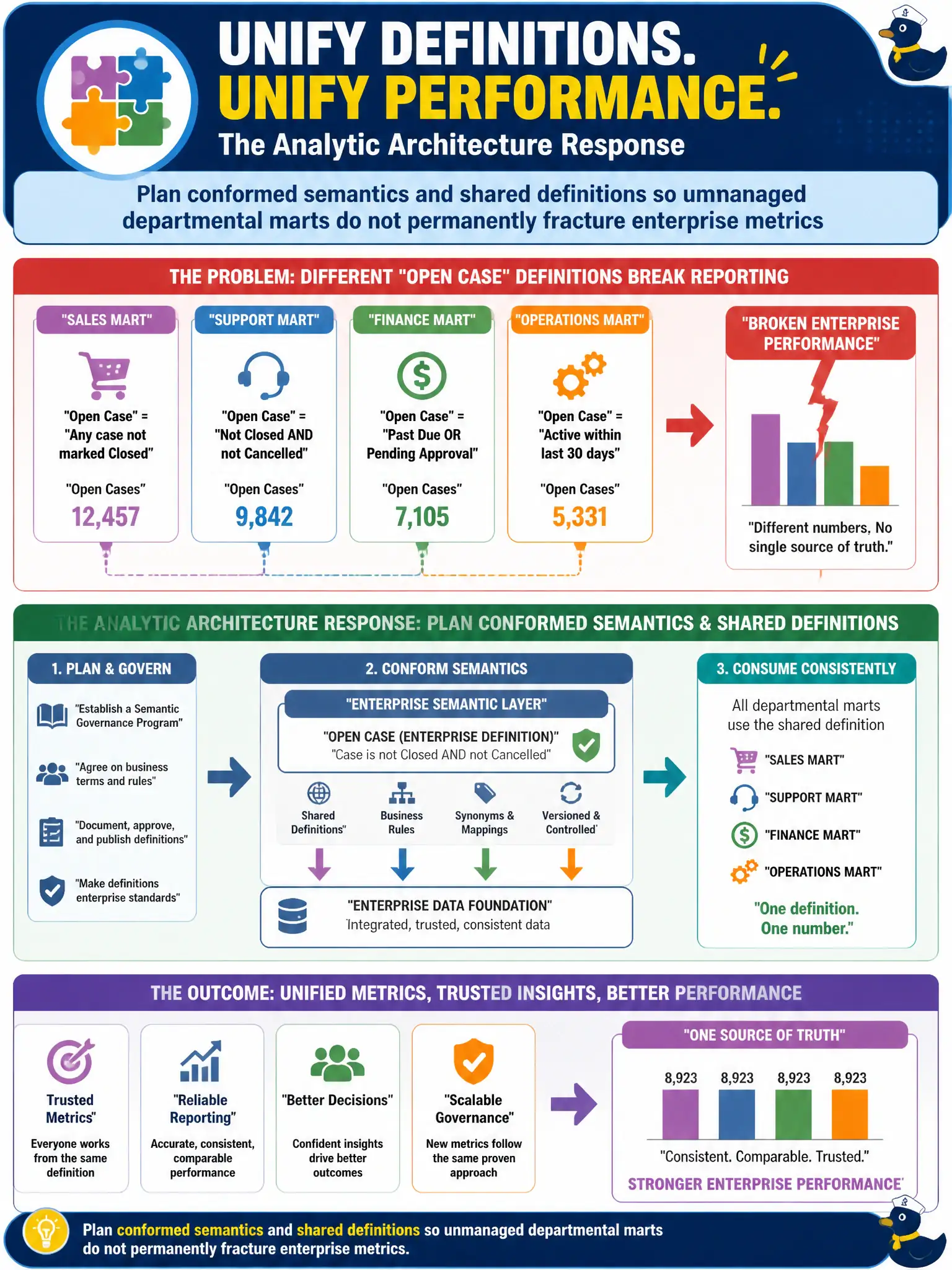
If every department invents its own meaning of ‘open,’ the citywide scoreboard is fiction. Conformed semantics—shared definitions—glue analytic marts together so enterprise reports mean one thing.
Full Explanation
Departmental marts that each define “open case” differently break enterprise performance reporting. Analytic architecture should plan conformed semantics and shared definitions so unmanaged marts do not permanently fracture enterprise metrics. Celebrating metric conflict as creativity excuses bad interoperability. Prohibiting enterprise reporting so siloed marts remain authoritative abandons leadership visibility. Adding more unmanaged marts whenever dashboards disagree worsens the fracture. Exam response: conformed semantics across analytic structures. Caveat: departmental marts can remain for local needs if they map to enterprise definitions for shared metrics rather than inventing peer “official” meanings. Operationally, establish the enterprise definition of open case, require marts contributing to enterprise reports to conform, and validate that cross-department case counts reconcile within agreed tolerances. Reconcile enterprise open-case totals to conforming marts monthly and treat persistent breaks as semantic defects, not dashboard styling issues. Enterprise performance reports should cite the conformed definition identifier for open case, making unmanaged mart semantics easy to spot when totals disagree.