
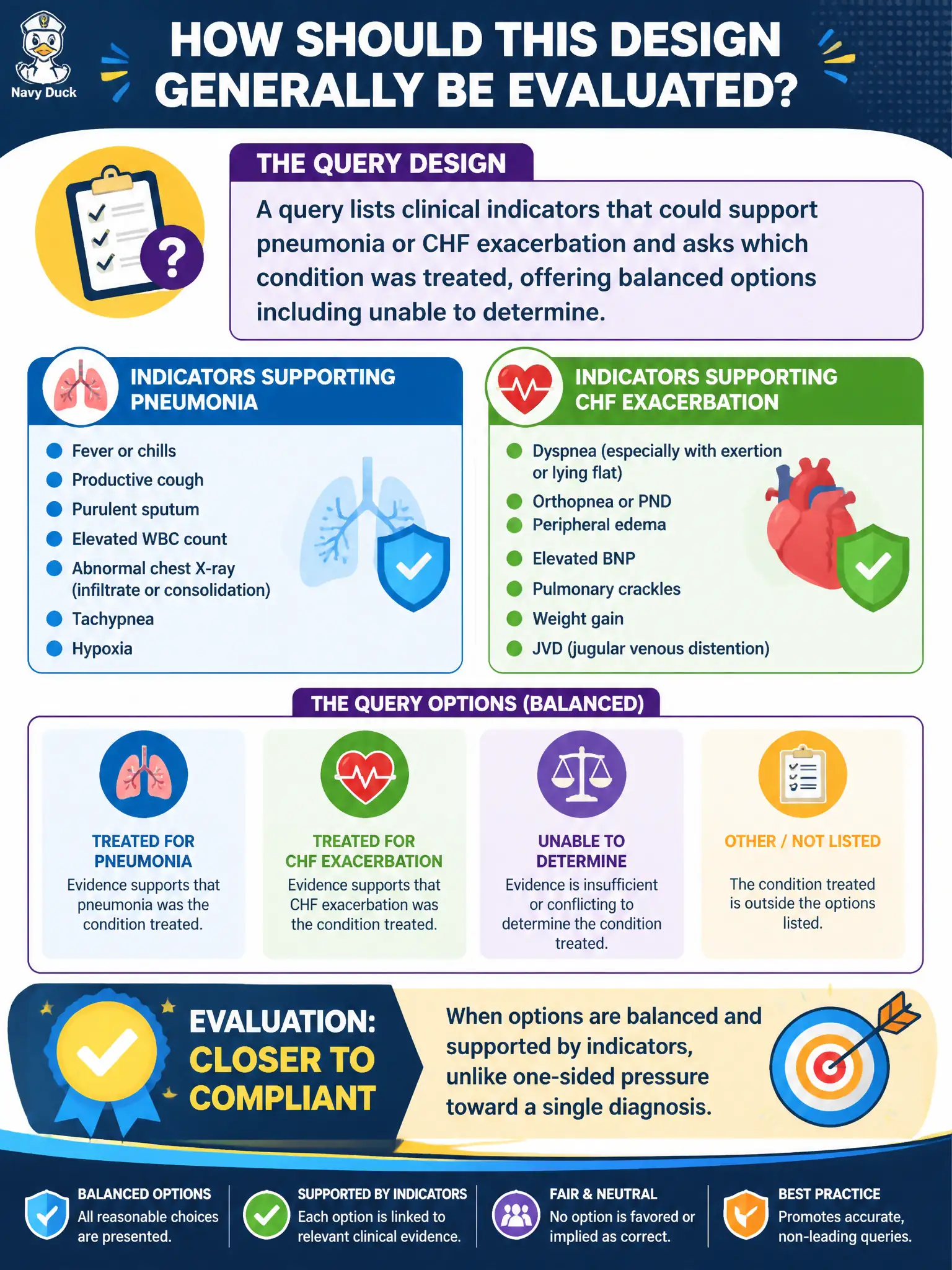
A query lists clinical indicators that could support pneumonia or CHF exacerbation and asks which condition was treated, offering balanced options including unable to determine. How should this design generally be evaluated?
Select an answer to reveal the explanation.
Short Explanation
When the chart could go either way, a balanced question with real options is the fair approach. Indicators plus even-handed choices beat one-sided pressure. That’s closer to compliant design.
Full Explanation
A query that lists clinical indicators supporting pneumonia or CHF exacerbation and asks which condition was treated, offering balanced options including unable to determine, is generally closer to compliant design than one-sided pressure toward a single diagnosis. Balanced, indicator-based options acknowledge legitimate diagnostic uncertainty and ask the provider to clarify what was actually treated during the civic hospital stay. The design is not automatically noncompliant merely because two diagnoses are mentioned; contrasting clinically reasonable possibilities is often necessary. Preferring the higher-paying diagnosis in bold as a condition of compliance inverts ethics into payment steering. Requiring the query to state the expected DRG would make the tool noncompliant, not compliant. Exam caveat: still ensure indicators truly appear in this patient's record and that options are not skewed by omitting reasonable alternatives. Operational check for civic CDI: verify each cited indicator in the chart, keep options balanced, omit financial language, and document the authenticated response in the permanent query record. This discipline protects patients, supports accurate public reporting for municipal hospitals, and keeps the coded abstract defensible when auditors compare codes to the authenticated record.