
When designing a multiple-choice provider query, which option design best supports a non-leading, ethical query?
Select an answer to reveal the explanation.
Short Explanation
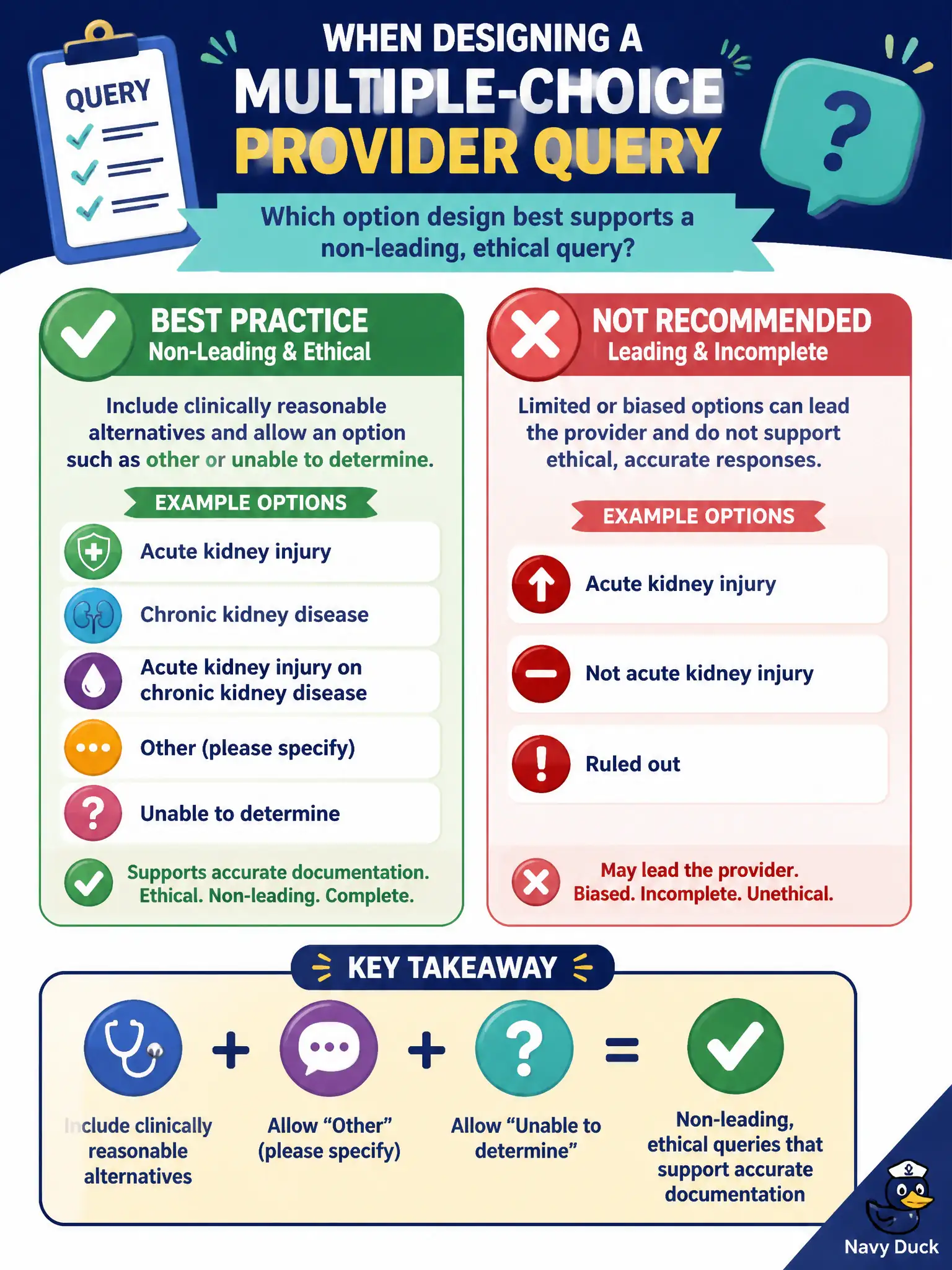
Multiple-choice queries need real exits—not a maze that funnels to one lucrative diagnosis. Put reasonable clinical choices on the table, plus “other/unable to determine.” That keeps the query from leading.
Full Explanation
Multiple-choice provider queries support ethical clarification when they include clinically reasonable alternatives and allow an option such as other or unable to determine. Balanced choices reduce leading pressure and acknowledge diagnostic uncertainty that may legitimately remain after chart review. Offering only the single highest-severity diagnosis as a choice skews the provider toward a reimbursement outcome and is a hallmark of noncompliant design. Listing two payment-advantaged options while omitting other clinically reasonable alternatives is similarly biased against accurate documentation. Forcing selection of one named diagnosis with no escape option coerces documentation rather than clarifying it. Exam caveat: yes/no formats are narrower and are appropriate only for limited true binary clinical questions—not as a workaround to force a profitable diagnosis name. Operational check for civic CDI programs: draft options that mirror the indicators actually in the record, include an uncertainty pathway, remove payment language, and peer-review the query before it reaches the attending. This discipline protects patients, supports accurate public reporting for municipal hospitals, and keeps the coded abstract defensible when auditors compare codes to the authenticated record.