
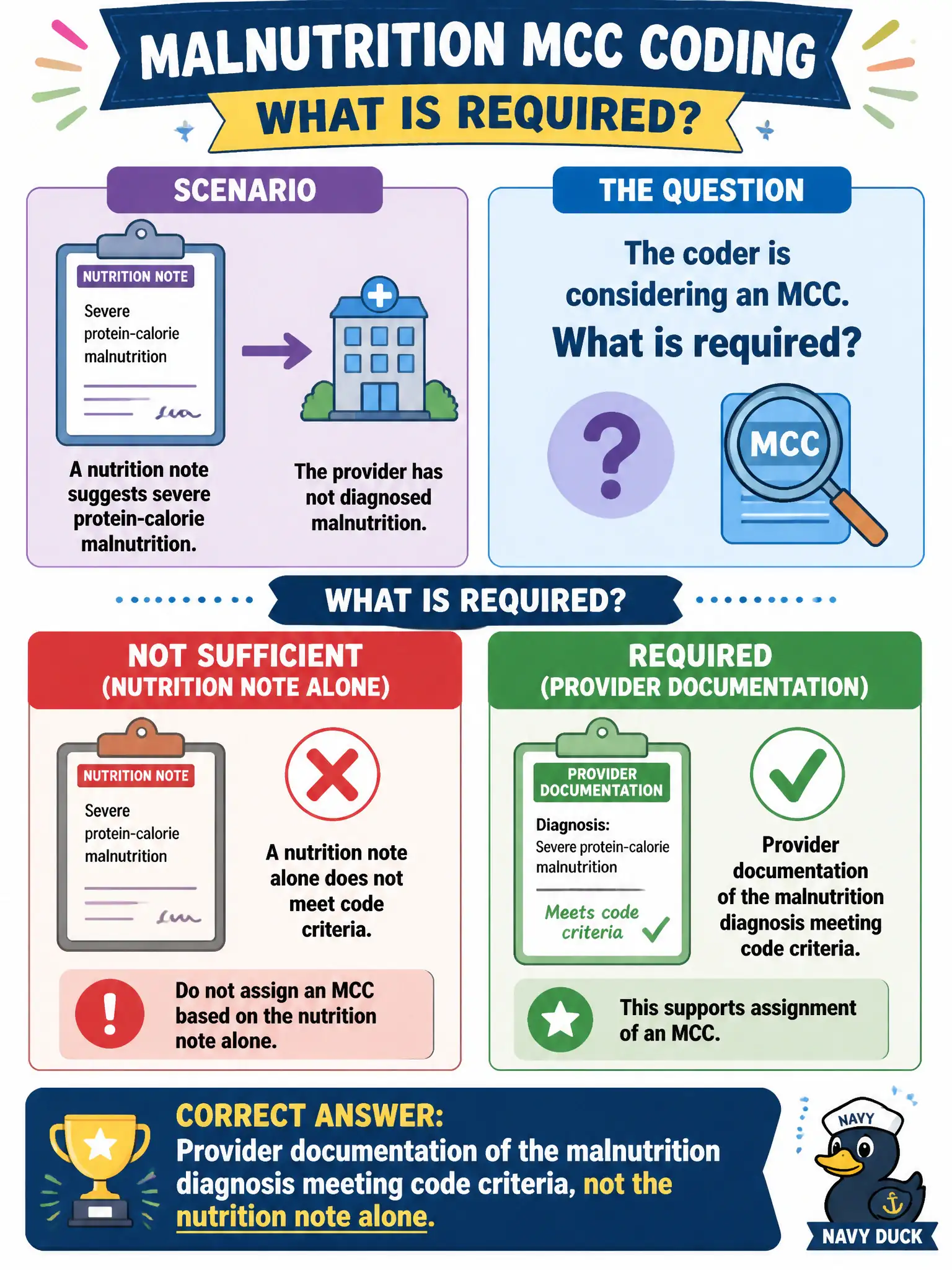
A nutrition note suggests severe protein-calorie malnutrition, but the provider has not diagnosed malnutrition. The coder is considering an MCC. What is required?
Select an answer to reveal the explanation.
Short Explanation
Nutrition notes can wave a big flag, but the provider still has to call the play. For a high-impact malnutrition MCC, you need a provider diagnosis that meets the criteria—not the dietitian note by itself.
Full Explanation
When a nutrition note suggests severe protein-calorie malnutrition but the provider has not diagnosed malnutrition and the coder is considering an MCC, what is required is provider documentation of the malnutrition diagnosis meeting code criteria—not the nutrition note alone. High-impact MCC capture at county hospitals must remain provider-authenticated. Coding severe malnutrition from the nutrition assessment because dietitians stage malnutrition independently for MS-DRG fails typical facility coding practice requiring provider diagnosis. Automatic MCC assignment whenever a nutrition note mentions “severe” fails as word-triggered upcoding. Omitting malnutrition permanently if nursing did not also document it fails when a later provider diagnosis meets criteria regardless of nursing silence. Exam caveat: nutrition notes supply indicators and query opportunities; provider documentation supports the MCC code. Operational check: use dietitian findings as query evidence on the municipal account, obtain provider diagnosis and severity, then code; never auto-MCC from “severe” alone. Track malnutrition CDI yield ethically for civic case-mix accuracy. In municipal and county facility practice, record the rationale for the chosen coding path and the rejected alternatives in the abstract notes so auditors and future coders understand the clinical and compliance basis. Re-check the decision if new authenticated documentation arrives before final bill drop, and escalate persistent documentation gaps to CDI or compliance rather than normalizing unsupported shortcuts that would distort civic claims, quality metrics, or case-mix reporting.