
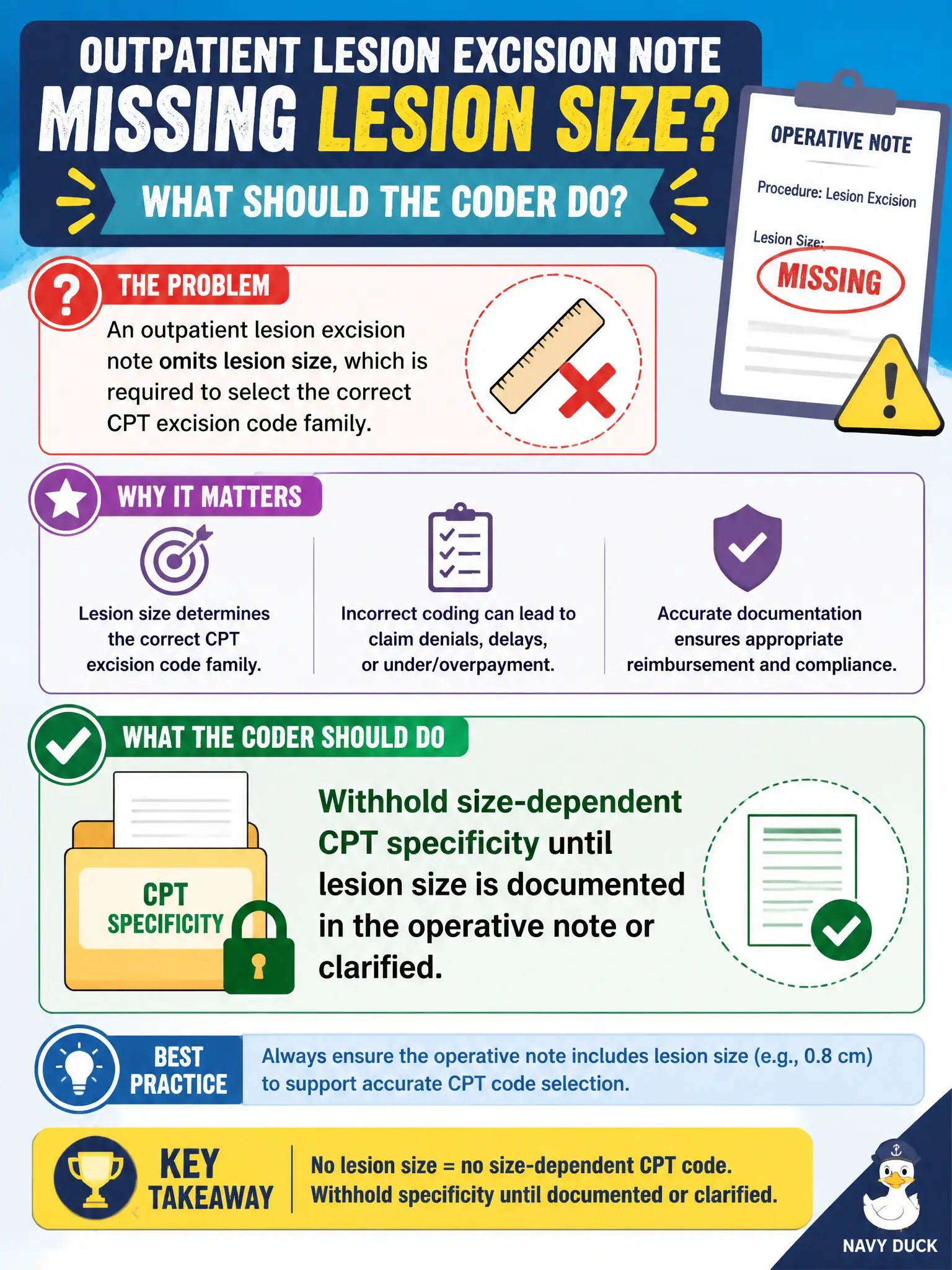
An outpatient lesion excision note omits lesion size, which is required to select the correct CPT excision code family. What should the coder do?
Select an answer to reveal the explanation.
Short Explanation
Lesion excision CPT codes care about centimeters, not vibes. If the op note forgot the size, do not eyeball pathology or pick the biggest code—get the measurement documented first.
Full Explanation
When an outpatient lesion excision note omits lesion size required to select the correct CPT excision code family, the coder should withhold size-dependent CPT specificity until lesion size is documented in the operative note or clarified. Size is a coding essential for many excision families in county ambulatory surgery. Estimating size from pathology specimen measurements fails as a substitute for the documented excised diameter in the operative documentation. Assigning the highest-level excision code to avoid undercoding fails as upcoding without size support. Coding only a biopsy CPT because size is missing improperly changes the service identity when an excision was performed but size was omitted. Exam caveat: missing size blocks size-dependent CPT selection; clarify rather than estimate, maximize, or convert to biopsy. Operational check: query the surgeon at the municipal outpatient OR for lesion size (and margins as required), update the operative note, then assign the correct excision CPT. Educate providers that centimeters must appear in the op note for compliant civic outpatient coding. In municipal and county facility practice, record the rationale for the chosen coding path and the rejected alternatives in the abstract notes so auditors and future coders understand the clinical and compliance basis. Re-check the decision if new authenticated documentation arrives before final bill drop, and escalate persistent documentation gaps to CDI or compliance rather than normalizing unsupported shortcuts that would distort civic claims, quality metrics, or case-mix reporting.