
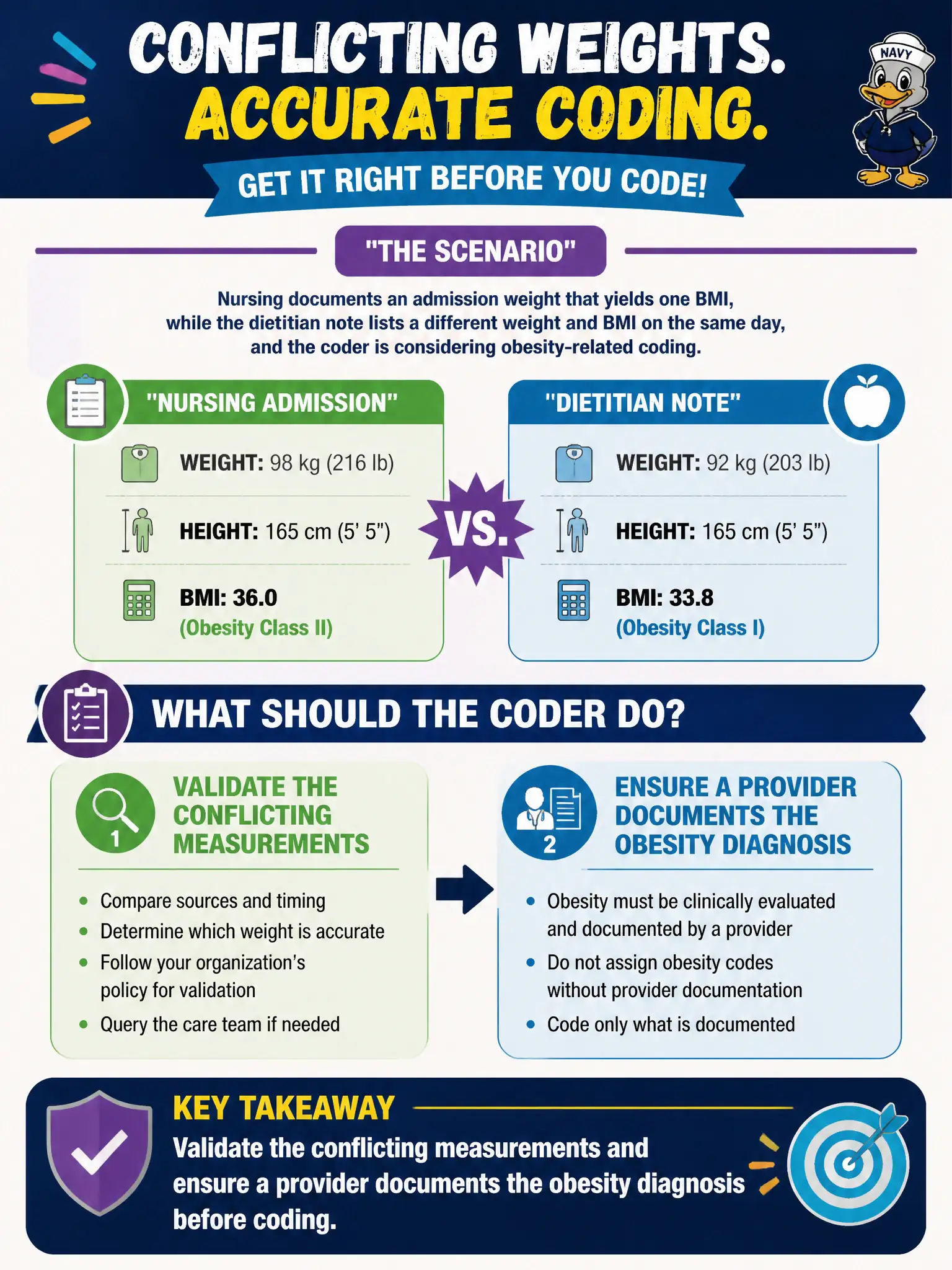
Nursing documents an admission weight that yields one BMI, while the dietitian note lists a different weight and BMI on the same day, and the coder is considering obesity-related coding. What should the coder do?
Select an answer to reveal the explanation.
Short Explanation
Two scales telling two stories is a yellow flag, not a math problem. Confirm which measurement is right, and remember BMI alone is not a free pass—obesity still needs provider documentation when you code it.
Full Explanation
When nursing documents an admission weight yielding one BMI while the dietitian note lists a different weight and BMI on the same day, and obesity-related coding is under consideration, the coder should validate the conflicting measurements and ensure a provider documents the obesity diagnosis before coding. Civic abstracts must not invent obesity severity from conflicting ancillary numbers. Averaging the two BMI values and assigning the obesity class that matches the average fails quantitative reconciliation standards. Coding obesity from the dietitian BMI alone because nutrition notes are always authoritative fails when provider diagnosis is typically required and values conflict. Ignoring both values and omitting any weight-related documentation fails when a supported obesity diagnosis and reconciled BMI could be reportable. Exam caveat: resolve BMI conflicts and pair BMI additional codes with provider overweight/obesity diagnosis per guidelines. Operational check: validate weights/BMI sources under municipal policy, query for obesity diagnosis when indicators exist, code BMI only with appropriate diagnosis support, and avoid averaged or unsupported obesity-class assignment from nutrition data alone.