
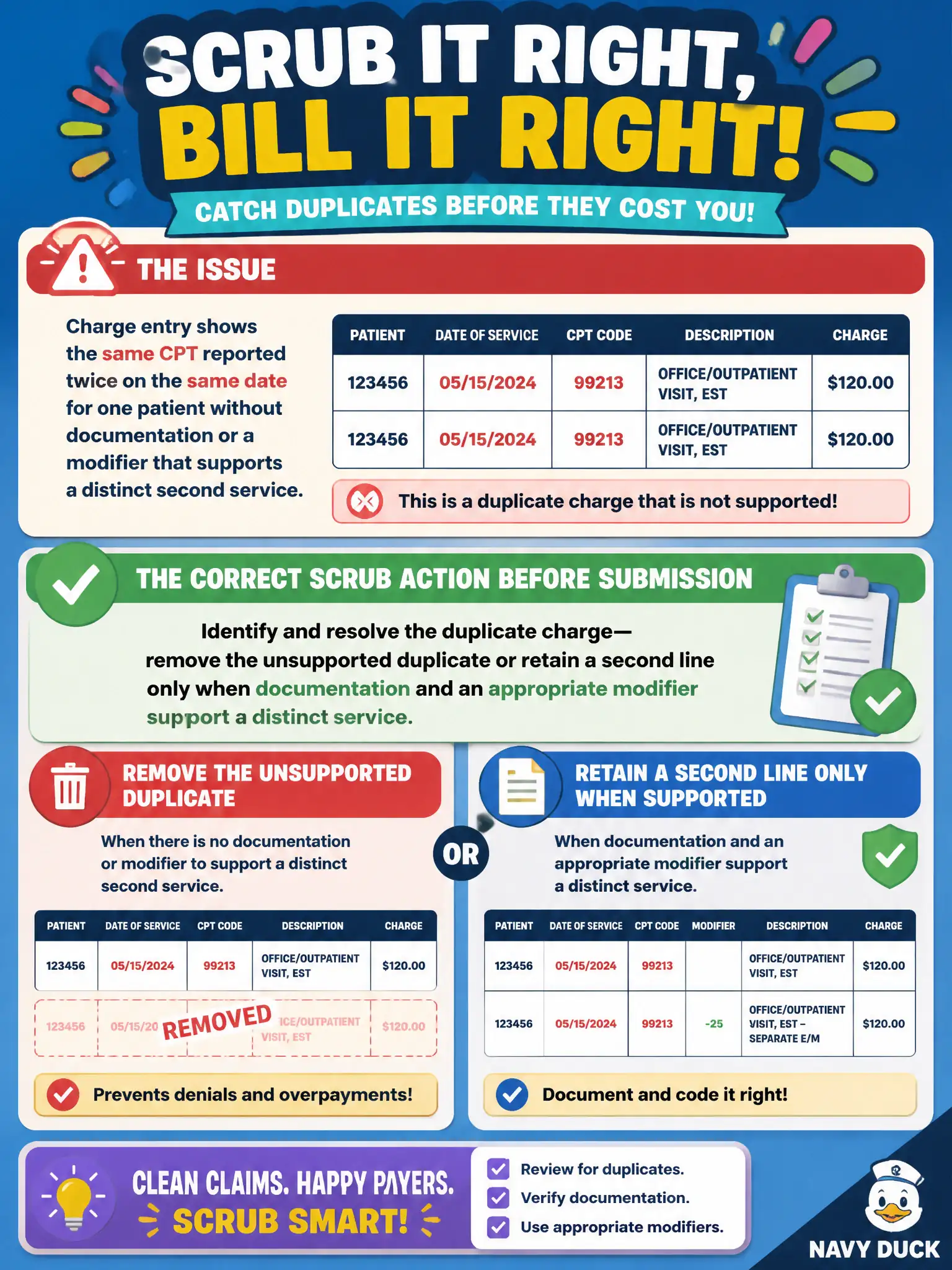
Charge entry shows the same CPT reported twice on the same date for one patient without documentation or a modifier that supports a distinct second service. What is the correct scrub action before submission?
Select an answer to reveal the explanation.
Short Explanation
Two identical CPT lines on the same day without a story look like a double-tap on the charge button. Scrub it: either delete the accidental twin or prove a truly separate service with documentation and the right modifier. Shipping duplicates “to see what happens” just trains denials.
Full Explanation
Duplicate CPT lines on the same date for one patient without documentation or a modifier supporting a distinct second service are a classic scrub target. The correct action is to identify and resolve the duplicate—remove the unsupported twin or retain a second line only when documentation and an appropriate modifier support a distinct service. Civic outpatient revenue integrity depends on stopping accidental double charges before they become denials or overpayments.
Submitting both lines unchanged so the payer’s duplicate edit can decide fails by concept because providers are responsible for clean claims, not outsourcing integrity to denial engines. Automatically appending modifier 59 to every duplicate without record review fails because 59 is not a universal duplicate eraser and misuse is a compliance risk. Changing the second line’s date of service by one day to bypass edits fails because falsifying dates is abusive billing.
Exam caveat: distinct procedural services, bilateral reporting, and repeat procedures each have specific modifier and documentation rules—apply the matching construct, not a generic 59 habit. Operational check: same-day same-CPT edits should force chart review; delete keystroke duplicates and keep true second services only with supporting documentation and modifiers.