
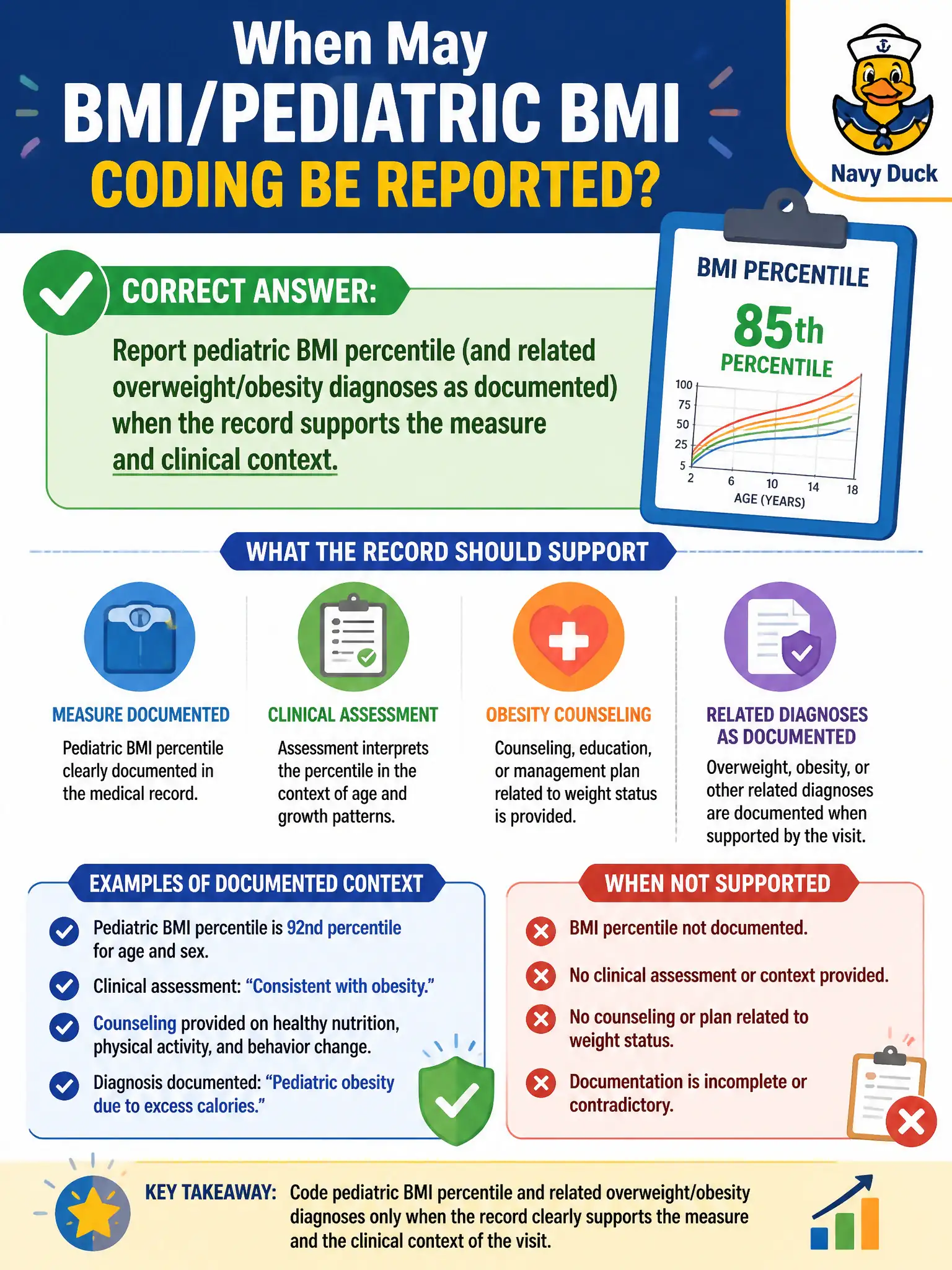
A school-based clinic documents a pediatric BMI percentile and provides obesity counseling based on that measure and clinical assessment. When may BMI/pediatric BMI coding be reported?
Select an answer to reveal the explanation.
Short Explanation
Kids get BMI-for-age percentiles, not the adult BMI number game. If the clinic documented the percentile and is counseling on obesity/weight, you can report those Z-BMI and related diagnosis concepts the note supports.
Full Explanation
ICD-10-CM includes BMI and pediatric BMI percentile codes reportable when a documented measure and associated clinical context are present. When a school-based clinic documents a pediatric BMI percentile and provides obesity counseling based on that measure and clinical assessment, report pediatric BMI percentile and related overweight or obesity diagnoses as documented. Never reporting BMI-related codes on professional claims because they are inpatient quality only fails; these codes are valid on ambulatory professional claims when supported. Inventing an adult BMI code for every child fails because pediatric coding uses BMI-for-age percentile concepts, not adult BMI value codes. Coding BMI only when no counseling or assessment is documented is backwards: reporting is strongest when the measure and clinical context such as counseling appear in the record, not when clinical work is absent. Exam caveat: associate obesity or overweight diagnosis codes when the provider documents those conditions; BMI Z-codes alone may not fully describe the clinical problem being managed. Operational check in civic school-based clinics: capture the documented percentile, use pediatric—not adult—BMI coding, add overweight or obesity if stated, and confirm counseling or clinical relevance in the note.