
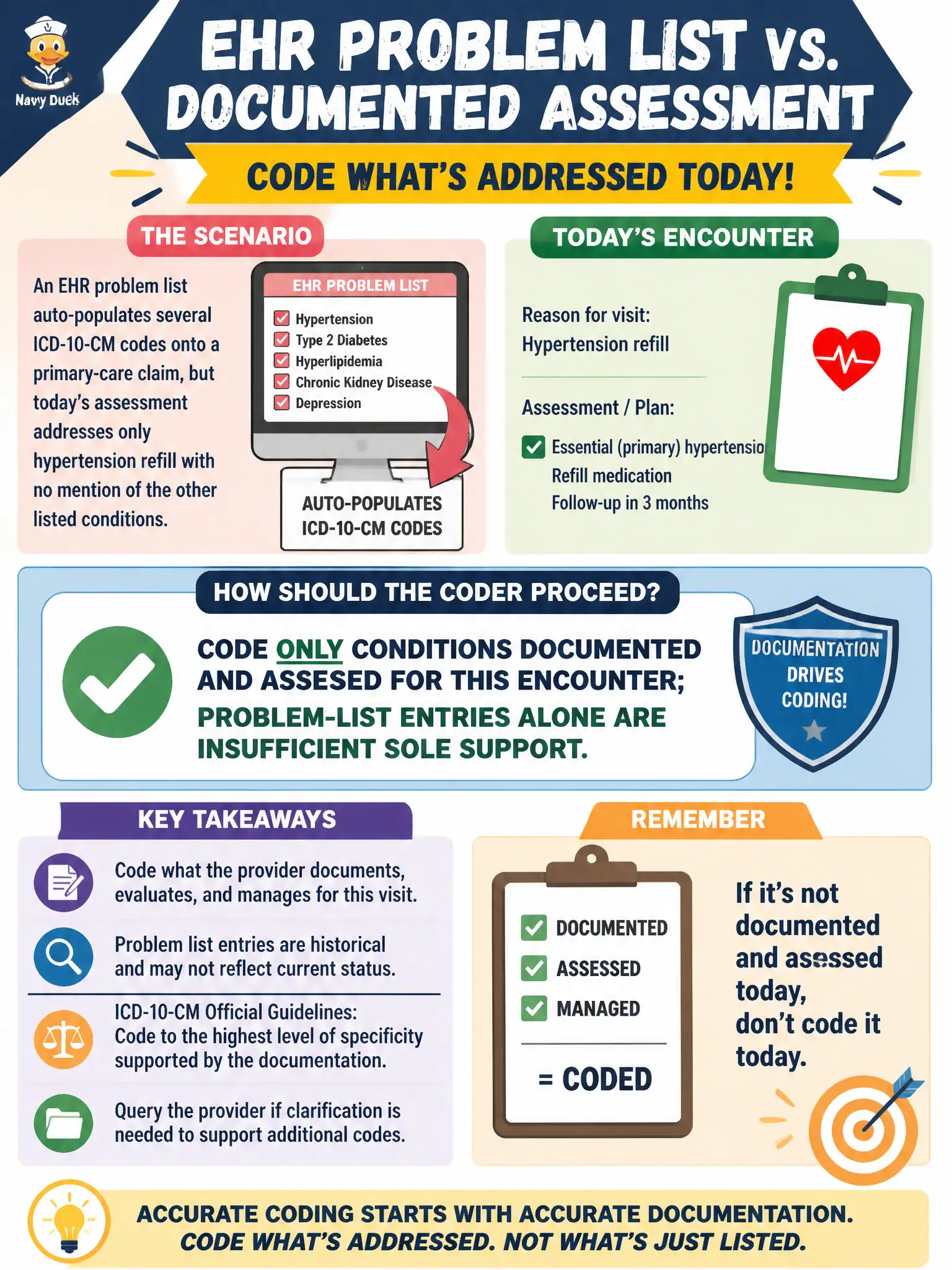
An EHR problem list auto-populates several ICD-10-CM codes onto a primary-care claim, but today's assessment addresses only hypertension refill with no mention of the other listed conditions. How should the coder proceed?
Select an answer to reveal the explanation.
Short Explanation
A problem list is like a pantry inventory—what's on the shelf isn't necessarily what you cooked today. For this visit, code what the clinician actually assessed and managed, not every leftover code the EHR auto-sprinkled onto the claim.
Full Explanation
Encounter diagnoses for physician billing must be supported by documentation of conditions addressed or assessed at that visit. Auto-populated problem-list codes without corresponding assessment, plan, or other clinician endorsement for the encounter do not substantiate reporting those diagnoses. When a primary-care civic clinic claim is flooded with problem-list ICD-10-CM codes but today’s assessment addresses only hypertension refill, the coder reports only conditions documented and assessed for this encounter. Billing every auto-populated problem-list code because the EHR selected them fails human coding responsibility. Reporting all chronic problem-list diagnoses to maximize HCC capture regardless of today’s assessment fails risk-adjustment integrity expectations that require encounter support. Converting all problem-list entries to “history of” codes without reading the assessment fails because status/history coding still requires documentation support and correct concept selection. Exam caveat: addressed chronic conditions may be reported even in brief refill visits when the note shows management—but list presence alone is not management. Operational check: strip unscored problem-list auto-codes, keep hypertension (and any truly addressed conditions), disable claim auto-add from problem list in the county EHR billing map, and educate providers to pull forward only conditions they manage today.