
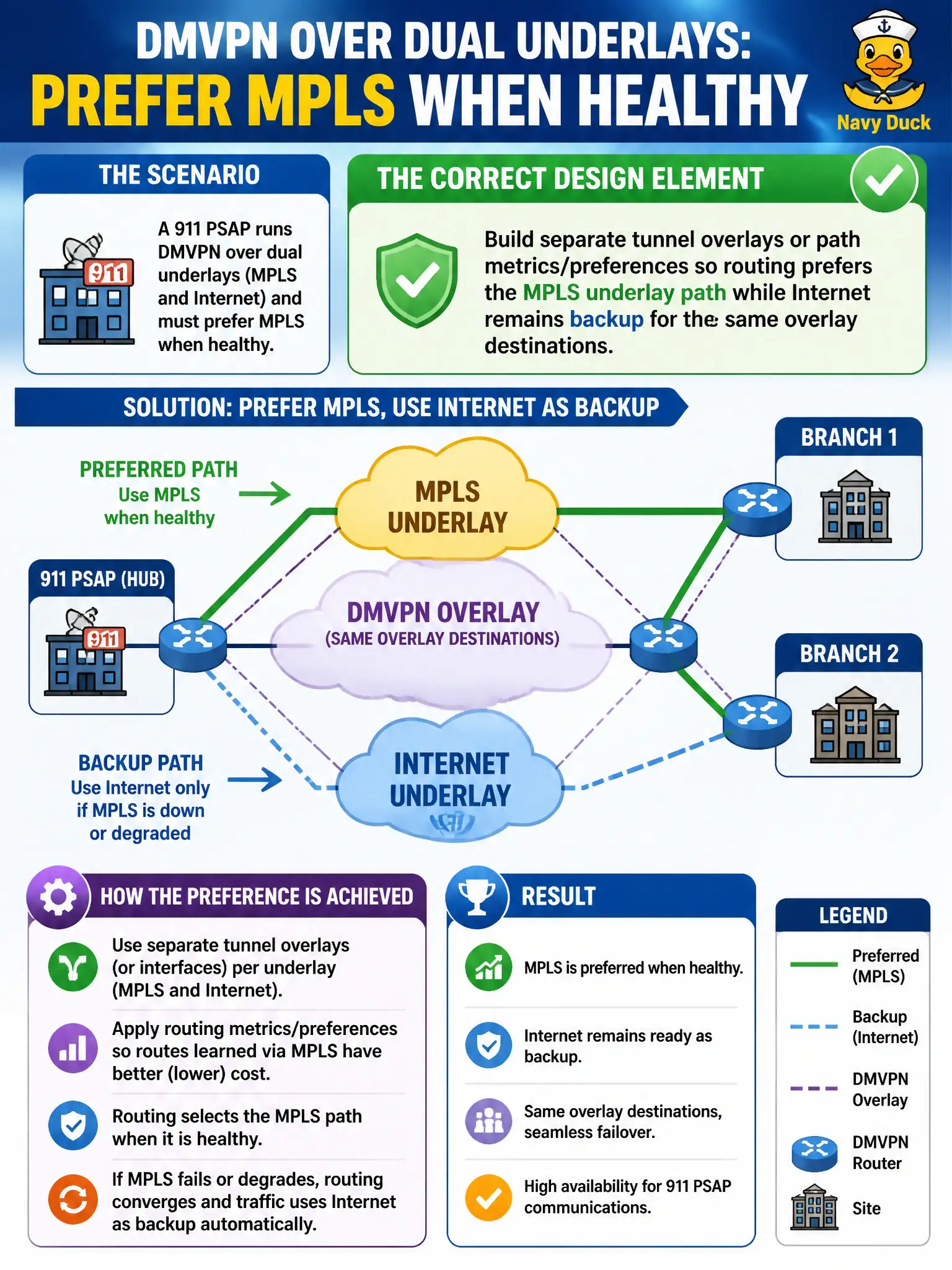
A 911 PSAP runs DMVPN over dual underlays (MPLS and Internet) and must prefer MPLS when healthy. What design element correctly expresses that preference?
Select an answer to reveal the explanation.
Short Explanation
Two roads to the hub—MPLS and Internet—need a clear favorite. Separate tunnels or routing metrics that prefer MPLS keep 911 traffic on the private path until it really needs the public detour.
Full Explanation
Dual-transport DMVPN for a 911 PSAP commonly uses multiple tunnels or differentiated metrics so overlay routing prefers the MPLS underlay and fails over to Internet when MPLS is unhealthy. Preference is expressed in tunnel design and routing metrics for the same overlay destinations—not in LAN spanning-tree elections.
Relying on STP root priority to choose the MPLS underlay for GRE confuses L2 root roles with WAN underlay preference. Disabling NHRP on the MPLS path and enabling it only on Internet forces the wrong path rather than expressing preference correctly. Static ARP entries for every hub Internet NBMA address do not encode underlay preference policy.
Exam caveat: dual underlay preference = tunnel/routing design; do not use STP or “disable NHRP on the good path.”
Operational check: build MPLS-preferred and Internet-backup tunnels or metrics, fail MPLS, confirm 911 overlay fails to Internet, restore MPLS preference, and document the metric scheme. For civic operations, record the chosen control and the rejected alternatives in the change record so future on-call engineers understand which failure modes were avoided for citizen-facing services. Re-validate after the next platform or policy change.