
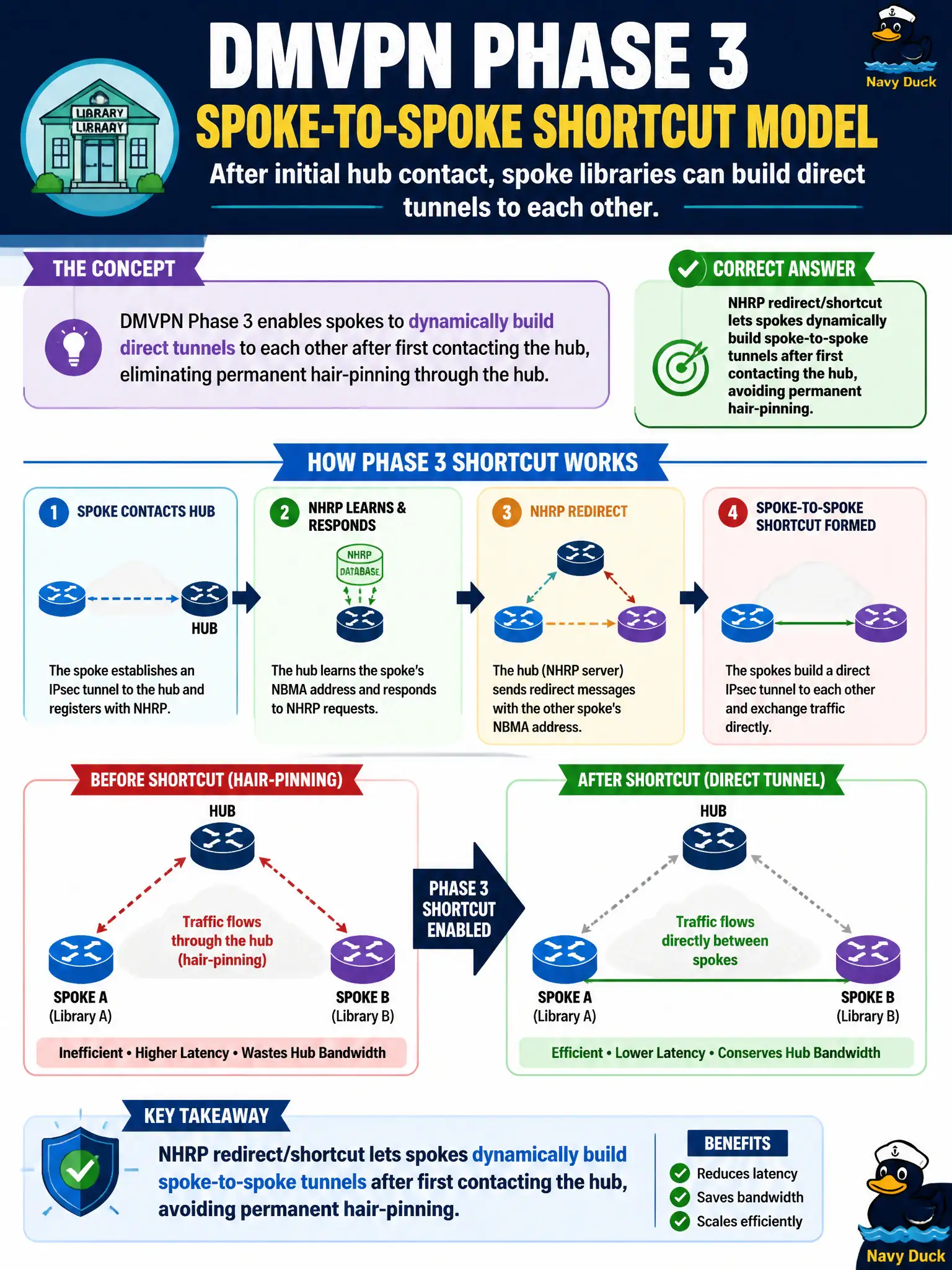
A municipal library consortium builds DMVPN Phase 3 so after initial hub contact, spoke libraries can build direct tunnels to each other. Which behavior characterizes that Phase 3 shortcut model?
Select an answer to reveal the explanation.
Short Explanation
Phase 3 is the introductions at the library conference: meet at the hub first, then get a direct hallway shortcut to the other spoke. NHRP redirect and shortcut make that hand-off happen. Without them you keep hair-pinning through the hub forever.
Full Explanation
DMVPN Phase 3 uses NHRP redirect and shortcut so spokes that initially reach each other via the hub can dynamically establish direct spoke-to-spoke tunnels. For a municipal library consortium, that shortcut model avoids permanent hair-pinning through the hub for east-west traffic after the first hub-assisted contact.
Saying spokes may only exchange traffic through the hub because redirects are forbidden in Phase 3 describes Phase 1-style behavior, not Phase 3. Requiring every spoke to be a next-hop server that terminates all tunnels inverts NHS/NHC roles. Claiming Phase 3 requires dual hubs on separate clouds before any spoke-to-spoke tunnel can form mixes resiliency design with the shortcut mechanism itself.
Exam caveat: Phase 3 = NHRP redirect/shortcut enabling dynamic spoke-to-spoke; dual hubs are optional resiliency, not a Phase 3 prerequisite.
Operational check: enable redirect on hubs and shortcut on library spokes, trigger spoke-to-spoke traffic, confirm dynamic tunnels form, and compare hub CPU before versus after shortcuts. For civic operations, record the chosen control and the rejected alternatives in the change record so future on-call engineers understand which failure modes were avoided for citizen-facing services.