
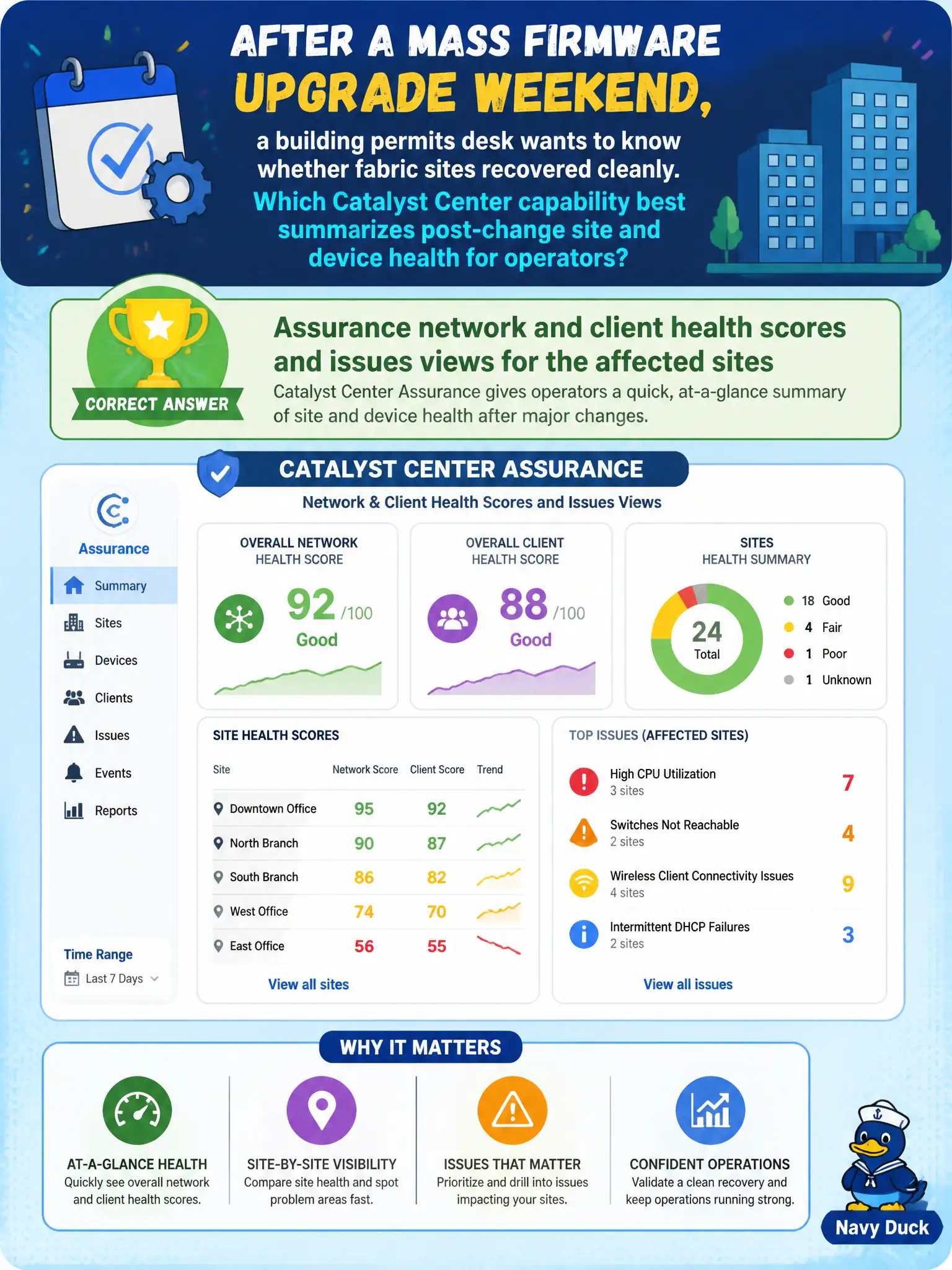
After a mass firmware upgrade weekend, a building permits desk wants to know whether fabric sites recovered cleanly. Which Catalyst Center capability best summarizes post-change site and device health for operators?
Select an answer to reveal the explanation.
Short Explanation
Assurance is the morning-after checklist for the whole civic campus, not a pile of unsorted syslog sticky notes. Health scores and issue views tell you which sites bounced back and which still limp after the upgrade. An MD5 on the TFTP box only proves the file copied, not that fabric clients are healthy.
Full Explanation
After a mass firmware upgrade weekend, a building-permits desk should use Catalyst Center Assurance network and client health scores and issues views to summarize post-change site and device health. Correlated scores beat raw log piles for civic operators validating recovery.
Exporting only raw syslog lines from each switch with no correlation overwhelms operators and misses cross-device patterns.
Disabling all telemetry until the next change window removes the very signals needed to prove success.
Relying solely on the firmware image MD5 on the TFTP server proves file integrity, not operational health after load.
Exam caveat: green image verify ≠ green client experience—always include client health after campus upgrades.
Operational check: compare Assurance site scores before/after, open issues for degraded devices, and clear or ticket each item. Attach Assurance screenshots to the permits-desk change postmortem. In municipal operations, record the rationale in the change ticket so future on-call staff know which control was chosen and which failure modes the rejected options would create for city services. Re-validate after the next maintenance window that the same control still holds under the platform code and policy revisions used by the civic network team.