
A transit authority must offer shared DNS and DHCP to endpoints in multiple Virtual Networks. Which border-oriented pattern addresses that shared-services reachability?
Select an answer to reveal the explanation.
Short Explanation
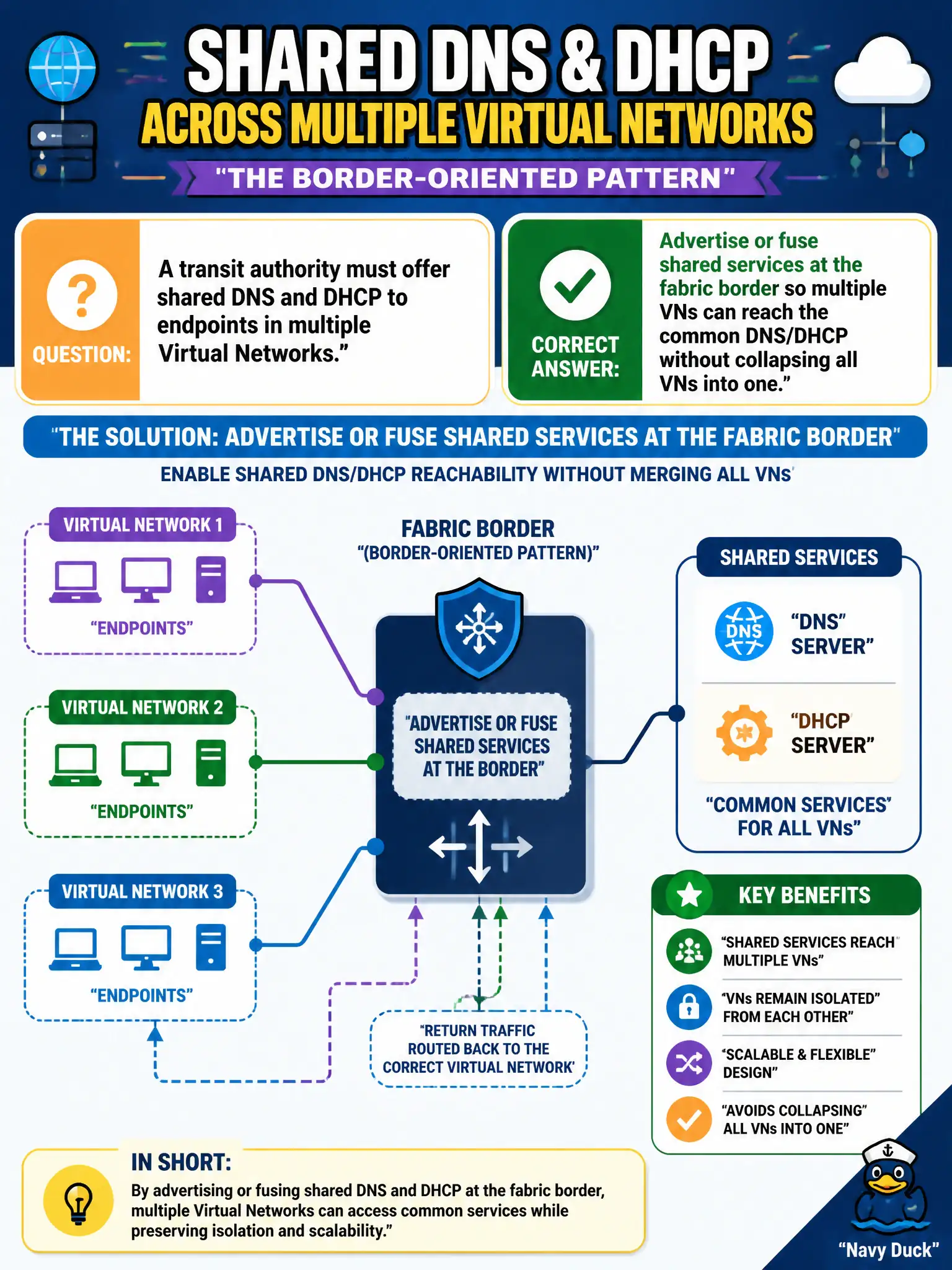
Everybody needs DNS and DHCP, but you do not want to glue every VN into one flat world to get them. Shared services usually sit outside or in a services space and get carefully advertised or fused at the border. That way each VN can reach the helpers without losing macro segmentation.
Full Explanation
A transit authority offering shared DNS and DHCP to endpoints in multiple Virtual Networks uses a border-oriented shared-services pattern: advertise or fuse shared services at the fabric border so multiple VNs can reach common DNS/DHCP without collapsing all VNs into one. That preserves macro segmentation while enabling civic infrastructure services.
Duplicating DNS/DHCP as a unique host inside every VN with no border fusion multiplies servers and operational burden without using the shared-services handoff model.
Redistributing all user EIDs into the underlay IGP so shared services never use the border pollutes the underlay and bypasses fabric mapping design.
Disabling LISP map-caching on edges whenever DHCP option 82 is present invents a harmful coupling between DHCP metadata and mapping caches.
Exam caveat: shared services fusion must be tightly controlled—only required prefixes should leak between VNs and the shared-services VN.
Operational check: place DNS/DHCP in the shared-services path, verify resolvers reachable from two user VNs, and confirm VNs remain otherwise isolated. Document the shared-services prefixes in the transit fabric interconnection guide. In municipal operations, record the rationale in the change ticket so future on-call staff know which control was chosen and which failure modes the rejected options would create for city services. Re-validate after the next maintenance window that the same control still holds under the platform code and policy revisions used by the civic network team.