
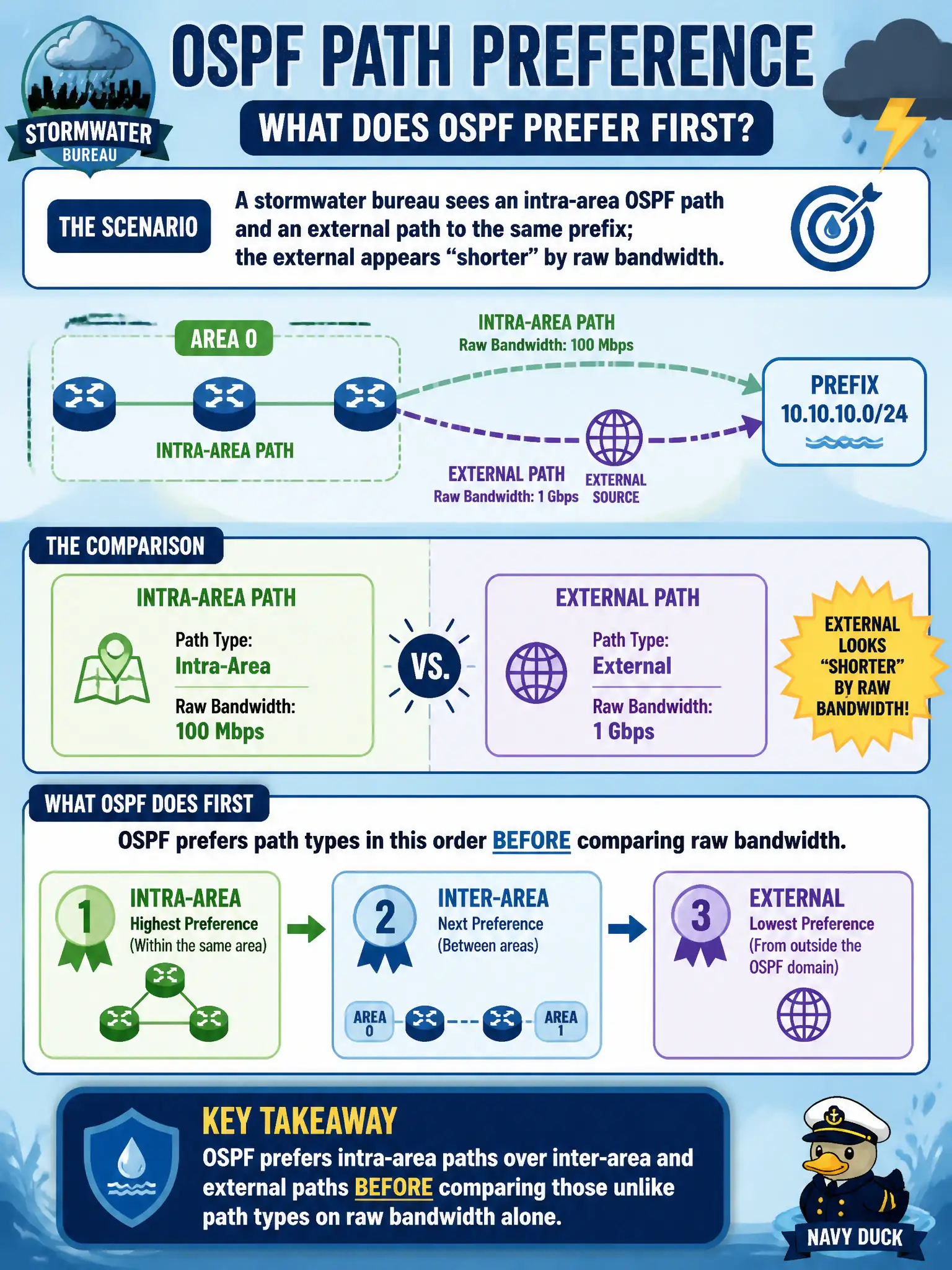
A stormwater bureau sees an intra-area OSPF path and an external path to the same prefix; the external appears “shorter” by raw bandwidth. Which path preference should expert operators expect OSPF to apply first?
Select an answer to reveal the explanation.
Short Explanation
OSPF ranks the kind of path before it argues about bandwidth stickers—intra-area beats inter-area beats externals in the usual preference order. A flashy external doesn’t dethrone a solid intra-area route just because a link looks faster. Know the path-type ladder.
Full Explanation
OSPF path selection prefers intra-area routes over inter-area, and those over external paths, rather than naively comparing unlike path types by interface bandwidth alone. When a stormwater bureau sees an intra-area path and an external path to the same prefix where the external looks “shorter” by raw bandwidth, expert operators should still expect OSPF to prefer the intra-area path first by path type. Path-type preference is the starting rule before cost nuances within a type.
OSPF does not always prefer external E2 routes over any intra-area path regardless of cost. It does not ignore path type and install whichever next hop has the lowest interface speed. It does not prefer BGP AD over its own intra-area routes when comparing entries inside OSPF’s preference rules—BGP AD is a RIB-source concern outside OSPF’s internal path-type ordering.
Exam caveat: E1 versus E2 and cost calculations matter within external types, but they do not overturn intra-area preference over externals for the same prefix. Operational check: show ip route and OSPF database entries for the prefix, confirm path type of the installed route, and resist troubleshooting solely by comparing raw link speeds across unlike path types.