
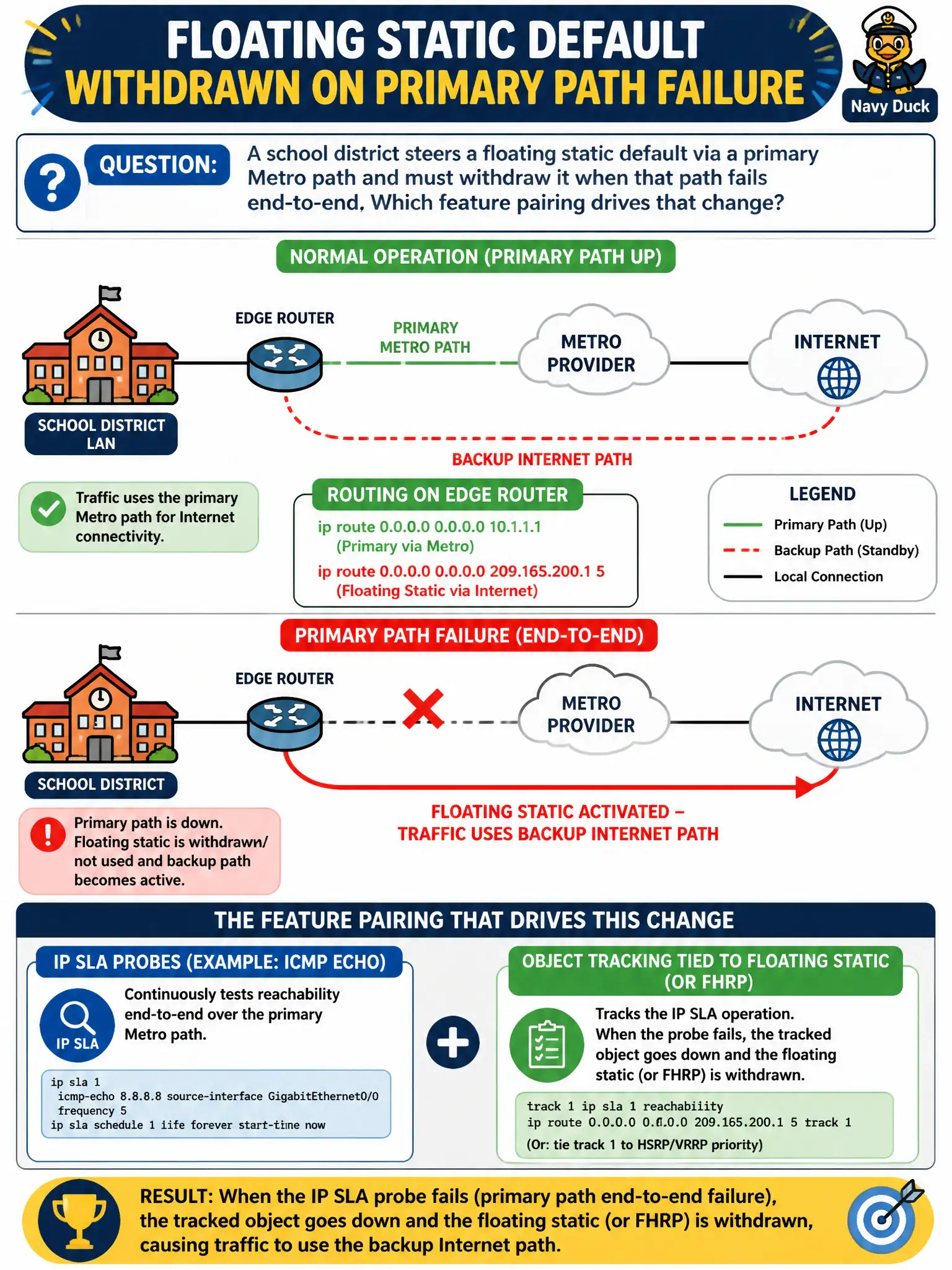
A school district steers a floating static default via a primary Metro path and must withdraw it when that path fails end-to-end. Which feature pairing drives that change?
Select an answer to reveal the explanation.
Short Explanation
A floating static is a spare tire—you want it to mount itself when the road ahead is closed. IP SLA pings the far side; tracking flips the route (or FHRP) when the echo fails. That beats waiting for the help desk to notice.
Full Explanation
A school district floating static default via a primary Metro path must withdraw when that path fails end-to-end. IP SLA probes (for example ICMP echo) with object tracking tied to the floating static (or FHRP) drive that conditional change when the probe fails. Tracking converts reachability evidence into routing or first-hop adjustments instead of waiting for users to complain.
SNMP traps alone without tracking objects do not conditionally withdraw static routes. Manually increasing administrative distance after users report an outage is reactive and slow. Disabling the backup link until a change window defeats automatic failover.
Exam caveat: probe target, timeout, and tracking dampening must match the Metro failure mode—P router brownouts may need HTTP/jitter probes, not only ICMP to the next hop. Operational check: bind IP SLA to a track object on the primary static, fail the primary path in a maintenance window, and confirm the floating backup installs within expected timers. District IP SLA trackers should alarm when the primary static withdraws so NOC staff know failover occurred before application tickets flood in. Record the chosen control and rejected alternatives in the municipal change record so future on-call engineers understand the failure modes avoided for city services.