
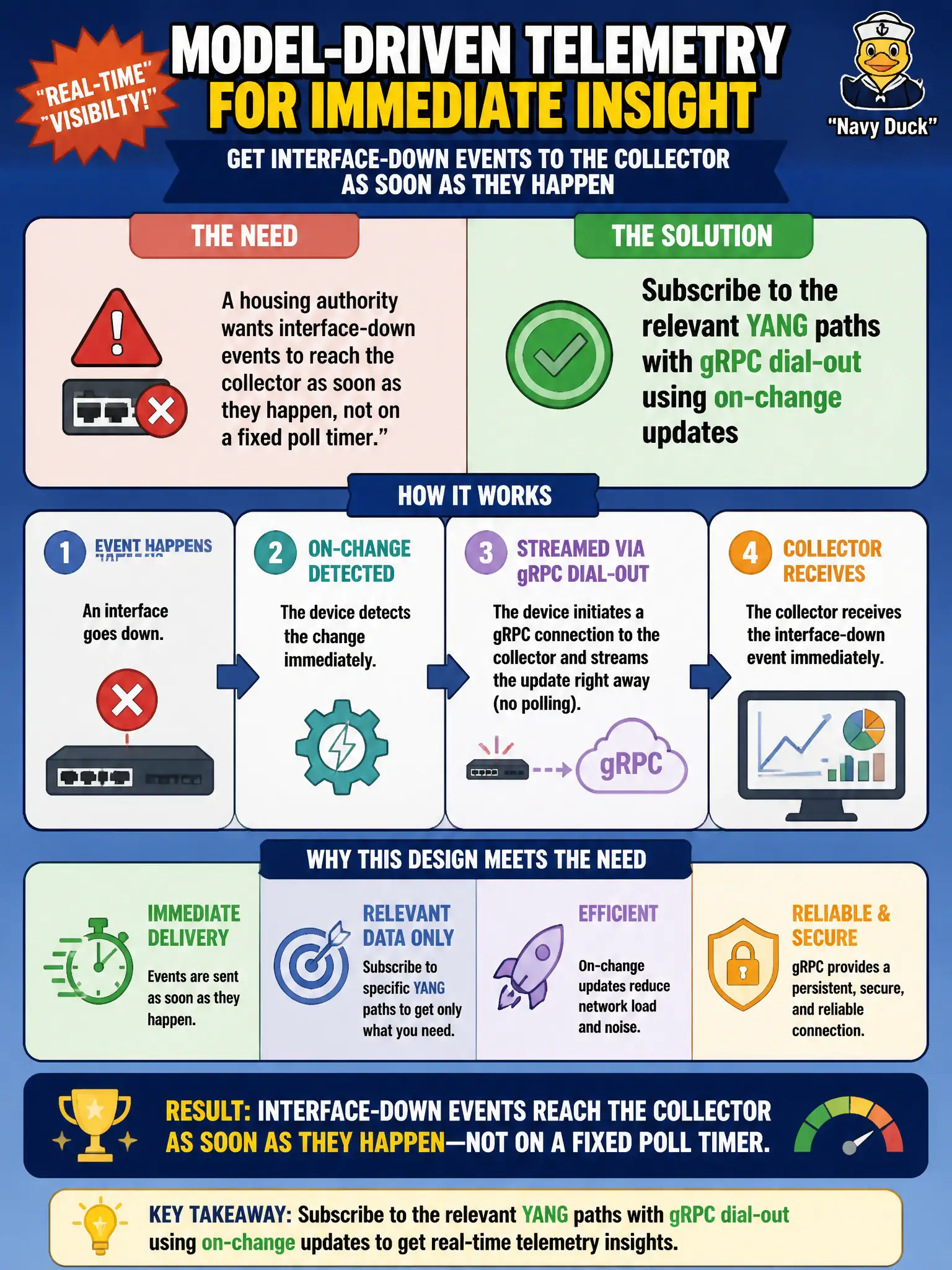
A housing authority wants interface-down events to reach the collector as soon as they happen, not on a fixed poll timer. Which model-driven telemetry design meets that need?
Select an answer to reveal the explanation.
Short Explanation
On-change telemetry is like a smoke alarm—it rings when the link drops, not when someone remembers to check the hallway. A gRPC subscription on the interface oper path streams the event right away. Polling and nightly configs are still looking at the clock instead of the fire.
Full Explanation
Housing authorities that want interface-down events as soon as they happen—not on a fixed poll timer—should subscribe to the relevant YANG paths with gRPC dial-out using on-change updates. On-change model-driven telemetry pushes events when state changes, which is the design for timely link notifications. That beats waiting for the next SNMP walk interval.
Increasing SNMP walk frequency to every few seconds loads devices and still lags true eventing. Scheduling nightly NETCONF get-config diffs detects config drift late, not live oper downs. Mirroring all switch ports to SPAN and parsing CDP only is unrelated heavy lifting.
Exam caveat: not every leaf supports on-change; confirm sensor path capabilities and dial-out connectivity/VRF. Operational check: subscribe on-change to interface oper status for a pilot stack, shut an interface, confirm collector receipt within expected delay, then expand. Alert if the subscription dies so housing NOC does not assume silence means health. Record the chosen control and rejected alternatives in the municipal change record so future on-call engineers understand the failure modes avoided for city services. Re-validate after the next maintenance window that telemetry, API results, and device state still match the documented design intent.