
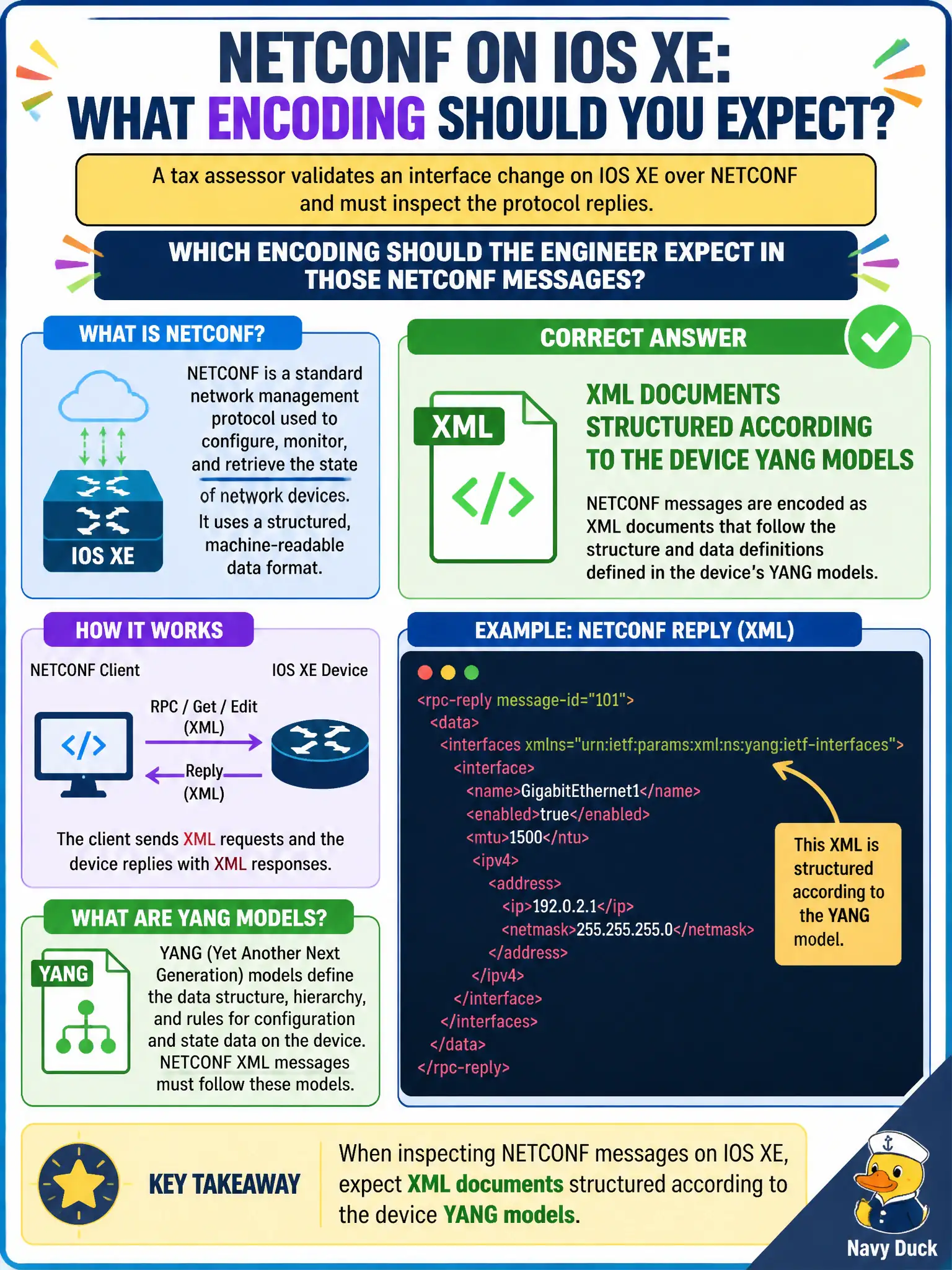
A tax assessor validates an interface change on IOS XE over NETCONF and must inspect the protocol replies. Which encoding should the engineer expect in those NETCONF messages?
Select an answer to reveal the explanation.
Short Explanation
NETCONF is the XML conversation with the router. YANG names the fields; XML is the envelope and body you read when validating that interface change. YAML is great for humans elsewhere, but classic NETCONF replies show up as XML.
Full Explanation
When a tax assessor validates an interface change on IOS XE over NETCONF, the protocol replies are XML documents structured according to the device YANG models. NETCONF’s conventional encoding is XML for RPCs, configuration datastores, and replies, aligned to the module schemas the device advertises. Engineers inspecting replies should expect XML tags and namespaces, not ad-hoc text.
YAML indentation blocks only are common for inventory/templates, not for NETCONF on-the-wire messages. Protobuf binary frames exclusive to gNMI describe a different telemetry/management path. CSV spreadsheets as MIME parts are not how NETCONF RPCs are encoded.
Exam caveat: RESTCONF may use JSON or XML over HTTPS, while NETCONF remains XML-centric—questions that say NETCONF are testing that distinction. Operational check: perform a NETCONF get or edit-config against a lab interface leaf, capture the RPC reply, and verify XML structure and namespaces match the expected YANG module before promoting the assessor automation. Keep schema versions pinned in the toolchain so reply parsing does not silently drift. Record the chosen control and the rejected alternatives in the municipal change record so future on-call staff understand which failure modes were avoided for city services.