
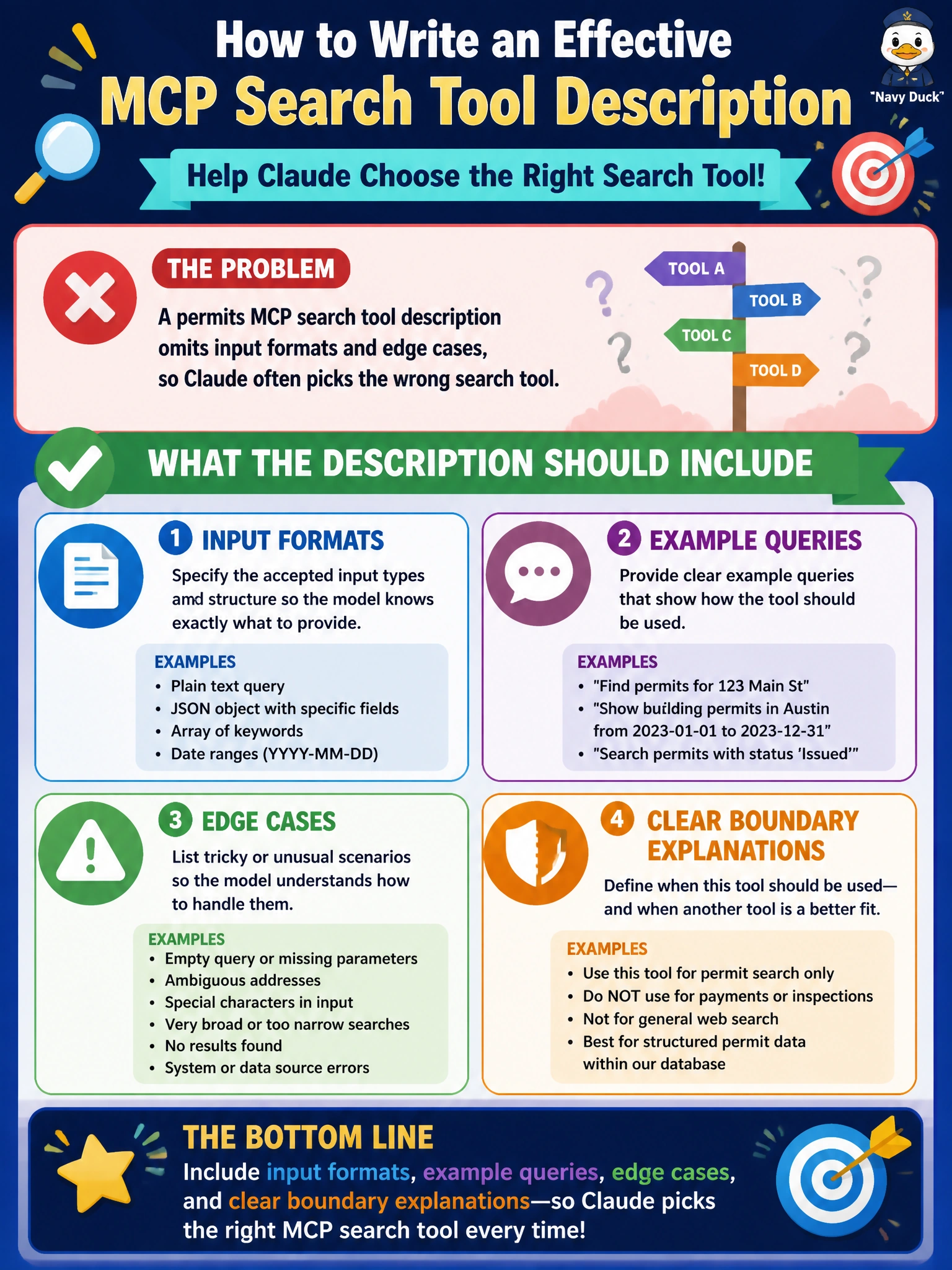
A permits MCP search tool description omits input formats and edge cases, so Claude often picks the wrong search tool. What should the description include?
Select an answer to reveal the explanation.
Short Explanation
Permits search tools need more than a shrug in the description. Give formats, example queries, edge cases, and boundaries so Claude stops grabbing the wrong searcher.
Full Explanation
A permits MCP search tool whose description omits input formats and edge cases leaves Claude unable to discriminate among similar searchers. The description should include input formats, example queries, edge cases, and clear boundary explanations—what query shapes are valid, what “no results” means, and when another permits tool should be used instead.
Rich descriptions work because permitting search is high-ambiguity: address strings, parcel IDs, applicant names, and status filters look alike to a model unless the contract spells formats and edges. Municipal permitting agents then route correctly and avoid wrong-application lookups that frustrate applicants.
Only a single vague verb with no formats or examples fails to differentiate tools and invites random selection. Internal database table names with no guidance for the model leak schema noise without teaching selection criteria or civic usage boundaries. A note that all edge cases are undocumented on purpose withholds the very signals needed for reliable tool choice under real permit desk traffic.
Exam caveat: examples should be representative, not exhaustive secrets; still document empty-result and invalid-format behavior. Operational check: add format and edge-case prose to the permits search description, then verify Claude stops selecting the wrong sibling search tool on ambiguous address queries.