
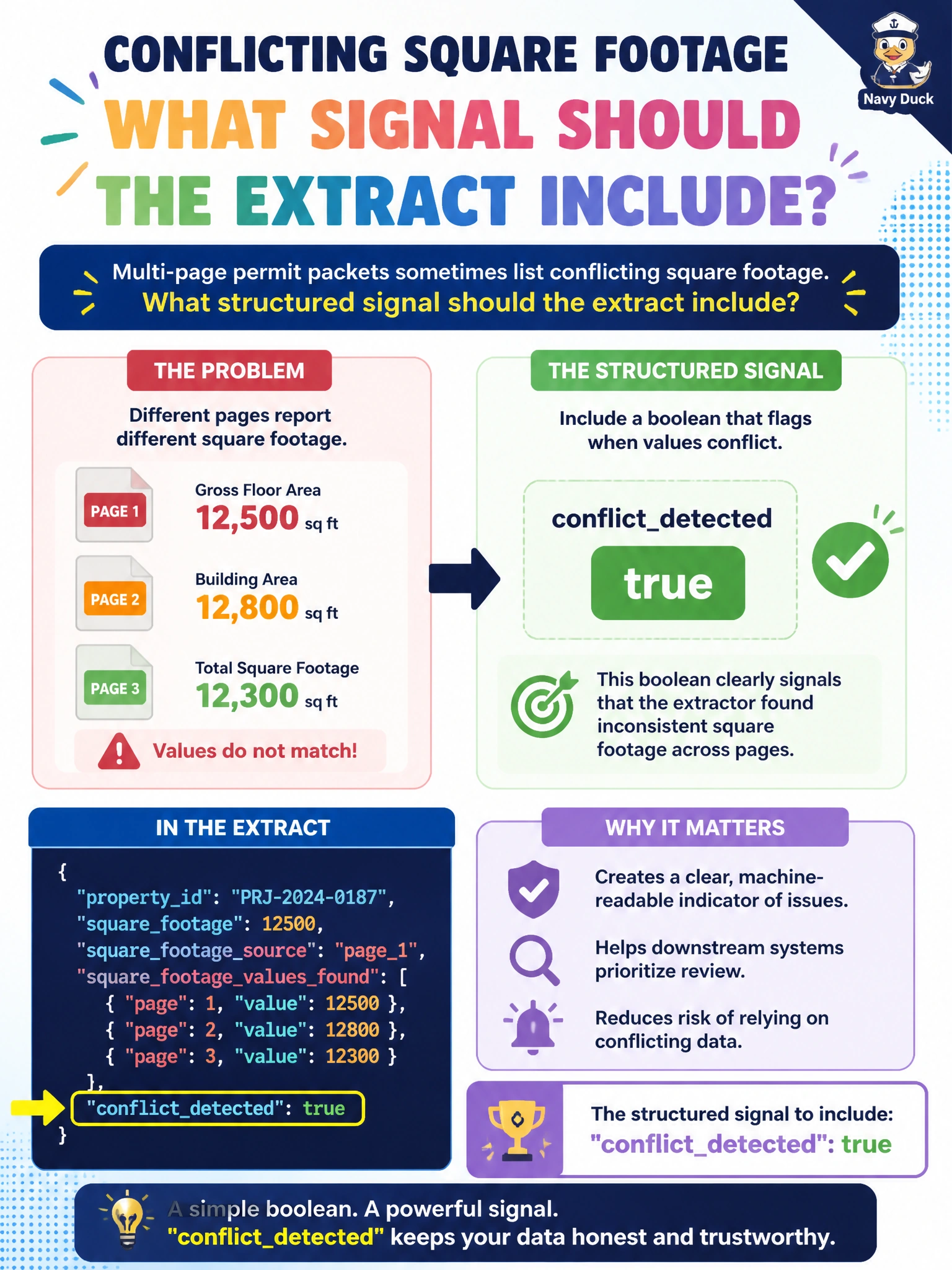
Multi-page permit packets sometimes list conflicting square footage. What structured signal should the extract include?
Select an answer to reveal the explanation.
Short Explanation
When page 2 argues with page 5 about square footage, don't quietly average—flip a conflict_detected flag. Humans need to see the fight.
Full Explanation
Multi-page municipal permit packets sometimes list conflicting square footage across pages, amendments, or stamped revisions. The extract should include a structured signal such as conflict_detected so clerks see inconsistency instead of receiving a silently chosen number. Flagging disagreement preserves auditability and routes human resolution before occupancy, fee, or zoning decisions rely on floor area. Silently averaging conflicting values without marking disagreement invents a compromise the source never authorized and hides that pages disagree. Forcing a single value with no flag that sources disagreed likewise erases evidence and can lock in the wrong page's figure. Discarding the entire packet whenever any two pages differ over-rejects workable applications and floods intake with false hard failures when a clerk could reconcile two candidate values quickly. Exam caveat: conflict flags indicate inconsistency among provided pages; they do not automatically pick the legally controlling figure under local amendment rules. Operational check: seed a packet with two different square-footage mentions, confirm conflict_detected is true and both candidate values are retained for review, and verify the municipal workflow blocks auto-posting until a clerk resolves the conflict.