
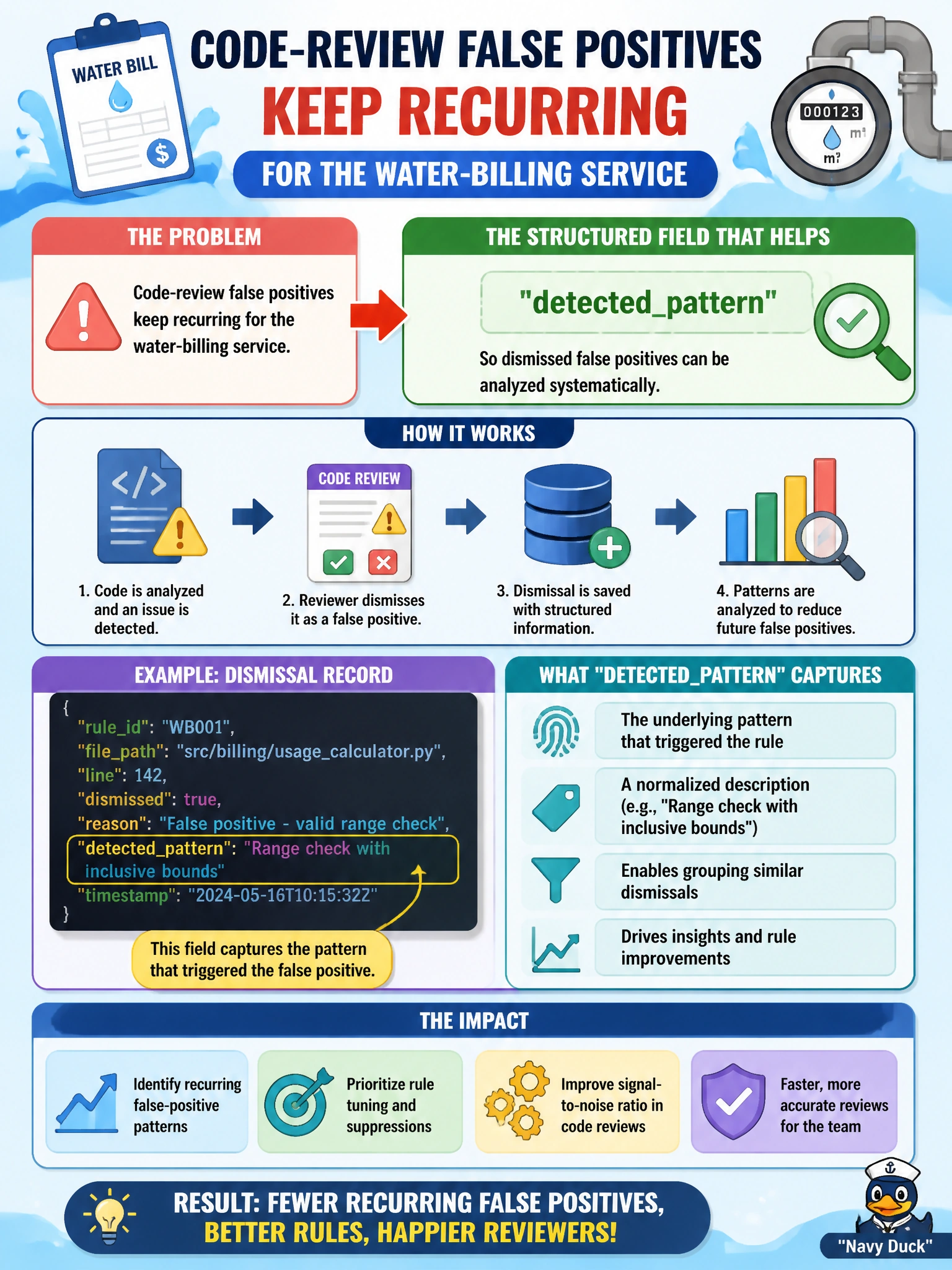
Code-review false positives keep recurring for the water-billing service. What structured field helps analyze dismissals?
Select an answer to reveal the explanation.
Short Explanation
Tag the kind of false alarm—like labeling which smoke detector chirps for toast. A detected_pattern field lets the team kill recurring noise systematically.
Full Explanation
Recurring code-review false positives on a municipal water-billing service need structured analytics, not anecdotal notes. A detected_pattern field on each finding lets teams group dismissed noise by rule or prompt pattern, measure recurrence, and tune detectors or allowlists systematically. Without that label, every dismissal looks unique and the same chirp returns every sprint. Free-form poems about how the reviewer felt may be human-readable once but cannot aggregate across PRs or power dashboards for civic DevOps. A single global score that erases which pattern was flagged collapses distinct failure modes—style nits, security smells, local conventions—into one opaque number that blocks root-cause work. Omitting pattern labels so analytics cannot group recurring noise deliberately disables the feedback loop that would quiet the review queue. Exam caveat: pattern tags support triage and tuning; they do not by themselves prove a finding is a true positive or replace human judgment on billing-critical paths. Operational check: export dismissed findings for a billing-service window, group by detected_pattern, and confirm the top noise patterns shrink after prompt or rule changes rather than merely being re-dismissed under new wording.