
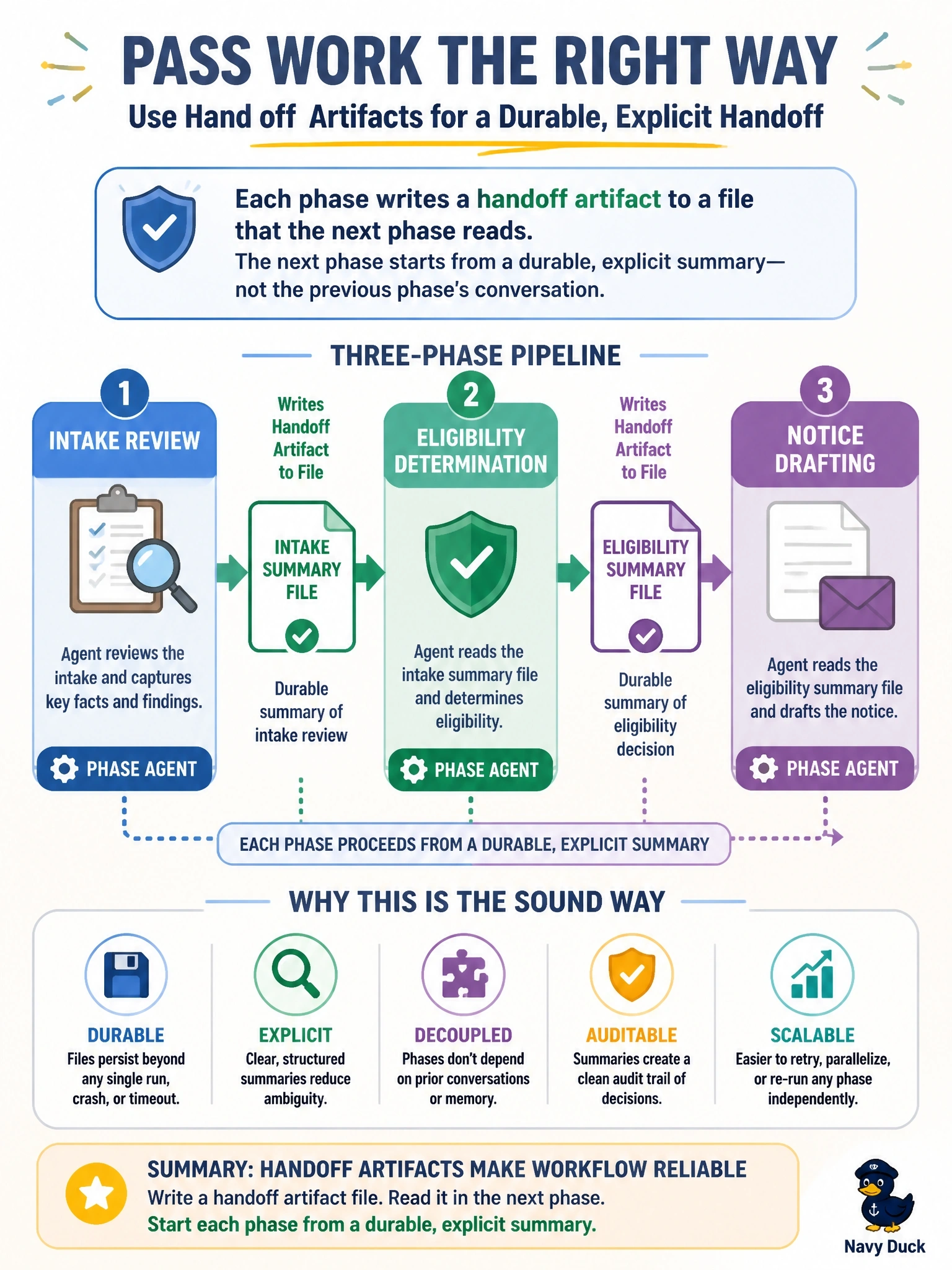
A housing authority runs a three-phase pipeline: intake review, eligibility determination, then notice drafting. Each phase is a separate agent run. What is the sound way to pass work from one phase to the next?
Select an answer to reveal the explanation.
Short Explanation
Each phase starts with an empty head, so the handoff has to be something you can physically pick up: a written artifact on disk. A conversation is not that.
Full Explanation
Separate agent runs do not share context. Anything the next phase needs must therefore exist outside the conversation that produced it, which makes the interface between phases a deliberate design decision rather than something inherited for free.
Having each phase write a structured handoff artifact that the next phase reads makes that interface explicit, durable, and inspectable. A caseworker can read the eligibility determination and the basis it states, a failed phase can be re-run against the same upstream artifact rather than reconstructed, and each phase pays context cost for a settled summary instead of the full history behind it. In a benefits pipeline that auditability is a requirement, not a convenience.
Collapsing all three phases into one continuous conversation accumulates every intermediate detail in a single window, crowding out the later phases and leaving no durable record of what each phase concluded; reading the previous phase's transcript assumes access separate runs do not provide, and a transcript carries superseded reasoning alongside the conclusion with nothing marking which is which; re-running intake at the start of eligibility duplicates cost and can produce a different intake result than the one the pipeline actually recorded.
Exam caveat: an artifact is only a good interface if its shape is agreed—free-form prose passed between phases reintroduces the ambiguity the file was meant to remove. Operational check: define a schema for each handoff file, validate it as the phase writes it, and confirm the downstream phase can run from that file alone with no access to the upstream run.