
A school-district modernization team finished a shared baseline analysis in Claude Code and now wants to compare two refactoring approaches without losing that baseline. What should they use?
Select an answer to reveal the explanation.
Short Explanation
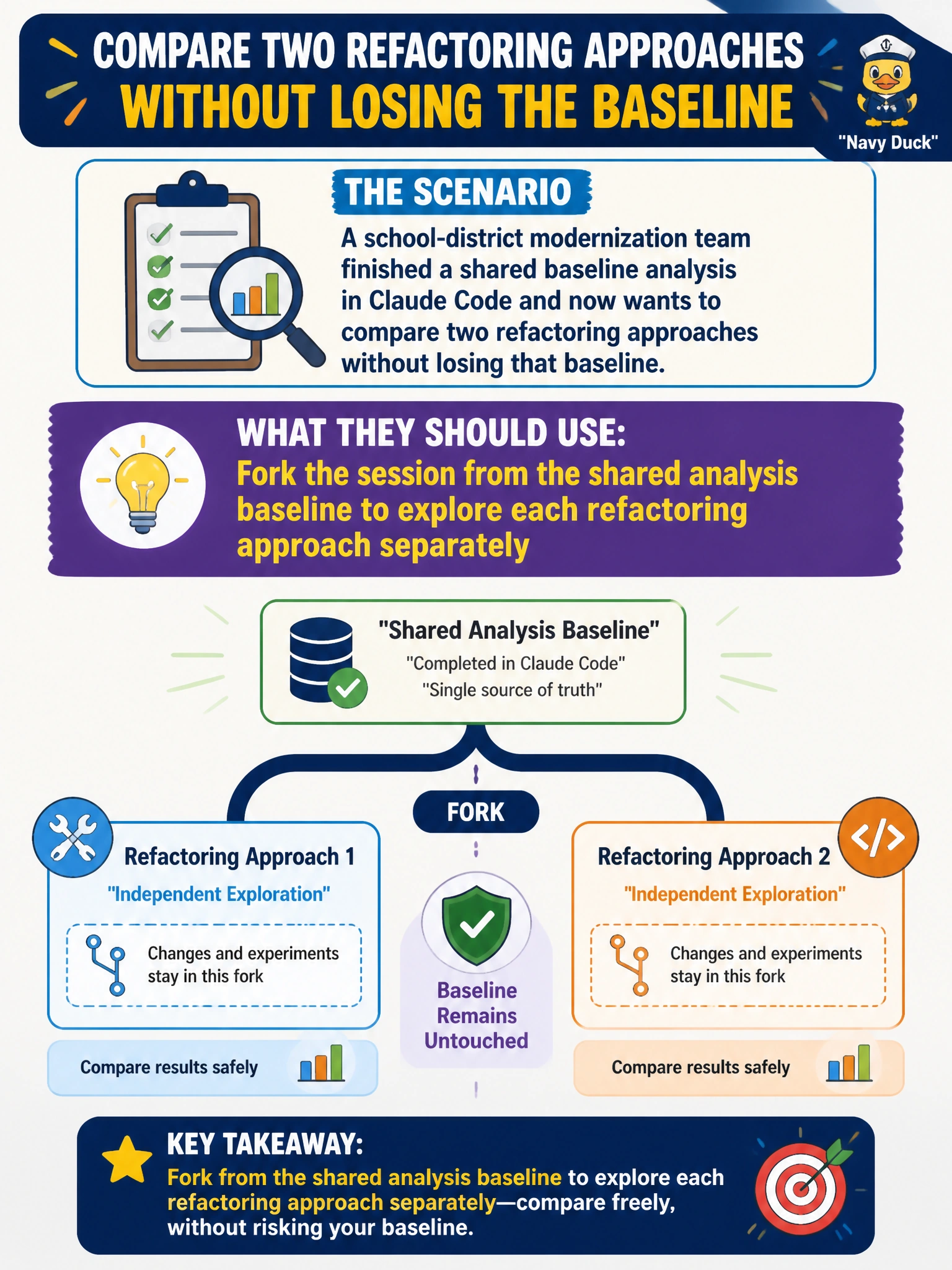
Forking is like photocopying the completed analysis binder and letting two teams mark it up differently. Same starting point, two clean what-if paths—no shredding the original.
Full Explanation
A school-district modernization team that finished a shared baseline analysis in Claude Code and wants to compare two refactoring approaches without losing that baseline should fork the session from the shared analysis. Forking preserves the completed baseline context while creating separate exploratory branches for each refactoring approach, so comparisons stay fair and the original analysis remains intact for district IT review.
Forking works for architectural what-ifs: both paths start from the same verified understanding of the legacy stack, then diverge cleanly. Teams can evaluate tradeoffs without contaminating the baseline branch with irreversible edits or losing the shared modernization findings.
Deleting the baseline and starting unrelated chats loses shared context and wastes re-analysis effort. Merging both refactoring plans into one irreversible edit on the baseline only destroys the clean comparison and the untouched reference. Disabling session features and redoing the baseline twice from scratch invites drift between the two supposedly identical starting points.
Exam caveat: forks still need naming, retention, and access controls so district staff can find the baseline later. Operational check: fork twice from the baseline, apply different refactor notes in each fork, and confirm the baseline session's artifacts are unchanged.