
A perioperative quality committee reviews its surgical site infection prevention bundle for adult patients undergoing elective colorectal and cardiac procedures. Which glycemic management target aligns with CDC surgical site infection prevention guidelines?
Select an answer to reveal the explanation.
Short Explanation
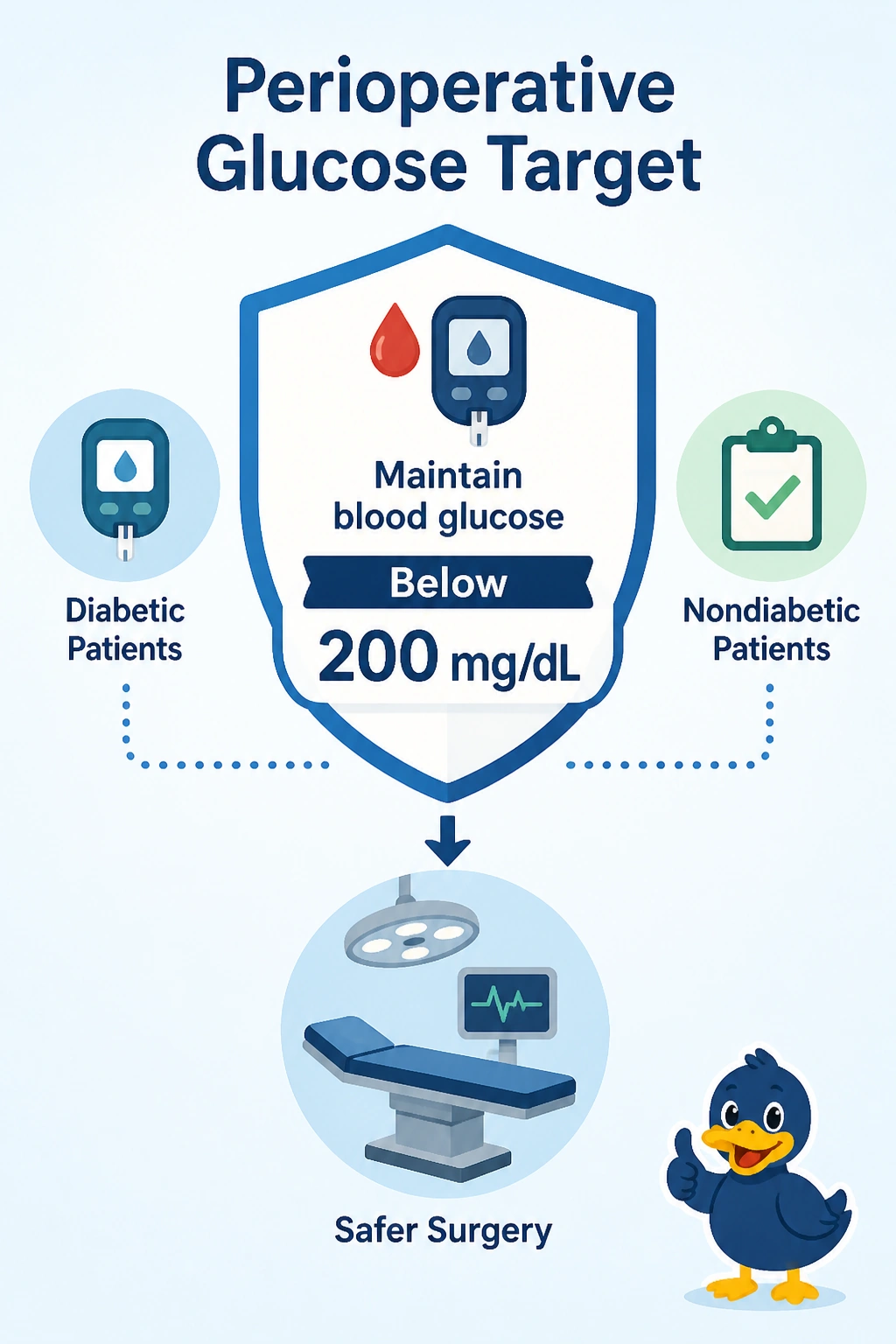
Surgical stress can spike blood sugar even in patients without diabetes, impairing white blood cells right when incisions need defense. The trap is reserving glucose control only for your diabetic patients instead of managing stress hyperglycemia across the board.
Full Explanation
The 2017 CDC Guideline for the Prevention of Surgical Site Infection recommends implementing perioperative glycemic control with blood glucose target levels below 200 mg/dL in patients both with and without diabetes. Hyperglycemia impairs neutrophil chemotaxis, phagocytosis, and microvascular perfusion, increasing wound infection risk; therefore, teams should Maintain perioperative blood glucose below 200 mg/dL for both diabetic and nondiabetic patients. Choosing to Restrict perioperative glycemic monitoring exclusively to patients with diagnosed diabetes mellitus misses surgical stress-induced hyperglycemia in undiagnosed or nondiabetic patients. Choosing to Delay elective clean procedures until hemoglobin A1C falls below 5.5 percent in all adults sets an unsupported and overly aggressive threshold that risks severe hypoglycemia and unnecessary surgical delays. Choosing to Treat perioperative hyperglycemia only after glucose remains above 250 mg/dL for 48 hours waits for prolonged severe hyperglycemia and misses the perioperative prevention window when control reduces infection risk. Caveat: this CDC target is specific to surgical site infection prevention and differs from other current diabetes-management targets; overly tight control should be avoided because of severe hypoglycemia risk without added benefit. Operational check: audit intraoperative and post-anesthesia care unit glucose logs monthly for compliance with the under-200 mg/dL threshold.
Prefer to study offline? Printable PDF study book + test engine ($7.50, unofficial). These questions stay free here.